
Separation Anxiety and Sleep: What’s Normal and How to Help


If sleep suddenly feels harder, your baby cries the moment you leave the room, or your toddler becomes extra clingy at bedtime, you are not imagining it. Separation anxiety is one of the most common reasons sleep can feel unsettled, even when routines were previously going well.
This stage is developmentally normal. It is not a sign you have done anything wrong, and it does not mean sleep is broken. It simply means your child’s awareness has grown, and sleep can be the place where that awareness shows up most strongly.
This guide explains what separation anxiety is, when it commonly peaks, how it can affect naps, bedtime and night waking, and how to support your baby or toddler while keeping sleep steady.
What is separation anxiety?
Separation anxiety is a normal developmental stage where your baby or toddler becomes more aware that you can leave and come back, and they begin to protest separation, especially when tired.
It is closely linked to object permanence, which is the understanding that you still exist even when your child cannot see you. This skill typically begins to develop around 6–8 months of age and becomes much stronger between 8–12 months, which is why separation anxiety often appears during this period. As your child becomes more aware that you can leave, but does not yet fully understand when you will return, naps, bedtime and overnight wakes can feel more intense for a while.
For some children, separation anxiety shows up mildly. For others, it can feel much bigger, especially if it overlaps with sleep regressions, nap transitions, illness, travel or big developmental changes.
During this stage, your child may cry when you leave the room, need more reassurance at bedtime, wake overnight looking for you, or become more clingy during the day.
When does separation anxiety peak?
Separation anxiety can appear at different points, but it often becomes more noticeable during common developmental windows, especially when it overlaps with sleep regressions, nap transitions or new skills.
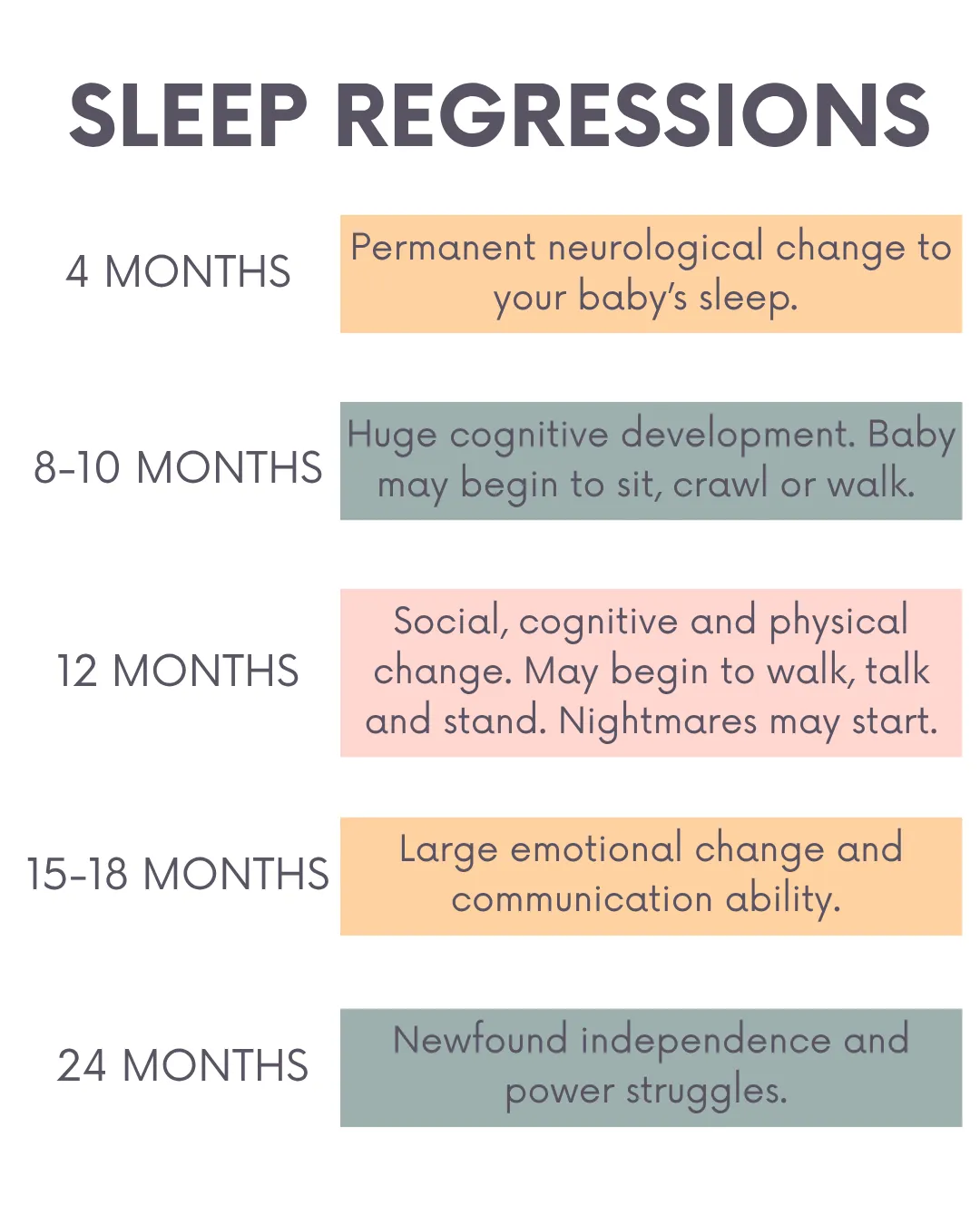
These developmental windows often overlap with regressions, changing sleep needs and emotional development, which is why separation anxiety can sometimes be mistaken for a sleep regression.
If you are in one of these windows, it can help to explore 8–10 Month Sleep Regression, 12 Month Sleep Regression, 15–18 Month Sleep Regression, and 24 Month Sleep Regression.
How separation anxiety impacts sleep
Separation anxiety tends to show up most strongly at sleep times because sleep involves two big triggers at once: tiredness and separation.
You might notice:
Crying or distress when you leave the room
Increased contact seeking at bedtime
Short naps or nap refusal
More frequent night waking
Difficulty resettling without you
Bedtime battles in toddlers
This can feel confusing because sleep may have been going well, and then suddenly your baby or toddler needs more reassurance again. In most cases, this does not mean anything has gone wrong. It simply means their emotional awareness has increased, and sleep is where that need for connection often shows up most clearly.
Why it can feel suddenly worse
Separation anxiety can feel like it comes out of nowhere, but it is not just about behaviour. It is closely linked to cognitive and emotional development.
As your child’s awareness expands, they begin to understand:
You exist even when they cannot see you
You can leave
They want to keep you close
Sleep means a temporary separation from you
This can make naps, bedtime and overnight wakes feel more emotionally loaded for a period of time.
It can also feel worse when your child is tired, unwell, going through a sleep regression, navigating a nap transition, adjusting to childcare, travelling, or experiencing changes at home.
In most cases, this stage does not mean you need to start again or change everything. It usually means your child needs consistent reassurance, predictable sleep cues and a settling approach that matches their current stage.
What helps separation anxiety at sleep times
The goal is not to eliminate separation anxiety, because it is a normal developmental stage. The goal is to support your child through it with calm, predictable reassurance, while keeping sleep as consistent as possible.
Add connection before sleep
Separation anxiety is often eased when your baby or toddler receives intentional connection before they are expected to separate.
This might look like:
Ten minutes of one-on-one time before bed
A slightly longer wind down routine
Extra cuddles, stories or calm play before sleep
A predictable goodnight phrase
Keeping the routine calm and unhurried
This helps fill their “connection cup” before sleep, so bedtime does not become the only moment your child seeks closeness.
Keep your response calm and predictable
During separation anxiety, your child is looking for reassurance and safety. A calm, steady response helps them feel secure.
This does not mean disappearing quickly, ignoring distress or forcing independence.
It means responding in a way that is consistent, reassuring and predictable, so your child knows what to expect at sleep times.
Choose a settling approach that matches the stage
Some babies cope well with a more direct settling approach, while others need a slower, more gradual presence when separation anxiety peaks.
If your child becomes very distressed when you leave, a more gradual approach may feel more appropriate for this stage. You can still support your child toward more settled sleep while offering reassurance in a way that feels emotionally safe.
Avoid too many changes at once
Separation anxiety is not usually the best time to change everything at once.
If your baby or toddler is also moving into a cot, moving rooms, starting daycare, dropping a nap, travelling, unwell or going through a developmental leap, sleep may become more unsettled because
When possible, focus on one change at a time and keep the rest of the routine as predictable as you can.
If this is your situation, it can help to review Daycare and Sleep, Moving From Bassinet to Cot, and When to Move Baby Into Their Own Room.
Support the sleep environment
When separation anxiety is strong, small environmental disruptions can make sleep feel harder.
A calm, safe and consistent sleep space can help your baby or toddler feel more secure. This might include a dark room, appropriate sleepwear, white noise if you use it, a safe cot or sleep space, and a bedtime routine that feels familiar from night to night.
A calm sleep space matters. If you need to review this, see Creating a Sleep-Conducive Environment and Creating a Safe Sleep Environment.
What not to do
Separation anxiety can trigger parents into doing whatever works in the moment, which is understandable when you are exhausted. But some responses can unintentionally increase long term waking.
Try to avoid:
Adding new sleep associations every few nights
Switching approaches repeatedly
Turning bedtime into a long negotiation with toddlers
Staying until your child is fully asleep every night if your goal is for them to fall asleep with less support over time
Continuing with an out-of-room approach if it is leading to increased distress, frequent check-ins that escalate emotions, or a worsening of sleep overall
Not every settling approach works for every child. While some babies and toddlers respond well to brief, predictable check-ins, others may become more upset when a parent leaves and re-enters the room repeatedly.
If an out-of-room approach appears to be making separation anxiety or sleep difficulties worse, consider whether a different, consistent approach may be more appropriate.
Support is important, but consistency is what helps this stage pass.
How long does separation anxiety last?
For some babies and toddlers, separation anxiety peaks for one to three weeks and then settles as confidence returns.
For others, it can come in waves for several weeks, especially if it overlaps with a sleep regression, nap transition, illness, travel, daycare, or another big change.
If sleep disruption continues beyond six weeks, it may no longer be only separation anxiety.
At that point, it can be helpful to review the full sleep picture, including routines, awake windows, sleep pressure, night waking, sleep environment and how your child is supported to sleep.
In that case, it can be helpful to look at Why Is My Baby Waking So Frequently at Night? and your age specific routine blog to make sure sleep needs are aligned.
Looking ahead
Separation anxiety is one of the most common and most misunderstood reasons sleep becomes unsettled. The good news is that it is normal, it is temporary, and with the right support, sleep can remain stable through it.
The 5–24 Month Infant Course supports families through separation anxiety at every key stage, alongside routines, settling approaches, regressions, and night waking.
For toddlers, bedtime resistance, emotional development, and fears, the Infant and Toddler Bundle provides long term support through the toddler years, with strategies that adapt as your child grows.
Need personalised support?
If your child starts screaming the moment you move toward the bedroom door, or they are suddenly waking up terrified around the clock looking for you, a 30-minute sleep chat is the perfect next step.
We will get straight to the point and look at your child's current sleep pressure, bedtime routine, and environmental cues to separate developmental anxiety from routine gaps. You will walk away with a clear, no-fuss plan to fill your child's connection cup and a gentle, consistent settling approach that provides emotional security without creating unsustainable overnight dependencies.
This is ideal for exhausted mums who want fast, personalised expert reassurance and a clear plan of action without committing to a full sleep package.
Eva Beke
Certified Paediatric Sleep Consultant
Founder The Sleepy Little Bubs
I’m Eva Beke, a certified baby and toddler sleep consultant and founder of The Sleepy Little Bubs, supporting families across Australia and the world with evidence based baby and toddler sleep support.
My approach is realistic, supportive, and designed to evolve as your child grows, so you’re not just getting help for today, but confidence moving forward.
CLIENT STORIES
Real Families. Real Rest.

"I actually can't believe how much your infant course has changed my little ones sleep... and in such a short amount of time. Thank you!"
- Sofija


"Ok, so here I am thinking this is just another "ohh most comprehensive" guide blah blah blah... wowza... the toddler course literally has everything, and I can't even tell you how many times I have referred back to it. Best money spend on sleep so far"
- Christina

"Hey I just wanted to let you know, I purchased your toddler course and within days we've gone from bed sharing and multiple wake ups to him sleeping in his own bed and sleeping through the night. What is this magic?"
- Lisa
PRODUCTS
INFORMATION
SUPPORT
LEGAL




© Copyright The Sleepy Little Bubs All Rights Reserved.