
Why Is My Baby Waking Frequently at Night?

Common reasons for frequent night waking, what may be driving it, and how to support your baby’s sleep without guessing.
What is considered frequent night waking?
Frequent night waking can look very different depending on your baby’s age, feeding needs, routine and development. For some families, it means waking every 45–90 minutes. For others, it may look like multiple wakes after midnight, long awake periods overnight, or early morning waking that does not resolve.
Before labelling night waking as a problem, it is important to understand what is biologically normal for your child’s age and what may be driving the wake ups.
Realistic overnight sleep expectations by age
Sleep consolidates gradually across infancy and toddlerhood. The idea that babies “should” sleep through the night early on is often unrealistic and creates unnecessary stress.
These are general ranges only. Some babies may still need overnight feeds depending on age, growth, feeding intake, medical needs and individual circumstances.
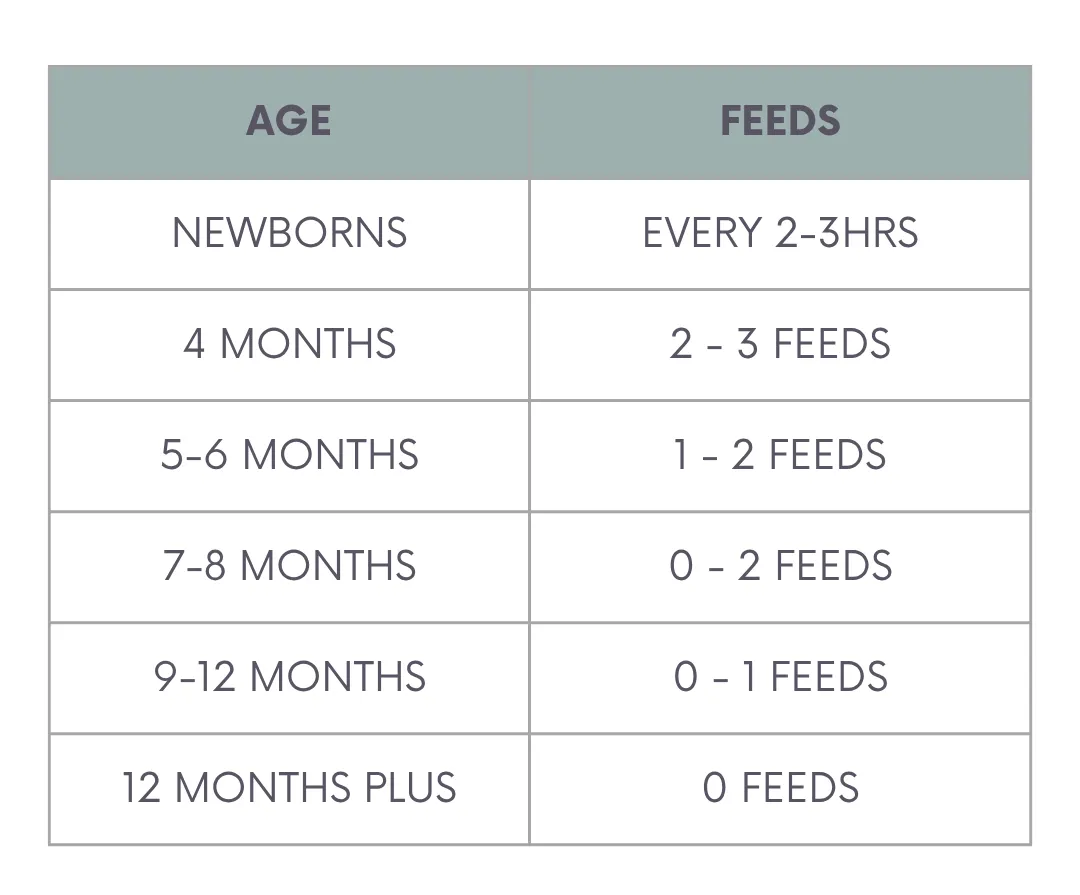
Some children sit comfortably at the lower end of these ranges, while others naturally consolidate sleep earlier. Both can be normal.
Frequent night waking only becomes a concern when it falls outside age-appropriate expectations, continues despite routine adjustments, or begins to impact your baby’s mood, development, feeding, or your family’s wellbeing.
Common reasons babies and toddlers wake frequently at night
Once age-appropriate sleep expectations are taken into account, frequent night waking is usually linked to one or more of the following factors.
Daytime sleep and routines
Overnight sleep is strongly influenced by what happens during the day. If naps are inconsistent, poorly timed, or no longer match your baby or toddler’s sleep needs, nights can quickly become unsettled.
This is why reviewing an age-appropriate sleep routine is so important, especially during periods of growth, development, nap transitions or sleep regressions.
Awake windows and sleep pressure
Awake windows play a big role in how easily your child falls asleep and stays asleep overnight.
If awake windows are too short, your child may not have enough sleep pressure to sleep for longer stretches. If awake windows are too long, overtiredness can lead to lighter sleep, false starts, frequent waking or early morning rising.
Understanding whether your child is undertired or overtired can help explain why they may be waking frequently, even when they seem exhausted.
How your child falls asleep
How your baby or toddler falls asleep at the beginning of the night can affect what happens when they wake between sleep cycles.
If your child falls asleep with a lot of support, they may look for those same conditions when they naturally stir overnight. These sleep associations can lead to repeated night waking if your child needs help to resettle each time.
Sleep environment
A sleep space that is too bright, noisy, stimulating, warm, cold or inconsistent can disrupt sleep, especially in the second half of the night when sleep is naturally lighter.
Reviewing your child’s sleep environment can make a significant difference before changing routines or settling approaches.
Development and emotional growth
Cognitive and emotional development can have a huge impact on sleep. Sleep regressions, separation anxiety, fears, increased awareness, new skills and growing independence can all show up overnight, especially from late infancy into toddlerhood.
Exploring separation anxiety is often important when night waking suddenly increases after a period of more settled sleep.
Illness, discomfort or physical factors
Teething, reflux, feeding discomfort, temporary pain or illness and sleep disruptions can increase night waking, even in babies and toddlers who usually sleep well.
These wakes often settle once the underlying issue resolves, but if frequent waking continues, it may be helpful to review the full sleep picture rather than assuming it is only developmental.
When frequent night waking is normal
Frequent waking is often temporary and expected, particularly during:
Nap transitions
Sleep regressions
Periods of separation anxiety
Illness or teething
Changes to routines or environment
In these cases, sleep usually improves once the body and brain adjust.
When frequent night waking may need support
If night waking is ongoing, unpredictable or worsening - especially when it falls outside age-appropriate expectations - it may be a sign that something in your baby or toddler’s sleep needs reviewing.
This does not mean anything is “wrong” with your child. It simply means the current routine, nap timing, awake windows, sleep environment, feeding patterns or settling approach may no longer be matching their stage of development.
Frequent night waking may need extra support if your child is:
Waking hourly or very frequently overnight
Taking a long time to resettle after each wake
Having split nights or long awake periods overnight
Waking very early and struggling to return to sleep
Becoming increasingly upset at bedtime or overnight
Experiencing short naps, overtiredness or bedtime battles alongside night waking
Seeming tired, unsettled or dysregulated during the day
Looking at sleep across the full 24-hour picture, rather than focusing only on overnight wakes, usually provides the most clarity. Often, night waking improves when the whole day is reviewed - including naps, feeding, bedtime, sleep pressure, emotional development and how your child is supported to sleep.
What helps reduce frequent night waking
Frequent night waking usually improves when the whole sleep picture is reviewed, rather than focusing only on the overnight wakes themselves. Small, thoughtful changes are often more effective than making drastic changes all at once.
Age-appropriate routines that support sleep pressure
A routine that matches your baby or toddler’s age can make a big difference to overnight sleep. If naps are too long, too short, too late, or no longer aligned with your child’s sleep needs, sleep pressure can become unbalanced and nights may feel more disrupted.
Reviewing your child’s routine can help you understand whether they are getting the right balance of day sleep, awake time and overnight sleep for their stage.
Awake windows that match current sleep needs
Awake windows naturally change as babies and toddlers grow. If your child is awake for too little time before bed, they may not be tired enough to stay asleep. If they are awake for too long, overtiredness can lead to false starts, lighter sleep, more frequent waking or early morning rising.
The goal is not to follow a routine perfectly, but to make sure awake windows are realistic for your child’s age, temperament and sleep needs.
A calm, predictable wind-down routine
A consistent wind-down routine helps your baby or toddler understand that sleep is coming. This does not need to be long or complicated. A simple sequence of calm connection, nappy change, sleep sack, story, feed if appropriate, white noise and a clear goodnight can help make bedtime feel more predictable.
Predictability can be especially helpful during regressions, separation anxiety, illness, travel or periods of developmental change.
A consistent sleep environment
A sleep environment that is dark, calm, safe and consistent can help reduce unnecessary waking, especially in the early morning hours when sleep is naturally lighter.
This may include reviewing light, room temperature, noise, sleepwear, white noise, and whether the sleep space feels consistent from bedtime through to morning.
Settling approaches that evolve with development
As babies and toddlers grow, their emotional needs and awareness change. A settling approach that worked well a few months ago may suddenly feel too abrupt, too hands-on, or no longer suitable.
Supporting your child to sleep may mean adjusting how you respond at bedtime and overnight, offering reassurance in a way that feels calm and predictable, and slowly building confidence around sleep in a way that suits their stage.
Feeding patterns and genuine hunger
For some babies, frequent night waking is connected to feeding. This may be due to age, growth, daytime intake, reverse cycling, feeding associations or comfort feeding.
Before making changes to night feeds, it is important to consider your baby’s age, weight, growth, feeding intake, solids, medical history and whether overnight feeds are still developmentally appropriate.
Responding to developmental changes
Sleep can become more disrupted during regressions, nap transitions, separation anxiety, teething, illness or big physical milestones. These stages do not always require a complete change in approach, but they often need patience, consistency and small adjustments.
When you understand what is driving the waking, it becomes much easier to respond in a way that supports your child without accidentally creating more confusion around sleep.
Small, thoughtful adjustments are often far more effective than drastic changes. The aim is to support your baby or toddler’s sleep needs, emotional needs and routine as they grow.
Looking ahead
Frequent night waking does not mean sleep is broken, and it does not mean you have failed. It usually means your child’s sleep needs have changed and their support needs to evolve with them.
The 5–24 Month Infant Course provides clear, age-specific guidance for infant sleep, including routines, awake windows, night waking, regressions, and nap transitions as your baby grows.
For toddlers, the Infant and Toddler Bundle supports families through separation anxiety, bedtime resistance, fears, overnight waking, and big developmental changes, offering long-term confidence rather than quick fixes.
Need personalised support?
If you’re not sure why your baby or toddler is waking frequently overnight, a 30-minute sleep consultation is a great place to start.
We’ll look at your child’s routine, awake windows, naps, feeds, settling, sleep environment and night wakes, then give you clear, practical next steps tailored to your family.
If sleep feels really unsustainable and you want more hands-on support, our Two Week Sleep Support package includes a personalised sleep plan, a 60-minute consultation and 14 days of weekday support while you make changes.
The Sleepy Little Bubs is based in Melbourne and offers virtual baby and toddler sleep consultations across Australia and worldwide, with in-home sleep support available in Melbourne.
Whether you need quick clarity or more structured support, we can help you choose the next step.

Eva Beke
Certified Paediatric Sleep Consultant
Founder The Sleepy Little Bubs
I’m Eva Beke, a certified baby and toddler sleep consultant and founder of The Sleepy Little Bubs, supporting families across Australia and the world with evidence based baby and toddler sleep support.
My approach is realistic, supportive, and designed to evolve as your child grows, so you’re not just getting help for today, but confidence moving forward.
CLIENT STORIES
Real Families. Real Rest.

"Eva is fantastic and helped my family get better sleep."
"I loved the practical advice and lack of judgement - being a mum of a baby who doesn’t sleep is hard and Eva really just gets it and supports you."
- Ashleigh T.


"Eva helped our little one sleep independently and we will forever be grateful for it!"
"After tweaking his environment and wake windows, with sleep training, we already saw improvements within 3 days. Thank you 🙏🏼"
- Farah F.

"Eva showed such kindness and professionalism in our support call."
"I’m so grateful that she made the effort to squeeze me in on short notice, to help a mama in dire need. She’s a gem!
- Johanna S.
PRODUCTS
INFORMATION
SUPPORT
LEGAL




© Copyright The Sleepy Little Bubs All Rights Reserved.