
6 Month Old Sleep Routine: Awake Windows, Naps & Bedtime



6 month old sleep routine, awake windows, nap expectations, feeding patterns, bedtime, and what a realistic day can look like.
If your baby was sleeping reasonably well and suddenly naps feel inconsistent, nights are more broken, or early mornings start creeping in, you are not imagining it. Around six months of age, many families notice sleep shifting again as babies move toward longer awake windows and more consolidated sleep.
This stage is often linked to changing sleep needs, increasing sleep pressure, and the early stages of nap transitions, particularly the move toward fewer naps.
While it can feel unsettling, this is very common and developmentally normal. With the right support, your 6 month old’s sleep routine can begin to feel more predictable again.
What should a 6 month old sleep routine look like?
At six months, your baby’s sleep is becoming more organised, but it is not yet fully mature. Some babies will already be taking two longer naps each day, while others are still adjusting and may need a short third nap to get through to bedtime.
If naps are short or inconsistent, this is often linked to catnapping, particularly while sleep pressure and day sleep structure are still settling.
This stage can also bring temporary disruptions such as frequent night waking or early starts to the day if awake windows are no longer quite right.
How much sleep does a 6 month old need?
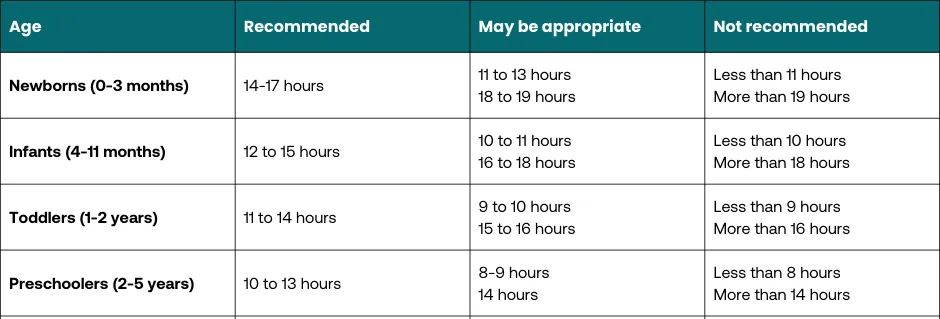
Most six month olds are aiming for around 12–15 hours of total sleep across 24 hours, including both day sleep and overnight sleep.
Some babies sit comfortably at the higher end of this range, while others need slightly less, especially if they are very alert or developmentally busy. Variation is completely normal.
Day sleep is typically spread across two to three naps, depending on where your baby is in their nap transition. This could mean anywhere between 2-3hrs of total day sleep.
6 month old awake windows
By six months, awake windows have usually stretched to around 2.5 hours, although some babies may still need slightly shorter windows, especially later in the day.
If your baby is resisting naps, waking early from naps, having frequent night wakes, or struggling to settle at bedtime, it may be a sign that their awake windows need adjusting.
Small changes to awake time can have a big impact at this age, so it’s best to increase awake windows gradually and watch how your baby responds.
How many naps should a 6 month old have?
Six months is a very common age for babies to begin the 3–2 nap transition. Some babies will already be settled on two naps, while others still need a short third nap as a bridge to bedtime.
During this transition, it is normal to see:
Short or inconsistent naps
A late afternoon nap that becomes harder to achieve
Bedtime shifting earlier or later temporarily
More night waking if awake windows are not quite right
Early morning rising if the transition has not taken place
Split nights where they are awake and happy for longer than one hour overnight
These changes are usually part of the transition process and often settle with time, consistency and age-appropriate awake windows.
Example of a 6 month old sleep schedule
Because babies are often mid-transition at this age, a 6 month old sleep schedule can look different from one family to the next.
Some babies may still need three naps, with the last nap kept short to protect bedtime.
Others may be ready for two longer naps with an earlier bedtime while they adjust.
Use the example below as a guide, not a strict schedule. Awake windows, nap lengths and bedtime may vary from day to day.
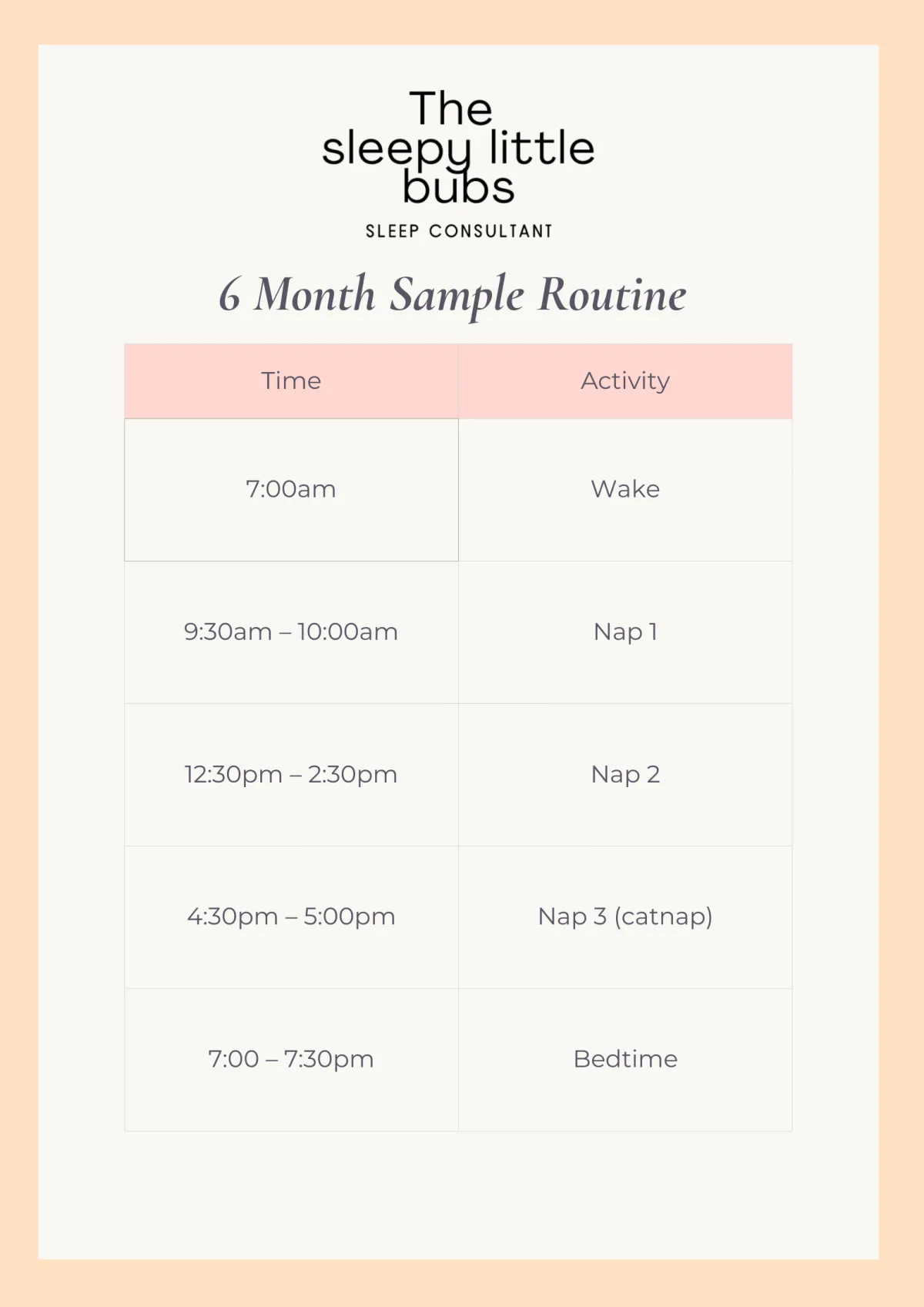
This is for babies that are in the very early stages of the 3-2 nap transition.
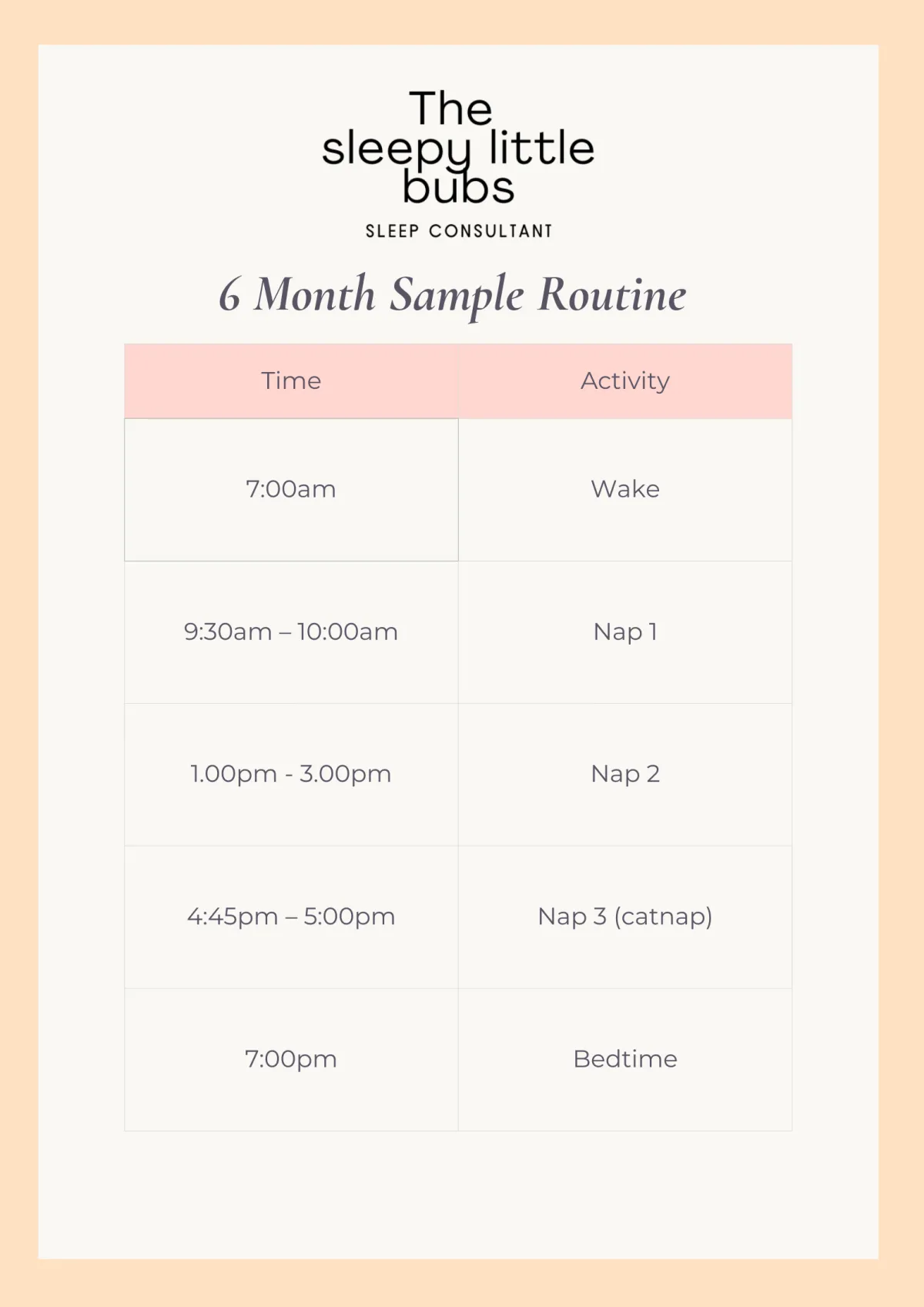
This is for babies that are in the very later stages of the 3-2 nap transition.
Common 6 month old sleep challenges
At six months, sleep can feel more predictable for some babies, but it is also very common for new challenges to appear. This is often linked to longer awake windows, nap transitions, developmental changes, feeding changes, and your baby’s sleep needs shifting again.
If your baby is waking earlier than expected, this can be linked to overtiredness, undertiredness, too much or too little day sleep, or naps that are no longer well aligned with their sleep needs. Reviewing awake windows, nap timing and bedtime can help address early morning waking.
An increase in night waking at this age is often connected to changes in daytime sleep, awake windows, settling, feeding, or developmental progress. If nights feel more broken, it can be helpful to look at frequent night waking as part of the whole 24-hour routine rather than focusing only on overnight sleep.
Short naps or catnapping
Some 6 month olds are still catnapping, especially if they are moving through the 3–2 nap transition. Short naps can be developmentally normal, but if they are causing an overtired baby by bedtime, your routine may need some adjusting.
Difficulty settling at bedtime
If bedtime suddenly becomes harder, your baby may need a change in awake windows, a more predictable wind down routine, or a slightly different nap structure. At this age, even small timing changes can make a big difference.
How to support your 6 month old's sleep
At six months, sleep is often becoming more predictable, but it can still change quickly as awake windows stretch, naps consolidate, and your baby moves through the 3–2 nap transitio
Using awake windows of around 2.5 hours
Offering two or three naps depending on where your baby is in the transition
Keeping the last nap short if your baby still needs a third nap
Adjusting awake windows gradually, not all at once
Keeping wind down routines calm and predictable
Accepting that short naps can still happen during this stage
Watching for signs of under or overtiredness
Reviewing feeds, sleep environment and settling if nights feel unsettled
If sleep feels unsettled, it does not mean you are doing anything wrong. It is often a sign that your baby’s sleep needs are shifting and their routine may need adjusting.
Looking ahead
As your baby moves beyond six months, naps continue to consolidate, awake windows stretch further, and routines often feel more predictable again once transitions settle.
The 5–24 Month Infant Course supports you through this stage and beyond, with clear guidance on nap transitions, awake windows, night waking, and sleep changes as your baby grows.
Need personalised support?
If you’re not sure what your 6 month old needs right now, a 30-minute sleep chat is a great place to start. We’ll look at your baby’s routine, awake windows, naps, feeds, settling and night wakes, then give you clear next steps.
If sleep feels really unsustainable and you want more hands-on support, our Two Week Support Package includes a personalised sleep plan plus daily support while you make changes.

Eva Beke
Certified Paediatric Sleep Consultant
Founder The Sleepy Little Bubs
I’m Eva Beke, a certified baby and toddler sleep consultant and founder of The Sleepy Little Bubs, supporting families across Australia and the world with evidence based baby and toddler sleep support.
My approach is realistic, supportive, and designed to evolve as your child grows, so you’re not just getting help for today, but confidence moving forward.
The Smarter Way to Invest in Better Sleep
Supporting sleep doesn’t have to mean starting over every time something changes.
Our sleep courses are built to support you long term, with age specific guidance that adapts as your child grows. From early routines and regressions to nap transitions and toddler sleep challenges, you’ll have a clear plan and ongoing support so you can respond with confidence at every stage.

Infant
5-24 Months

Toddler
2-4 Years
PRODUCTS
INFORMATION
SUPPORT
LEGAL




© Copyright The Sleepy Little Bubs All Rights Reserved.