
Early Morning Rising: Why Your Baby Wakes Early and How to Respond



Early morning waking is one of the most frustrating sleep challenges families face. If your baby or toddler is waking at 4:30am, 5:00am or long before you are ready to start the day, it can leave everyone feeling exhausted before the day has even begun.
A baby waking early is not always caused by one single thing. Early rising can be linked to sleep pressure, nap timing, bedtime, hunger, sleep environment or the way your child is supported back to sleep in the early morning hours.
In this blog, we’ll look at why your baby may be waking up early, what counts as an early morning wake, the most common causes, and what you can do to support a later, more settled start to the day.
What counts as early morning waking
Early morning waking is generally considered any wake that happens around one hour before your designated wake time, where your baby or toddler cannot resettle and treats it as the start of the day.
For example, if your designated wake time is 7:00am, anything before 6:00am would usually be considered an early morning rise.
This can look like:
Waking happy, alert and ready to go
Waking upset but unable to fall back asleep
Waking earlier and earlier over several days
Shortening overnight sleep without obvious cause
It is important to separate early morning rising from occasional early wakes. One rough morning here and there is normal. A repeated pattern of early starts usually means something in the full 24-hour sleep picture needs reviewing.
Why early morning rising happens
Early morning sleep is naturally lighter than the first part of the night. By the early morning hours, your baby or toddler has already had a large portion of their overnight sleep, so sleep pressure is lower and it can be harder for them to resettle.
This means small disruptions can have a bigger impact at 4:30am or 5:00am than they would earlier in the night.
Common reasons for early morning waking include:
Low sleep pressure after a long stretch of overnight sleep
Hunger or feeding patterns, especially if daytime intake is low or feeds have shifted overnight
Sleep environment, including light entering the room, household noise, temperature changes or inconsistent sleep cues
Overtiredness, which can lead to more fragmented sleep
Undertiredness, where your child has had too much day sleep or not enough awake time
Routine changes, nap transitions, illness, travel or developmental stages
Parental response, where early wakes are unintentionally reinforced through feeding, bedsharing, screen time, starting the day too early or changing the response each morning
This does not mean you have done anything wrong. Early morning wakes are hard, and most parents respond in whatever way gets everyone more sleep.
But if early rising becomes a pattern, it is worth looking at the full 24-hour sleep picture to understand what may be keeping the wake in place.
If you’re unsure whether the sleep space is contributing to early morning waking, download our free Safe & Conducive Sleep Environment Guide here to double check your baby or toddler’s sleep setup.
Undertired vs overtired and early morning waking
One of the most common reasons early morning rising is mismanaged is confusion between undertiredness and overtiredness. Both can cause early wakes, but they require very different responses.
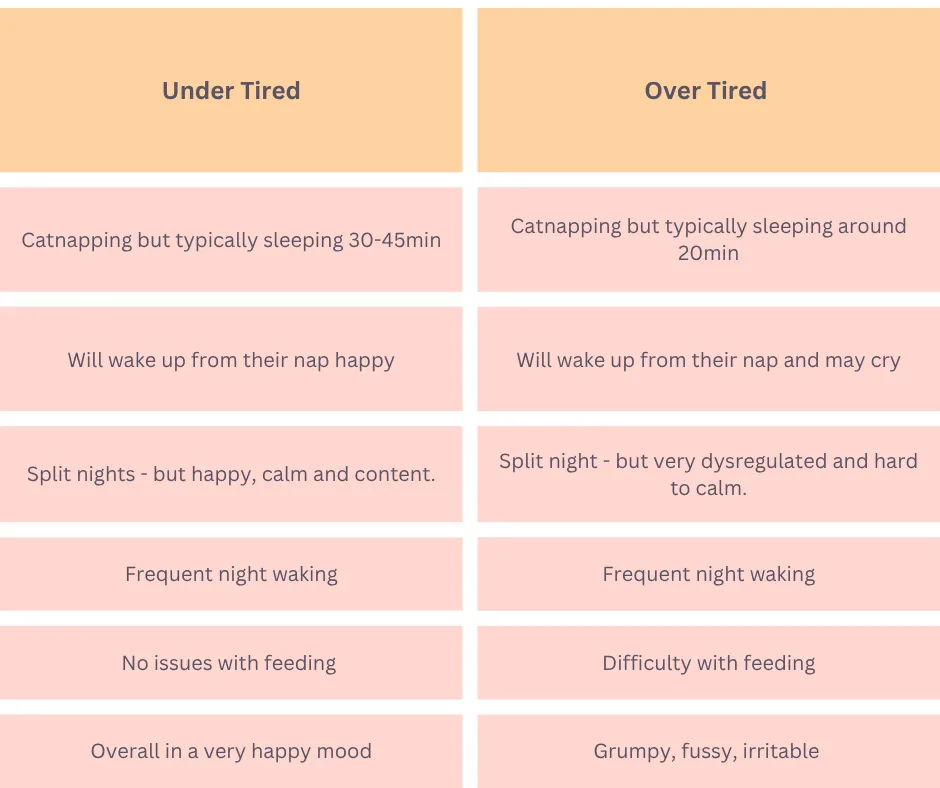
Undertired early morning waking
Early waking due to undertiredness often looks like:
Waking happy or calm
Ready to start the day
Difficulty resettling, but not distressed
Nights that feel short but not particularly unsettled
In this case, your child simply hasn’t built enough sleep pressure to stay asleep longer. This is often linked to:
Awake windows that are too short
Too much daytime sleep
Bedtime that is too early for current sleep needs
Overtired early morning waking
Early waking due to overtiredness often looks like:
Waking upset or crying
Appearing tired but unable to resettle
Early wakes that worsen over time
Increased night waking alongside early starts
Here, the nervous system is overloaded. Sleep may become lighter and more fragmented, which can make the early morning hours harder to consolidate.
This is why simply pushing bedtime later or stretching awake windows further can sometimes make early rising worse. The right response depends on whether your child needs more sleep pressure, less overtiredness, or a routine that better matches their current stage.
This chart can help you compare whether early morning waking is more likely linked to undertiredness or overtiredness.
How routines can cause early morning waking
Early morning waking is often a sign that your baby or toddler’s current routine no longer matches their sleep needs.
This can happen during:
Moving through a nap transition
Having too much daytime sleep
Not getting enough daytime sleep
Needing more awake time between naps or before bed
Going to bed too early for their current sleep needs
Feeding too early in the evening and waking hungry in the early morning
A routine that once worked beautifully can suddenly start to feel off as your child grows. When this happens, early morning rising is often one of the first signs that sleep pressure, naps, bedtime or feeding patterns may need adjusting.
For example, if bedtime is too early, the bedtime feed may also be too early. Your baby or toddler may then have a longer stretch overnight than they can comfortably manage, which can contribute to genuine hunger in the early morning hours.
Things to review include:
Total sleep across 24 hours
Nap timing and nap length
Awake windows across the day
Bedtime timing
Timing and quality of feeds
Whether your child is undertired or overtired
Consistency from day to day
Rather than reacting to one early morning, it is important to look for patterns across several days. This is where reviewing an age-appropriate routine can provide clarity and help prevent overcorrecting.
How much sleep does my child actually need?
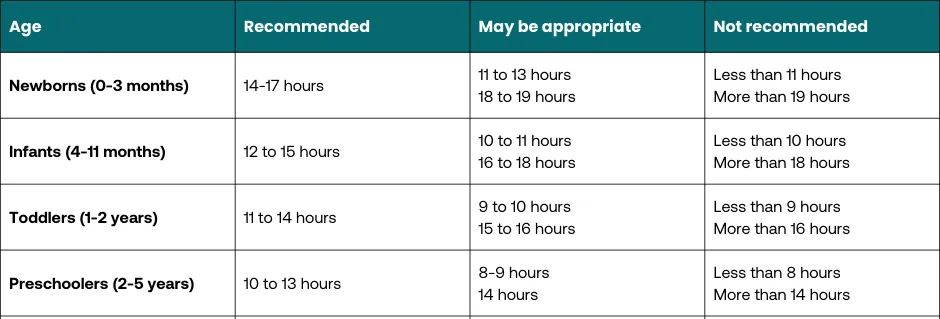
Before changing naps, bedtime or morning responses, it helps to understand how much sleep your baby or toddler actually needs across 24 hours.
Early morning waking can happen when your child is getting too much sleep, too little sleep, or when their day sleep and night sleep are no longer balanced for their age and stage.
Some children naturally sit at the lower end of sleep needs, while others need more sleep to function well. This is why it is important to look at your child’s mood, feeding, development, nap quality and overnight sleep - not just the clock.
If your child is waking early but seems happy, alert and ready to start the day, they may be getting enough total sleep or may need more awake time during the day.
If your child is waking early upset, tired, dysregulated or unable to resettle, they may be overtired, uncomfortable, hungry, or struggling with a routine that no longer matches their sleep needs.
Use the chart below as a guide, but remember that these are ranges, not strict rules.
Sleep environment and early morning waking
Your baby or toddler’s sleep environment can play a much bigger role in early morning waking than many families realise.
In the early morning hours, sleep is lighter and your child is more easily disrupted by:
Light entering the room
Noise in the household or outside
Temperature changes
Inconsistent sleep cues
Increased stimulation close to morning
Even small amounts of morning light can signal to the brain that it is time to wake. This is especially relevant during seasonal changes, daylight savings, or when sunrise starts shifting earlier.
Before changing routines, dropping naps or stretching awake windows, it is worth reviewing your child’s sleep environment first.
Is the room truly dark in the early morning?
Are there new noises starting around wake time?
Has the room temperature changed overnight?
Are sleep cues consistent from bedtime through to morning?
Small environment changes are often one of the simplest ways to improve early morning waking without changing the rest of the day.
A small change to the sleep environment can sometimes make a big difference, especially in the early morning hours.
Download our free Safe & Conducive Sleep Environment Guide here to double check your baby or toddler’s sleep space.
What not to do when early morning waking starts
When early morning waking becomes a pattern, it is tempting to change everything quickly. But big or inconsistent changes can sometimes make early rising worse.
Stretching awake windows too quickly
Pushing bedtime later when your child is already overtired
Dropping naps before your child is ready
Changing the morning response from day to day
Starting the day too early if your goal is a later wake time
Reinforcing the early wake with feeding, bedsharing or getting up for the day before your designated wake time, unless your child genuinely needs support
Early morning waking is rarely fixed by one dramatic adjustment. Small, consistent changes are usually far more effective.
How to respond to early morning waking
Supporting early mornings usually involves looking at the full 24-hour sleep picture, not just the wake itself.
This may include:
Identifying whether undertiredness, overtiredness, hunger or environment is the main driver
Reviewing naps, awake windows and total sleep across 24 hours
Checking whether bedtime and the bedtime feed are timed appropriately
Protecting naps and bedtime during nap transitions
Making sure the sleep environment supports sleep past sunrise
Keeping your response consistent in the early morning hours
Giving any routine change several days to settle before adjusting again
It is about responding to what your child needs now, not what worked a few weeks or months ago.
Looking ahead
Early morning rising is a signal, not a failure. It usually means your child’s sleep needs are shifting and their routine or environment needs adjusting to match.
When early mornings are addressed in context rather than in isolation, sleep often begins to settle again without drastic changes.
For families wanting step by step guidance through sleep changes, routines, awake windows, and night waking, the 5–24 Month Infant Course and Infant and Toddler Bundle provide age specific support that evolves with your child, helping you understand when to hold steady, when to adjust, and how to support sleep confidently as your child grows.
Need personalised support?
If early morning waking is still happening and you’re not sure whether it’s routine, hunger, environment, overtiredness or undertiredness, a 30-minute sleep consultation is a great place to start.
We’ll look at your baby or toddler’s routine, awake windows, naps, feeds, sleep environment, settling and night wakes, then give you clear next steps tailored to your child.
If sleep feels really unsustainable and you want more hands-on support, our Two Week Sleep Support package includes a personalised sleep plan, a 60-minute consultation and 14 days of weekday support while you make changes.
The Sleepy Little Bubs is based in Melbourne and offers virtual baby and toddler sleep consultations across Australia and worldwide, with in-home sleep support available in Melbourne.

Eva Beke
Certified Paediatric Sleep Consultant
Founder The Sleepy Little Bubs
I’m Eva Beke, a certified baby and toddler sleep consultant and founder of The Sleepy Little Bubs, supporting families across Australia and the world with evidence based baby and toddler sleep support.
My approach is realistic, supportive, and designed to evolve as your child grows, so you’re not just getting help for today, but confidence moving forward.
The Smarter Way to Invest in Better Sleep
CLIENT STORIES
Real Families. Real Rest.

"I actually can't believe how much your infant course has changed my little ones sleep... and in such a short amount of time. Thank you!"
- Sofija


"Ok, so here I am thinking this is just another "ohh most comprehensive" guide blah blah blah... wowza... the toddler course literally has everything, and I can't even tell you how many times I have referred back to it. Best money spend on sleep so far"
- Christina

"Hey I just wanted to let you know, I purchased your toddler course and within days we've gone from bed sharing and multiple wake ups to him sleeping in his own bed and sleeping through the night. What is this magic?"
- Lisa
PRODUCTS
INFORMATION
SUPPORT
LEGAL




© Copyright The Sleepy Little Bubs All Rights Reserved.