
The 1–0 Nap Transition:
Moving Out of Day Sleeps



The 1–0 nap transition marks the final major change to your child’s day sleep. For many families, this stage feels confusing because some days look fine without a nap, while other days completely fall apart.
This transition is less about age and more about sleep needs, temperament, and how well overnight sleep is holding together. Understanding when your toddler is truly ready, and how to support the transition without creating overtiredness, is key.
What is the 1–0 nap transition?
The 1–0 nap transition refers to the gradual move from one daytime nap to no naps at all.
As toddlers grow, their total sleep needs decrease and they are able to tolerate longer periods of wakefulness across the day. Eventually, daytime sleep is no longer required to support overnight sleep.
This transition is permanent and should be approached cautiously.
When does the 1–0 nap transition happen?
Most children move through the 1–0 nap transition between three and five years of age. Some children may show signs earlier, while others continue to benefit from a nap well into preschool.
Age alone is not a reliable indicator. Many toddlers appear ready on some days but still need a nap on others.
This is why dropping naps too early often leads to more sleep disruption rather than better nights.
Signs your child may be ready
True readiness for the 1–0 nap transition usually shows up as a consistent pattern rather than occasional resistance.
Signs may include:
Refusing naps most days despite adequate awake time
Taking a nap but bedtime becomes very late
Taking a nap and then struggling to fall asleep overnight
Managing long days without becoming overtired
Nights remaining settled without a nap
These signs should be present consistently over several weeks before fully dropping the nap.
When nap refusal does not mean readiness
Many toddlers resist naps for reasons unrelated to sleep needs.
Nap refusal can also be linked to:
Growing independence
Increased boundary testing
Stimulation or excitement
Fear of missing out
This is why it is important to look at the whole picture, including behaviour, mood, and night sleep, before removing naps entirely.
Nap resistance that coincides with bedtime battles or overnight disruption often indicates that sleep is still needed.
How dropping naps affects bedtime
When naps are dropped, bedtime usually needs to move earlier to prevent overtiredness.
If bedtime remains late without a nap, overtiredness can show up as:
Increased emotional dysregulation
Early morning waking
Night waking
Difficulty settling
Supporting this transition often means protecting night sleep more than focusing on how the day looks.
What does the transition look like in practice?
Many children move through a long in-between phase where:
Some days include a nap
Some days do not
Bedtime shifts earlier on no-nap days
Rather than forcing a full drop, many families find success with:
Offering quiet rest instead of sleep
Keeping routines predictable
Adjusting bedtime based on nap or no-nap days
A realistic structure for this stage is outlined in the 2+ year sleep routine, which supports toddlers as day sleep fades.
Example Routine During the 1-0 Nap Transition
Many toddlers move through a phase where some days include a nap and others do not. Bedtime often needs to adjust depending on how the day unfolds.
Every child varies, but protecting night sleep with flexible bedtimes is often key during this stage.
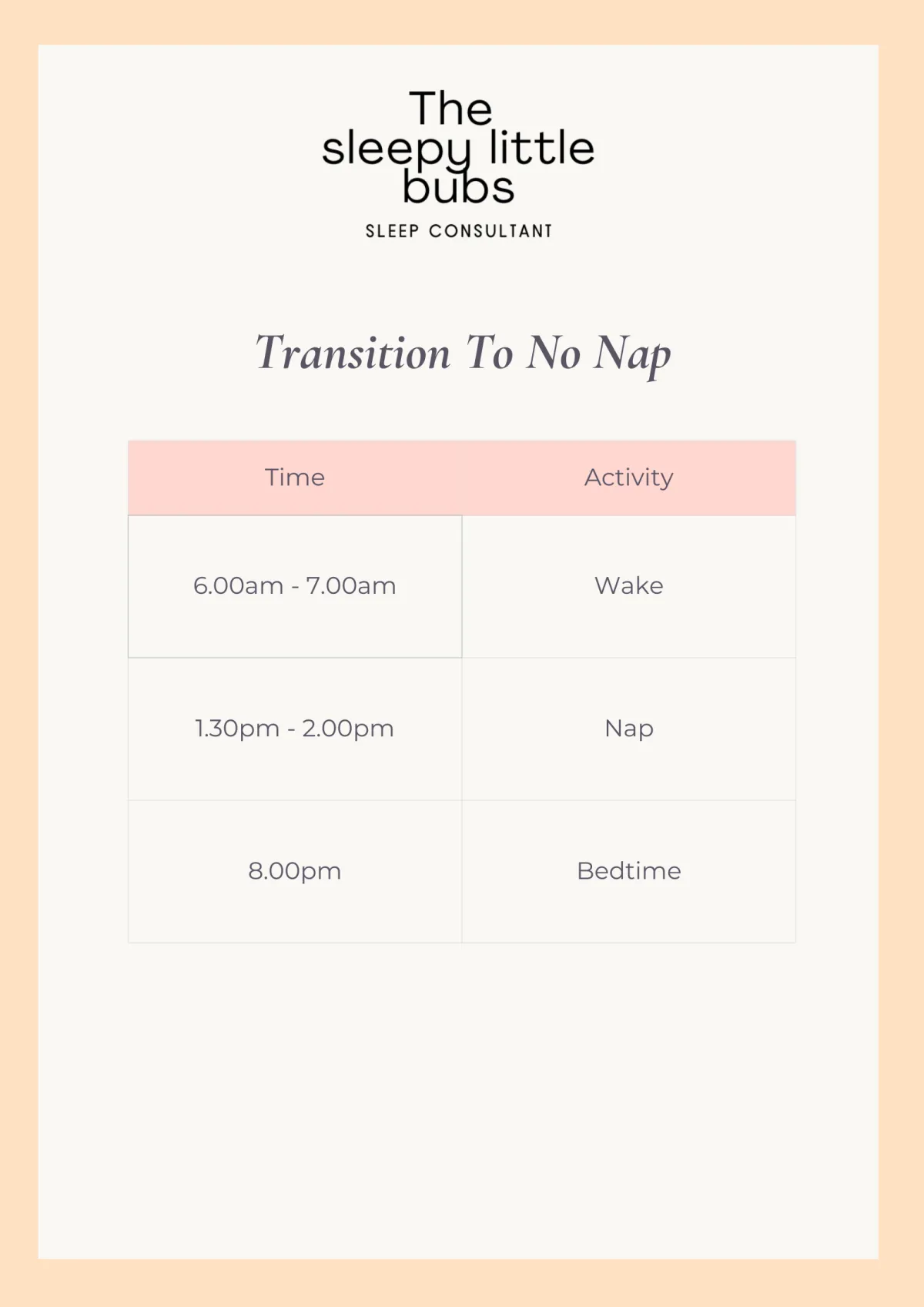
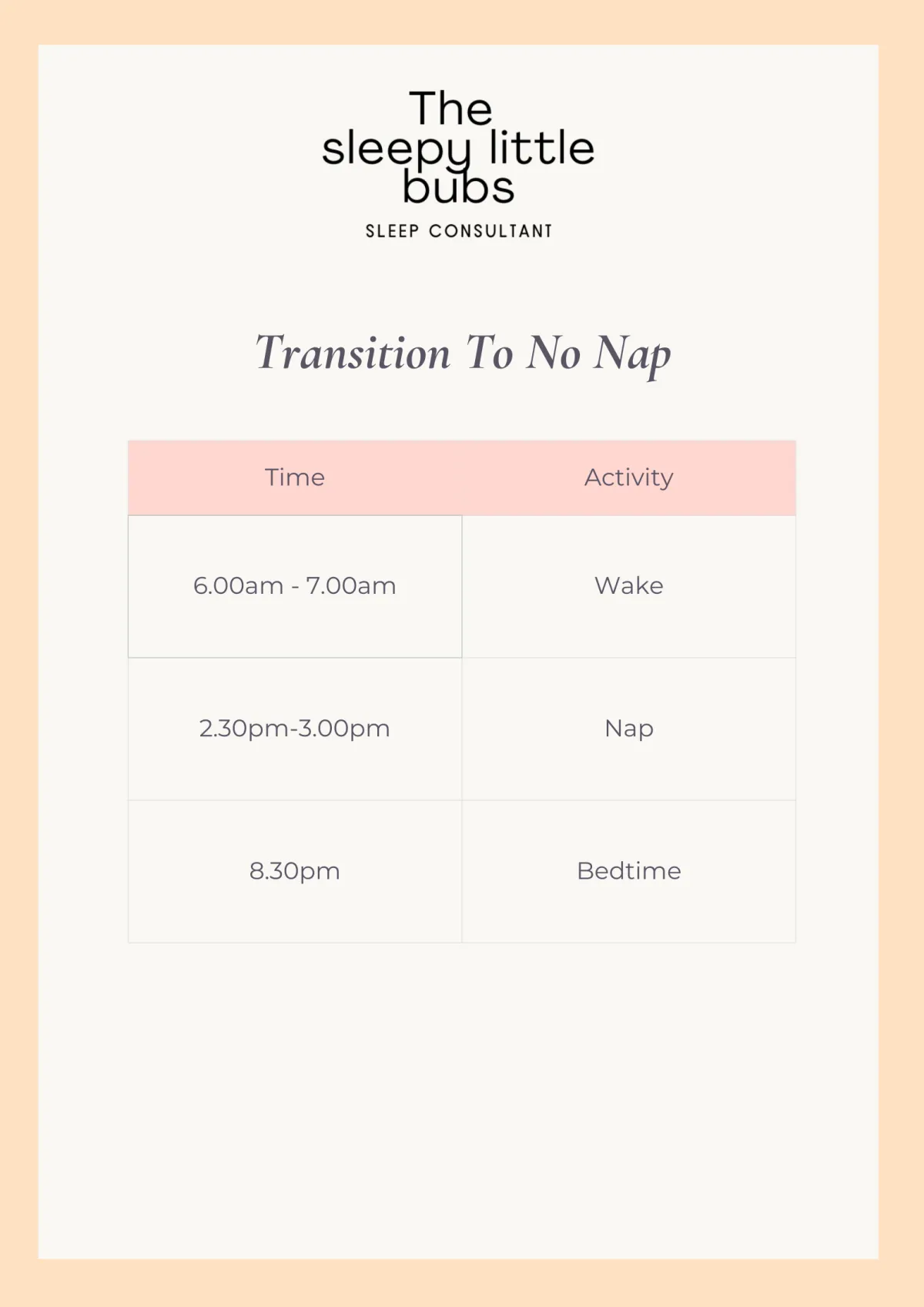
This in between phase can last several months, which is why flexibility rather than rushing the transition tends to lead to better long term sleep outcomes.
Behaviour changes during the 1–0 nap transition
As toddlers lose daytime sleep, behaviour can become more challenging temporarily.
This may show up as:
Increased emotional outbursts
Difficulty settling at night
More resistance around routines
Frequent requests after bedtime
Some children may also start getting out of bed more frequently as fatigue and boundary testing overlap.
A calm, supportive toddler environment can help reduce overstimulation and support smoother evenings during this stage.
Common mistakes during the 1–0 nap transition
Some common challenges include:
Dropping naps too early
Keeping bedtime too late
Expecting immediate improvement
Removing naps during periods of illness, travel, or big change
Gradual adjustment and flexibility tend to lead to far better outcomes than sudden removal.
Supporting your toddler through the transition
Helpful strategies during the 1–0 nap transition include:
Offering rest time instead of sleep
Using earlier bedtimes on no-nap days
Maintaining consistent routines
Keeping expectations realistic
This stage is about supporting regulation, not pushing independence.
FAQs
How do I know if my toddler is ready to drop their nap?
True readiness shows as consistent nap refusal over several weeks while overnight sleep remains settled. Occasional skipped naps or resistance alone usually does not mean your child is ready.
What age do toddlers stop napping?
Describe the item or answer the question so that site visitors who are interested get more information. You can emphasize this text with bullets, italics or bold, and add links.
Should I force my toddler to nap?
No. Instead of forcing sleep, many families move toward quiet rest time. This protects downtime without creating bedtime struggles or overtiredness.
What time should bedtime be when naps stop?
Describe the item or answer the question so that site visitors who are interested get more information. You can emphasize this text with bullets, italics or bold, and add links.
Is nap refusal always part of the 1–0 nap transition?
No. Nap resistance is often developmental and linked to independence or stimulation rather than reduced sleep needs.
Looking ahead
Once the 1–0 nap transition settles, many families find nights become more predictable again and evenings feel calmer.
Having guidance through toddler sleep changes can make this stage far less overwhelming.
The Toddler Course supports families through toddler sleep challenges, including nap transitions, bedtime resistance, overnight waking, and emotional development, with practical strategies that grow with your child.
Need personalised support?
If your toddler is suddenly resisting naps, fighting bedtime, waking overnight or struggling more with separation, you’re likely navigating a mix of developmental changes and shifting sleep needs all at once.
For families wanting clear, targeted guidance, a 30-minute sleep consultation can help you understand what’s driving the changes and what to adjust right away.
For more complex or ongoing sleep challenges, our Two Week Sleep Support package includes a personalised sleep plan, a 60-minute consultation and 10 days of weekday support to help you adjust routines, troubleshoot challenges and move through this stage with confidence.
If you’re looking for consistent support through this stage, Two Week Sleep Support is the best place to start.
The Smarter Way to Invest in Better Sleep
As toddlers grow, sleep needs continue to change. Nap transitions, bedtime resistance, and emotional development can all impact sleep during this stage.
If you want guidance that evolves with your child beyond infancy, the Toddler Sleep Course supports families through nap transitions, bedtime challenges, overnight waking, and independent sleep into the preschool years.

Toddler
2-4 Years

Infant
5-24 Months
PRODUCTS
INFORMATION
SUPPORT
LEGAL


© Copyright The Sleepy Little Bubs All Rights Reserved.