
When to stop swaddling your baby (and how to do it safely)
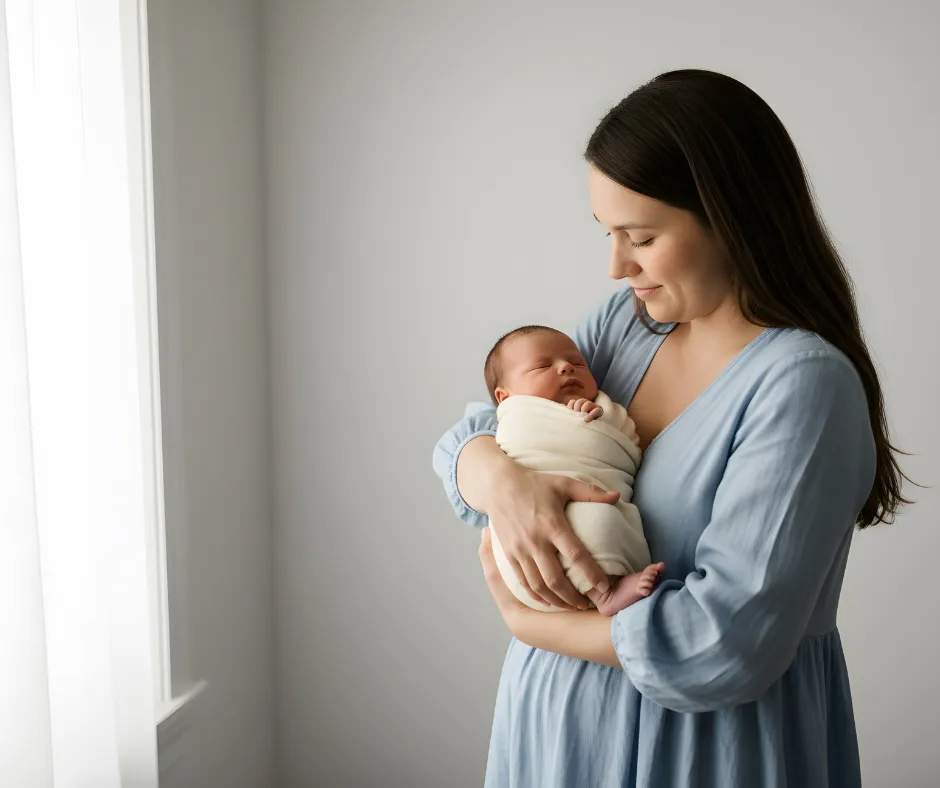


Swaddling can be a lifesaver in the early weeks. It soothes the startle reflex, helps your newborn feel secure, and often means more settled sleep for everyone. But there comes a point where swaddling is no longer safe, and knowing when to stop swaddling your baby and how to handle the transition can make a real difference to both safety and sleep.
Here is everything you need to know.
When to stop swaddling a baby
The answer is simple: as soon as your baby shows any signs of attempting to roll.
For many babies, this happens somewhere between 8 and 16 weeks, but it can occur earlier or later. Rolling while swaddled significantly increases the risk of airway obstruction, which is why the AAP (American Academy of Pediatrics), Red Nose Australia, and the Lullaby Trust (UK) all recommend stopping swaddling at the first sign of rolling, no exceptions.
This timing often overlaps with the 4 month sleep regression, when babies go through major neurological changes and sleep can feel more disrupted. These two things tend to happen around the same time, but the reason to stop swaddling is always safety, not sleep behaviour.
When to stop swaddling baby to sleep is not a judgement call based on how well your baby is sleeping. It is a safety decision based on what your baby's body is starting to do.
When to stop swaddling according to the AAP
AP swaddling guidelines are clear: once a baby shows signs of rolling, swaddling must stop. The AAP recommends that babies are always placed on their back on a firm, flat surface with no loose items in the sleep space, and that swaddling is only used while the baby is not yet able to roll.
Red Nose Australia and the Lullaby Trust (UK) echo this guidance. If you are ever unsure, the rule is: rolling signs mean swaddling ends, even if rolling has not happened yet.
Why the transition can feel hard
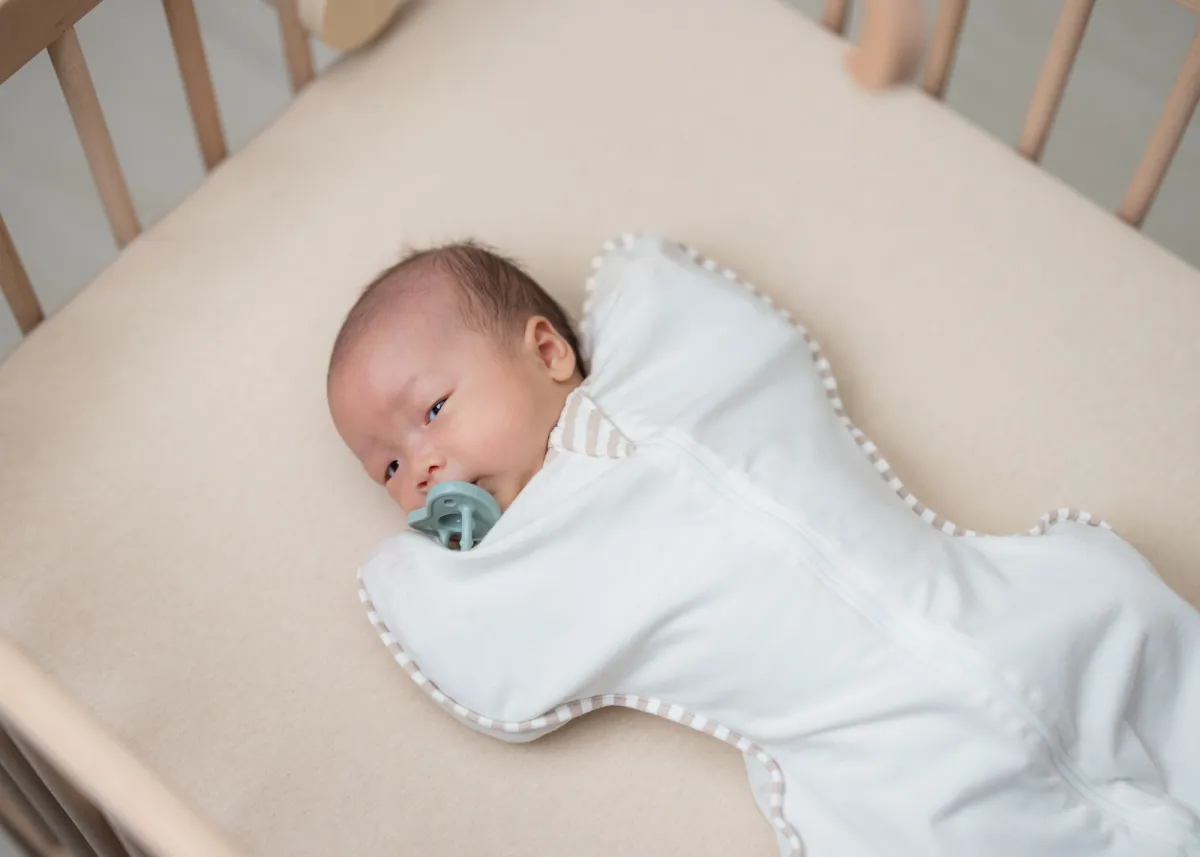
Many babies sleep beautifully while swaddled. When those arms come free, you might notice:
More movement during sleep
Shorter naps
Increased waking overnight
More difficulty settling to start with
This is completely normal. Swaddling suppresses the startle reflex, and once it is removed, babies need time to learn how to manage that movement on their own.
The adjustment period does not mean your baby has forgotten how to sleep. It means they are learning a new skill.
How to stop swaddling baby
There is no single right way, but there are a few common approaches that work well.
One arm out
Some families start by leaving one arm out for a few nights, then move to both arms out once their baby adjusts. This can work well for babies who still rely heavily on the swaddle but are close to rolling.
Both arms out
Other babies do better with a clean break. Moving straight to both arms out avoids drawing out the adjustment and can lead to faster settling overall. Some parents find this approach simpler and less disruptive in the long run.
Transition products
Some families use transitional sleep suits or arms out sleep sacks to bridge the gap between swaddling and fully unrestricted sleep. These can offer a sense of containment while still allowing safe movement.
Regardless of the approach you choose, once rolling begins, both arms must be free. There is no safe way to continue swaddling once your baby is attempting to roll.
What to dress your baby in once swaddling ends
Once swaddling stops, your baby should sleep in an arms out sleep sack or sleeping bag that fits correctly and aligns with safe sleep recommendations. This keeps the sleep space clear while still providing warmth and comfort.
For guidance on TOG ratings and what to use at each age and stage, our baby sleep sacks guide covers everything you need to know.
It is also important to make sure your baby is dressed appropriately for the room temperature. Overheating can contribute to unsettled sleep and discomfort, so always follow the manufacturer's clothing guide for the sleep sack you are using.
Safe sleep during and after the transition
Even during unsettled periods, safe sleep practices must stay consistent.
Your baby should always be placed:
On their back
On a firm, flat mattress
In a clear sleep space free of loose items, pillows, and blankets
These recommendations are supported by Red Nose Australia, the Lullaby Trust (UK), and the AAP. For a full overview of safe sleep basics, our safe sleep guidelines blog covers the non-negotiables for every sleep space.
Sleep may feel more disrupted for a short period after the transition. That is expected. But safety should never be adjusted to improve sleep temporarily.
How long does the swaddle transition take?
For most babies, the transition out of the swaddle takes anywhere from a few nights to a couple of weeks. If sleep disruption lasts longer than that, it is usually worth looking at:
Awake windows
Day sleep structure
Settling support
Sleep environment
A prolonged rough patch after the swaddle transition is rarely about the swaddle itself. It is usually a sign that sleep needs have shifted alongside your baby's development, and a few adjustments can make a big difference.
Supporting sleep once the swaddle is gone
Once your baby's arms are free, a few things can really help sleep come back together:
A consistent bedtime routine
Clear sleep cues (like a sleep sack being put on)
Appropriate awake windows for your baby's age
A calm and steady settling approach
This stage is not about pushing independence before your baby is ready. It is about supporting them through a significant physical and neurological change in a way that feels manageable for both of you.
If you are based in Melbourne and want hands on help navigating this transition, Eva also offers in home sleep support across Melbourne and surrounding areas.
Looking ahead
Transitioning out of the swaddle is one of the first big sleep changes families navigate, but it will not be the last. Sleep keeps evolving through regressions, nap transitions, and developmental leaps.
If your baby is between five and twenty four months and sleep still feels hard after the swaddle transition, the Sleepy Little Bubs Infant Sleep Course provides age specific guidance through each stage, including routines, night waking, settling support, and what comes next as your baby grows.
Need personalised support?
If your baby’s sleep has completely fallen apart since freeing their arms, or you are staring at a rolling baby and feel terrified to drop the swaddle, a 30-minute sleep chat is the perfect next step.
We will get straight to the point and look at your baby's current settling habits, awake windows, and sleep environment to build a clear plan of attack for the arms-out transition. You will walk away with practical, no-fuss strategies to calm the startle reflex and settle your baby safely, without dragging out the sleepless nights.
This is ideal for exhausted mums who want fast, personalised expert reassurance and a clear plan of action without committing to a full sleep package.
Eva Beke
Certified Paediatric Sleep Consultant
Founder The Sleepy Little Bubs
I’m Eva Beke, a certified baby and toddler sleep consultant and founder of The Sleepy Little Bubs, supporting families across Australia and the world with evidence based baby and toddler sleep support.
My approach is realistic, supportive, and designed to evolve as your child grows, so you’re not just getting help for today, but confidence moving forward.
The Smarter Way to Invest in Better Sleep
Supporting sleep doesn’t have to mean starting over every time something changes.
Our sleep courses are built to support you long term, with age specific guidance that adapts as your child grows. From early routines and regressions to nap transitions and toddler sleep challenges, you’ll have a clear plan and ongoing support so you can respond with confidence at every stage.

Infant
5-24 Months
Toddler
2-4 Years
PRODUCTS
INFORMATION
SUPPORT
LEGAL



© Copyright The Sleepy Little Bubs All Rights Reserved.