Baby sleep sacks: what to use and when



A baby sleep sack is one of the most useful tools you will reach for from the newborn days right through to toddlerhood. But with so many options, sizes, and TOG ratings out there, figuring out what your baby actually needs at each stage can feel overwhelming.
This guide breaks it all down: what type of sleep sack baby needs at every age, when to make the switch, how to get the TOG right, and how sleep sacks fit into a safe, comfortable sleep setup.
Safe sleep always comes first
Before choosing any sleep sack, your baby's sleep environment needs to meet current safe sleep guidelines. Red Nose Australia, the Lullaby Trust (UK), and the American Academy of Pediatrics (AAP) all agree on the essentials:
A firm, flat mattress
A clear sleep space with no loose items, blankets, pillows, or toys
Baby placed on their back for every sleep
A sleep sack supports safe sleep, but it cannot replace it. If you are still setting up your baby's sleep space, start with our safe sleep guidelines
Why a baby sleep sack is recommended
Sleep sacks are recommended by safe sleep organisations worldwide because they provide warmth without the risks that come with loose bedding. Unlike a blanket, a sleep sack stays on your baby's body and moves with them. There is no risk of it shifting over their face or airway during sleep.
A baby sleep sack also works as a consistent sleep cue. When your baby is placed into their sleep sack before each nap and bedtime, it signals that sleep is coming. Over time, this association builds, and the sack becomes a part of the routine your baby recognises and responds to.
How sleep sacks support better sleep
Beyond safety, the right sleep sack can help your baby sleep more soundly by keeping their body temperature regulated through the night. Babies who are too warm or too cold are more likely to wake between sleep cycles, especially during naps and in the early morning hours.
A well fitted sleep sack in the correct TOG for your room temperature helps your baby stay comfortable without extra layers or blankets getting in the way.
When sleep cycles are fragile (during regressions, developmental leaps, or nap transitions), comfort and consistency matter even more. This is where your baby's overall sleep environment plays a big role in keeping sleep on track.
What to use at each age and stage
Newborn stage
In the early weeks, many newborns sleep best when swaddled. Swaddling helps calm the startle (Moro) reflex and supports early sleep regulation.
If you are wondering how to swaddle a baby safely, the key rules are:
Use a product designed specifically for swaddling
Keep arms secured while your baby is not yet showing signs of rolling
Always place your baby on their back
Stop swaddling at the first signs of rolling
Some families choose to use an arms out sleep sack from birth instead of swaddling. Both options can work well depending on your baby and the product being used.
For more on safe swaddling and early sleep, our free Newborn Sleep Guide walks you through the essentials.
Rolling stage and early mobility
Once your baby shows signs of rolling or attempting to roll, swaddling must stop immediately. This is a non negotiable safety rule supported by Red Nose Australia, the Lullaby Trust, and the AAP.
At this stage, your baby needs an arms free sleep sack that allows full movement of the arms and hips. The fit should be snug enough to stay in place but not so tight that it restricts natural movement.
This transition often catches parents off guard. For a step by step guide on making the switch, our blog on when to stop swaddling.
Older babies (around 6 to 12 months)
As your baby becomes more mobile and aware, their sleep sack needs to keep up. At this stage:
Comfort becomes increasingly important for resettling between sleep cycles (link to: baby sleep cycles blog)
Overheating or restriction can disrupt sleep
Incorrect sizing or the wrong TOG can contribute to catnapping, frequent night waking, or unsettled early mornings
If sleep has changed and you are not sure why, it is always worth checking whether the sleep sack still fits correctly and matches the current room temperature before adjusting routines.
Toddlers
Toddlers can continue using sleep sacks safely for as long as they fit correctly and allow free movement. At this stage, a sleep sack can:
Provide warmth without loose bedding in the cot
Help reduce night time wandering once your toddler moves to a bed
Act as a clear, familiar sleep cue at bedtime
If your toddler transitions out of a sleep sack, keep the rest of the sleep environment as consistent as possible. Changing too many things at once can unsettle sleep.
TOG ratings and what they mean
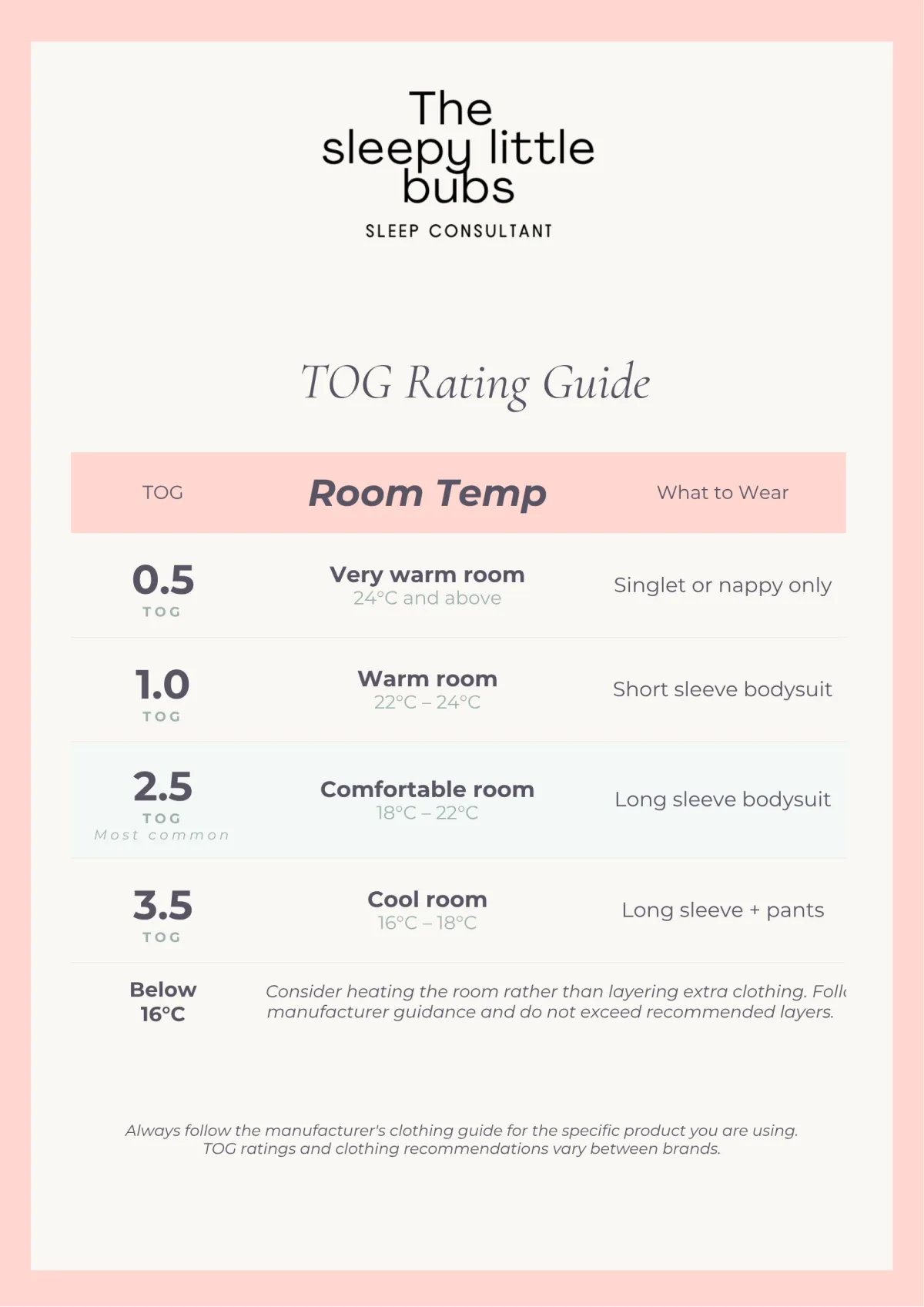
Modern sleep sacks come with TOG ratings that indicate how warm they are. Choosing the right TOG for your room temperature is one of the simplest ways to support comfortable, uninterrupted sleep.
When using a sleep sack:
Always follow the manufacturer's TOG and clothing guidelines for the specific product you are using
Choose the TOG based on room temperature, not the season alone
Avoid adding extra layers beyond what the manufacturer recommends
Guessing layers or mixing advice from different brands can increase the risk of overheating, which is both a comfort concern and a safety concern.
Signs a sleep sack is not working
A sleep sack may be contributing to disrupted sleep if:
Your baby feels hot or sweaty on the chest or back of the neck
Your baby appears uncomfortable or restricted during sleep
Sleep worsens after a size or TOG change
Night waking or early mornings increase without any other changes to routine
If something feels off, reviewing both sleepwear and the broader sleep environment together is usually more helpful than jumping to routine changes.
Common mistakes with sleep sacks
Some of the most common issues we see include:
Continuing to swaddle past rolling readiness
Using the wrong TOG for the room temperature
Sizing up too early, which reduces warmth and fit
Layering beyond the manufacturer's guidance
These mistakes are usually well intentioned, but they can quietly contribute to disrupted sleep without parents realising the connection.
Looking ahead
Sleep sacks are a simple but powerful part of your baby's sleep setup. Getting the right one for your baby's age, stage, and room temperature can make a real difference to how well sleep holds together, especially during those tricky transitions.
If your baby is between five and twenty four months and sleep is still feeling hard, the Sleepy Little Bubs Infant Sleep Course offers age specific guidance to help you navigate what comes next, with the same calm, evidence informed approach you will find throughout this blog.
If you are in the early weeks and want a clear starting point, our free Newborn Sleep Guide covers safe sleep setup, settling techniques, and what to expect in those first few months.
Need help choosing the right sleep sack for your baby?
If your baby's sleep has suddenly derailed, they are waking up freezing in the early hours, or you are terrified of making the transition from swaddle to arms-free sleeping, a 30-minute sleep chat is the perfect next step.
We will get straight to the point and review your baby’s exact sleep setup, including room temperature, TOG ratings, layering, and daytime routines. You will walk away with a clear, no-fuss plan to ensure your baby is perfectly comfortable and safe so everyone can get back to sleeping through the night.
This is ideal for exhausted mums who want fast, personalised expert reassurance and a clear plan of attack without committing to a full sleep package.
Eva Beke
Certified Paediatric Sleep Consultant
Founder The Sleepy Little Bubs
I’m Eva Beke, a certified baby and toddler sleep consultant and founder of The Sleepy Little Bubs, supporting families across Australia and the world with evidence based baby and toddler sleep support.
My approach is realistic, supportive, and designed to evolve as your child grows, so you’re not just getting help for today, but confidence moving forward.
The Smarter Way to Invest in Better Sleep
Supporting sleep doesn’t have to mean starting over every time something changes.
Our sleep courses are built to support you long term, with age specific guidance that adapts as your child grows. From early routines and regressions to nap transitions and toddler sleep challenges, you’ll have a clear plan and ongoing support so you can respond with confidence at every stage.

Infant
5-24 Months
Toddler
2-4 Years
PRODUCTS
INFORMATION
SUPPORT
LEGAL



© Copyright The Sleepy Little Bubs All Rights Reserved.