
The 2–1 Nap Transition: Timing, Signs and How to Support It


The transition from two naps to one can be one of the trickiest nap transitions for parents to navigate!
One week your toddler is happily having two naps, and the next they're refusing their morning nap, taking FOREVER to fall asleep in the afternoon or suddenly fighting bedtime like they've never been tired in their life.
And naturally, you're wondering whether it's finally time to drop that morning nap.
But just because your toddler starts refusing a nap doesn't automatically mean they're ready to move to one nap.
Sometimes their awake windows need adjusting, they're getting more daytime sleep than they actually need or there simply isn't enough sleep pressure for their second nap.
Other times, they're genuinely ready to transition to one longer lunchtime nap.
And this is where things can get particularly frustrating!
Drop the morning nap too early and your toddler might struggle to make it through to lunchtime. Keep offering two naps for too long and suddenly bedtime is taking an hour, early mornings are creeping in or they're wide awake in the middle of the night.
The key is understanding your toddler's individual sleep needs, how much sleep they're getting across 24 hours and whether they can comfortably manage the longer awake periods that come with a one-nap routine.
So let's look at the signs your toddler might be ready for the 2–1 nap transition, what can happen when the timing isn't quite right and how to make the adjustment without completely throwing their sleep off track.
What is the 2–1 nap transition?
The 2–1 nap transition is when your toddler moves from having two daytime naps to just one, usually around the middle of the day.
As toddlers grow, they're generally able to manage longer periods awake, which means they no longer need two separate naps to get through the day.
For example, your toddler might have previously been having a morning nap around 9.30am and another nap after lunch.
But as their awake windows increase, fitting both naps into the day can become increasingly difficult.
You might notice that the morning nap is pushing the afternoon nap later, your toddler is taking FOREVER to fall asleep for their second nap or bedtime is suddenly becoming a battle.
This often happens because their sleep needs are changing, and they're no longer building enough sleep pressure to comfortably fit two naps and a full night's sleep into 24 hours.
Eventually, one longer nap around lunchtime may be enough to meet their daytime sleep needs while allowing for appropriate awake time before bedtime.
But this doesn't mean every toddler will suddenly start having a beautiful two-hour lunchtime nap the moment you drop their morning sleep!
Some toddlers transition relatively easily, while others need time to adjust to the longer awake periods.
And it's important to remember that nap refusal isn't always a sign your toddler is developmentally ready for one nap.
Sometimes their existing routine simply needs adjusting.
When does the 2–1 nap transition happen?
Most toddlers transition from two naps to one somewhere between 15 and 18 months, although some are ready earlier and others may still need two naps closer to 20 months.
And that's completely fine!
But one of the biggest mistakes I see parents make is assuming that because their 12-month-old has suddenly started refusing their morning or afternoon nap, they're ready to move to one nap.
PLEASE don't rush to drop a nap just because your toddler has turned one!
Around 12 months, it's not uncommon for toddlers to start resisting naps, taking longer to fall asleep or experiencing changes to their overnight sleep.
This is often referred to as the 12 Month Sleep Regression, although these changes aren't necessarily caused by a specific developmental regression.
Sometimes your toddler is busy practising new skills, experiencing separation anxiety or simply needing an adjustment to their existing awake windows.
And sometimes they're getting more daytime sleep than they actually need, which means they don't have enough sleep pressure to fall asleep for their second nap.
None of these things automatically means they're ready to manage an entire day with just one nap.
For example, your 12-month-old might suddenly refuse their afternoon nap for three days in a row, but still struggle to stay awake comfortably until lunchtime.
Dropping the morning nap completely could leave them with an excessively long awake window that they're simply not ready to manage.
On the other hand, a toddler who's consistently refusing one nap, comfortably managing longer awake periods and having difficulty fitting two naps into the day might genuinely be approaching the transition.
The key is looking at what's happening consistently over time rather than making a permanent change after a few difficult days.
Age can give us a general guide, but your toddler's individual sleep needs, awake windows and overall sleep patterns should determine when the transition happens.
Signs your child may be ready for the 2-1 nap transition
So how do you actually know when your toddler is ready to drop from two naps to one?
One of the biggest signs is that they're consistently refusing one of their naps, despite having appropriate awake windows.
Perhaps your toddler was previously falling asleep quite easily for their morning and afternoon naps, but now you're spending 30–45 minutes trying to settle them for their second nap, only for them to be wide awake and showing absolutely no interest in sleeping!
Or maybe they're having a beautiful morning nap, but that afternoon nap is becoming almost impossible to achieve.
You might also notice bedtime getting later and later because their second nap is finishing too late in the afternoon.
And suddenly, your toddler who was previously falling asleep around 7.00pm is still wide awake at 8.30pm!
Other signs can include increased bedtime resistance, early morning waking, frequent night waking or longer periods awake overnight.
But none of these signs on their own automatically means your toddler is ready to drop a nap.
For example, if your toddler is refusing their afternoon nap, it might simply be that their morning nap is too long or they're not getting enough awake time between naps.
Likewise, if they're suddenly waking at 5.00am or spending two hours awake overnight, we need to consider whether they're getting more sleep across 24 hours than they actually need.
Sometimes adjusting the timing or length of their existing naps is enough to improve things without needing to transition to one nap just yet.
And this is particularly important around 12 months, when temporary nap resistance can easily be mistaken for readiness to drop a nap.
What I want to see is a consistent pattern, not just three difficult days!
If your toddler has been struggling to fit two naps into their day for a couple of weeks, can comfortably manage longer awake windows and is showing signs that their overall sleep needs have changed, then it might be time to consider the transition.
The goal is to work out whether your toddler genuinely needs one nap or whether their current two-nap routine simply needs adjusting.
Because those are two very different things!
Signs your child may not be ready for the 2-1 nap transition
Just because your toddler has suddenly started refusing a nap doesn't mean it's time to drop down to one!
And this is particularly important around 12 months, when nap resistance can become more noticeable.
Perhaps your toddler has been happily having two naps for months, but suddenly they're fighting their morning nap, taking FOREVER to settle in the afternoon or waking more frequently overnight.
It's tempting to assume they're ready for one nap, but sometimes their existing routine simply needs adjusting.
For example, if your toddler is still falling asleep relatively easily for both naps, bedtime is working well and they're getting an appropriate amount of sleep across 24 hours, there might be absolutely no reason to change anything.
Another important consideration is whether your toddler can comfortably manage the longer awake windows required for a one-nap routine.
If they're currently having their first nap around 9.30am but struggling to stay awake much beyond that, expecting them to suddenly make it through until 12.00pm or 12.30pm might be a little ambitious!
You might find that on one-nap days they're becoming increasingly unsettled before lunchtime, having a very short nap or struggling to manage the afternoon without being pushed well beyond their threshold.
And if their overnight sleep consistently becomes more disrupted on one-nap days, that's worth paying attention to.
But I also want parents to understand that having two good naps doesn't automatically mean your toddler still needs both of them.
If those naps are contributing to bedtime resistance, long periods awake overnight or early morning waking, it might be that your toddler is getting more daytime sleep than they actually need.
Sometimes shortening the morning nap or adjusting awake windows can help you maintain two naps a little longer without disrupting overnight sleep.
It's also worth considering whether your toddler has recently been unwell, travelling, experiencing separation anxiety or going through a period of significant developmental change.
These things can temporarily affect sleep without necessarily indicating that their daytime sleep needs have changed.
My advice? Don't make a permanent routine change based on a handful of difficult days.
Look at what's happening consistently over the following couple of weeks, how much sleep your toddler is getting across 24 hours and whether they can comfortably manage longer awake periods.
Because there's absolutely no benefit in rushing to one nap if your toddler isn't ready for it!
The role of awake windows during the 2-1 nap transition
One of the biggest factors influencing the transition from two naps to one is your toddler's changing awake windows.
As toddlers grow, they're generally able to manage longer periods awake and need more time between sleep periods to build sufficient sleep pressure.
And this is where things can start getting tricky!
Your toddler might have previously been falling asleep beautifully for their morning nap after three hours awake, but suddenly they're taking 30 minutes to settle, having shorter naps or refusing their afternoon nap altogether.
Sometimes this is simply because their awake windows are no longer long enough to build the sleep pressure they need.
For example, if your toddler is having a long morning nap and then you're offering another nap only three hours later, they might not actually be ready to fall asleep again.
But that doesn't automatically mean you need to drop the morning nap completely!
Sometimes shortening that first nap or adjusting the awake time between naps can make a significant difference.
On the other hand, moving to one nap too early can create a completely different problem.
If your toddler is used to having their first nap at 9.30am and you suddenly expect them to stay awake until 12.30pm, that's a significant increase in awake time!
And if they're not ready to manage that longer stretch, you might notice increased irritability, difficulty settling or shorter lunchtime naps.
This is why I wouldn't recommend suddenly stretching awake windows by an hour or two simply because your toddler has reached a particular age.
The goal isn't to keep your toddler awake for as long as possible. It's to make sure they're building enough sleep pressure without being pushed beyond their individual threshold.
And here's where it can become confusing. A toddler who hasn't built enough sleep pressure can resist naps, but so can a toddler who's struggling to manage an excessively long awake window.
The behaviour might look similar, but the adjustments needed can be completely different.
If you're unsure which one you're dealing with, our Under vs Overtired blog explores how to identify whether your child's sleep challenges may be related to insufficient sleep pressure or awake periods that are too long.
Because sometimes the answer is to increase awake time, and sometimes it's to reduce it. Understanding the difference is what matters!
Early morning waking during the 2–1 nap transition
Is your toddler suddenly waking at 5.00am when they were previously sleeping until 6.30am or 7.00am?
Early morning waking can become more noticeable during the transition from two naps to one, particularly when your toddler's daytime sleep needs and awake windows are changing.
But before assuming your toddler is waking early because they're pushed beyond their threshold, I would be looking closely at their entire routine.
For example, if your toddler is still having two reasonably long naps but their overall sleep needs have decreased, they might simply be getting more daytime sleep than they need.
And if they're already meeting their sleep requirements across 24 hours, expecting them to continue sleeping until 7.00am might not be realistic without adjusting their daytime sleep.
On the other hand, perhaps you've recently dropped the morning nap and started putting your toddler to bed at 6.00pm because they're struggling to manage the longer awake windows.
Now, if your toddler typically sleeps around 10.5–11 hours overnight, a 6.00pm bedtime could naturally result in a 4.30–5.00am wake-up.
Not exactly the sleep-in you were hoping for!
But it doesn't necessarily mean your toddler needs even more sleep.
Sometimes an earlier bedtime is helpful temporarily, but it isn't always the solution to early morning waking.
We also need to consider whether your toddler is genuinely ready for one nap.
If they're struggling to make it through to lunchtime, having a short midday nap and then facing an excessively long afternoon, the transition might be happening too quickly.
This is why I encourage parents to consider how much sleep their toddler actually needs across 24 hours, how that sleep is distributed between day and night, and whether their awake windows are appropriate.
Rather than automatically moving bedtime earlier, cutting naps or stretching awake windows, we need to understand what's contributing to those early starts.
Our Early Morning Rising blog explores the common reasons babies and toddlers wake earlier than we'd like, including how daytime sleep, bedtime and individual sleep needs can influence morning wake-up times.
Because the solution isn't always more sleep. Sometimes it's about adjusting when that sleep happens.
Bedtime battles during the 2-1 nap transition
Has bedtime suddenly gone from a relatively straightforward 15-minute process to an hour of your toddler standing in their cot, chatting away, protesting or doing absolutely EVERYTHING except falling asleep?
Welcome to toddlerhood!
Bedtime resistance can become particularly noticeable during the transition from two naps to one, but I wouldn't automatically assume it's behavioural or that your toddler is simply testing boundaries.
One of the first things I would be looking at is whether your toddler has enough sleep pressure at bedtime.
For example, if they're still having two naps and their afternoon nap is finishing at 4.00pm, expecting them to fall asleep at 7.00pm might no longer be realistic.
They might simply need more awake time before bedtime.
And what happens when we repeatedly try to settle a toddler who isn't actually ready to sleep?
Bedtime becomes a battle!
On the other hand, if you've recently dropped the morning nap and your toddler is struggling to manage the longer awake windows, they might be pushed beyond their threshold by the time bedtime arrives.
This can also make settling more challenging, particularly if they've only managed a short lunchtime nap.
But sleep pressure isn't the only consideration.
Around this age, toddlers are also becoming increasingly aware of their surroundings, developing preferences and experiencing separation anxiety.
Your toddler might suddenly want you to stay in the room, protest when you leave or become upset when their bedtime routine begins.
And sometimes it's a combination of things!
This is why I wouldn't automatically recommend changing your settling technique every time bedtime becomes difficult.
First, consider whether their naps, awake windows and bedtime are appropriate for their individual sleep needs.
Then look at what's happening during the bedtime routine, how your toddler is falling asleep and whether separation anxiety or changes in their environment might be contributing.
Keeping bedtime predictable, maintaining consistent boundaries and making appropriate routine adjustments can make a significant difference.
If bedtime has become a nightly struggle, our Bedtime Battles blog explores why babies and toddlers resist bedtime and what you can do to make evenings more manageable.
Because sometimes bedtime resistance isn't about refusing to sleep. Your toddler might simply not be ready to fall asleep at the time you're offering it.
What does the 2-1 nap transition look like in practice?
One of the most frustrating parts of the 2–1 nap transition is that your toddler's routine can suddenly feel completely unpredictable!
One day they're refusing their morning nap and happily making it through until lunchtime, and the next they're falling apart by 10.30am and there's absolutely NO WAY they're making it until midday.
And you're left wondering whether you should be offering one nap, two naps or just putting them to bed at 5.00pm and hoping for the best!
But the transition doesn't have to happen overnight.
Some toddlers manage one nap quite comfortably from the beginning, while others need a more gradual adjustment.
For example, you might start by shortening their morning nap to 20–30 minutes, allowing enough sleep pressure to build for a longer afternoon nap.
As their awake windows increase, that morning nap might gradually become shorter until it's no longer needed.
Other toddlers might manage one nap on days when they've had a good night's sleep, but still benefit from two naps after an early morning or a particularly disrupted night.
And that's absolutely fine!
What I wouldn't recommend is forcing a one-nap routine simply because your toddler has reached 15 or 18 months.
If they're struggling to stay awake until lunchtime, consistently having short naps and becoming increasingly unsettled throughout the afternoon, we need to consider whether they're genuinely ready for the transition.
Likewise, if they're still having two naps but bedtime is being pushed later and later, it might be time to review how much daytime sleep they're getting and whether that morning nap is still necessary.
Bedtime may also need some flexibility during this stage, particularly when your toddler first starts managing one nap.
However, bringing bedtime significantly earlier every afternoon isn't always the answer, especially if your toddler doesn't need 12–13 hours of overnight sleep.
The goal is to gradually find a routine that allows your toddler to build enough sleep pressure for a consolidated lunchtime nap while still supporting their overnight sleep.
And remember, not every toddler is going to have a three-hour lunchtime nap!
Some might sleep for 1.5 hours, others closer to two hours, and some will need more or less depending on their individual sleep requirements.
If you're wondering what a one-nap routine might look like, our 15–18 Month Sleep Routine provides practical examples of nap timings, awake windows and bedtime.
But during the transition itself, your toddler's day might look a little different.
Let's look at a few examples of how you can approach the move from two naps to one.
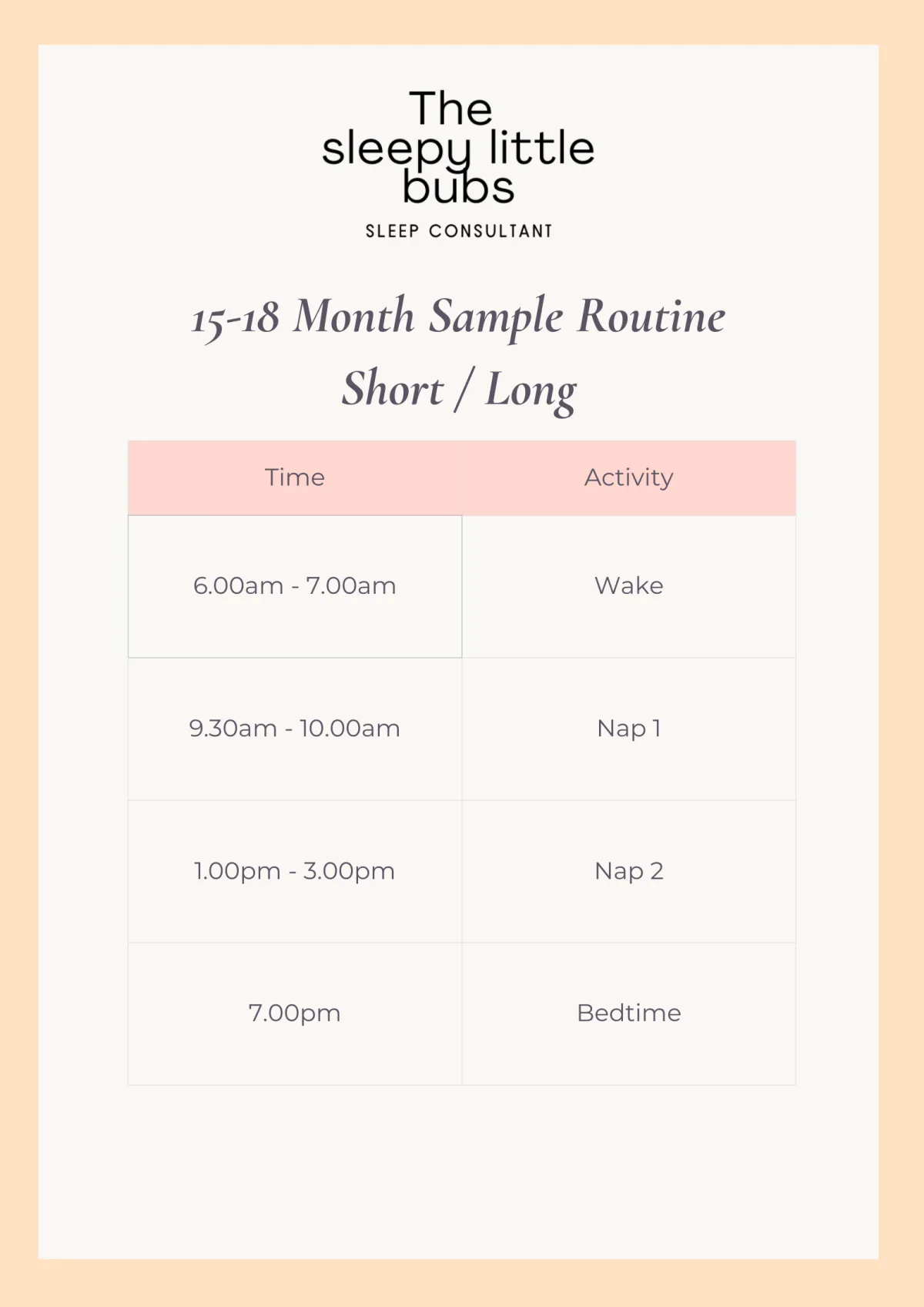
Then:
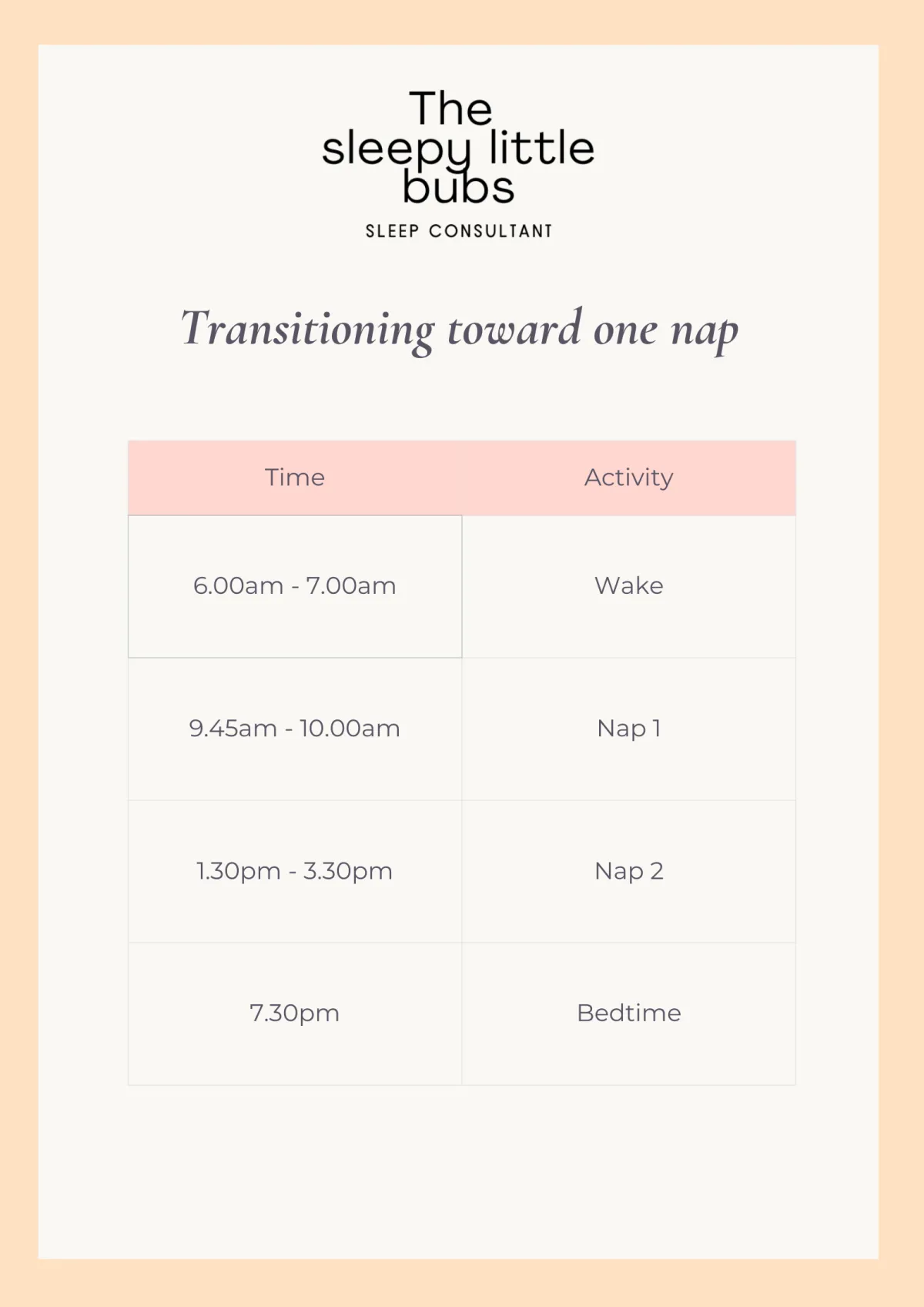
And finally:
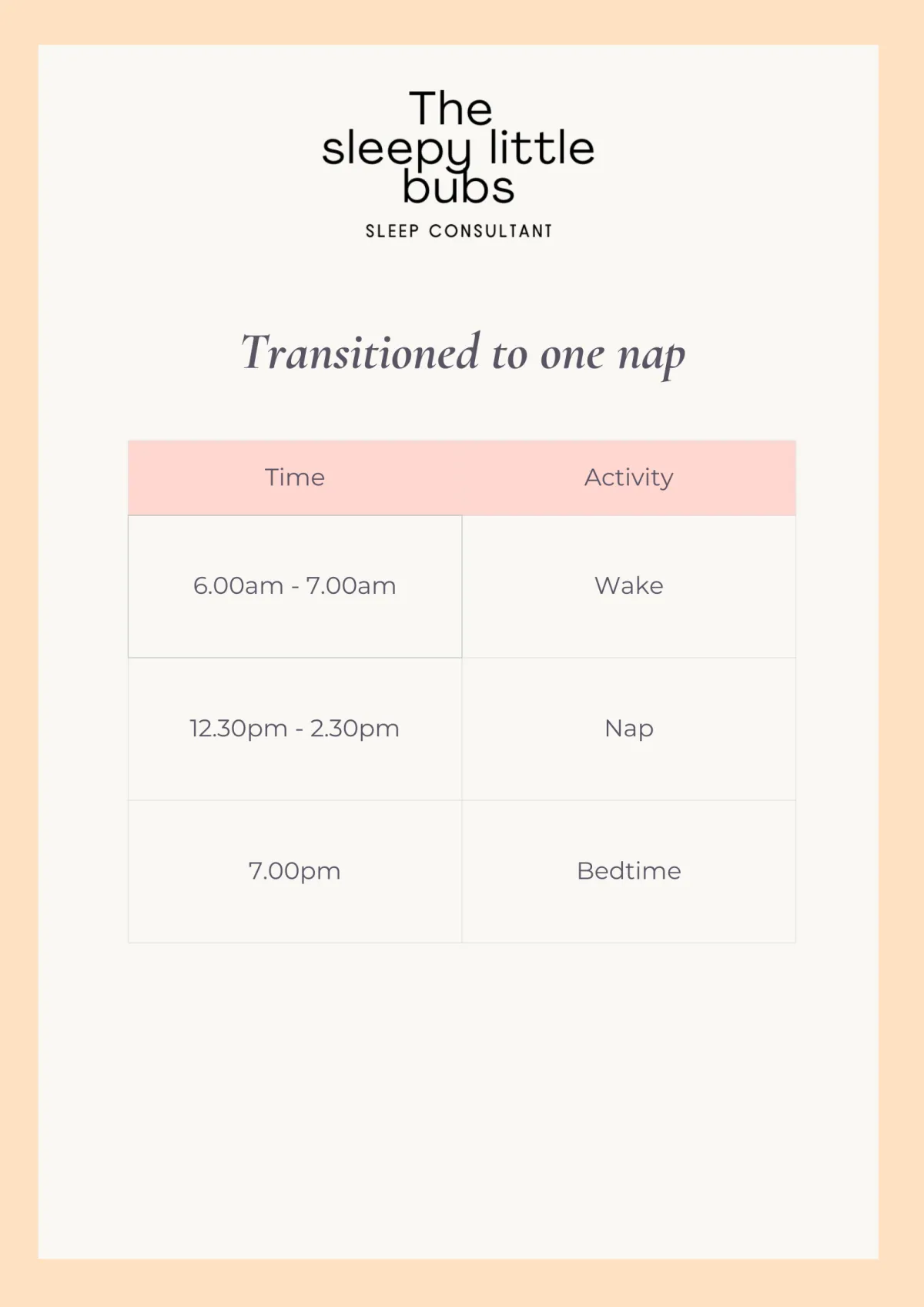
Common mistakes during the 2–1 nap transition
One of the biggest mistakes I see parents make during the 2–1 nap transition is dropping the morning nap before their toddler is actually ready.
And I get it! When your toddler starts refusing their afternoon nap or bedtime suddenly becomes a two-hour battle, moving to one nap can seem like the obvious solution.
But just because your toddler is refusing one of their naps doesn't automatically mean they're ready to manage the entire day with only one sleep.
Sometimes their morning nap is simply too long, their awake windows need adjusting or they're getting more daytime sleep than they actually need.
Another common mistake is stretching awake windows far too quickly.
If your toddler is used to having their first nap at 9.30am, suddenly expecting them to stay awake until 12.30pm is a BIG adjustment!
Some toddlers manage this relatively easily, while others struggle with the additional awake time and end up having a short lunchtime nap, leaving you with an incredibly long afternoon.
And then what happens?
Bedtime gets moved earlier and earlier to compensate, only for your toddler to start waking at 5.00am because they've already had the amount of overnight sleep they need.
Now you're stuck in a cycle of early mornings, early naps and early bedtimes!
Another mistake is expecting overnight sleep to improve immediately after dropping to one nap.
If your toddler was previously waking frequently overnight or taking a long time to fall asleep at bedtime, moving to one nap might help if their daytime sleep was contributing to insufficient sleep pressure.
But if the issue is related to something else, dropping a nap isn't necessarily going to solve it.
And PLEASE avoid changing everything at once!
If you're dropping a nap, stretching awake windows, moving bedtime and changing how your toddler falls asleep all at the same time, it becomes incredibly difficult to work out what's actually helping.
My advice? Make small, considered adjustments and give your toddler time to settle into the changes before making more.
You don't need to force the transition simply because they've reached a particular age, and you certainly don't need to follow a one-nap routine that isn't working for your child.
The goal isn't to get onto one nap as quickly as possible. It's to find a routine that supports your toddler's individual sleep needs, allows enough sleep pressure to build throughout the day and works alongside their overnight sleep.
Supporting your toddler through the 2-1 nap transition
So, how do you actually help your toddler move from two naps to one without completely throwing their sleep off track?
First, don't feel like you need to drop the morning nap overnight!
For some toddlers, gradually shortening that morning nap can be a really helpful way to approach the transition.
For example, if your toddler is currently having a one-hour morning nap but consistently refusing their afternoon sleep, you might start by reducing that morning nap to 30 minutes and reviewing how this affects their second nap and bedtime.
Over time, as they're comfortably managing longer awake windows, you can continue adjusting their routine until they're ready for one lunchtime nap.
Other toddlers might move straight to one nap without too much difficulty, particularly if they're already managing longer awake periods and their two-nap routine is no longer working.
And that's fine too!
There's no single approach that works for every toddler.
You might also find that some days your toddler manages one nap beautifully, while other days they still benefit from a short morning nap.
Rather than forcing the same routine every single day, consider how much sleep they've had overnight, how they're managing their awake time and whether they're building enough sleep pressure for their next nap.
Bedtime might also need some flexibility during this stage.
If your toddler has had a particularly short lunchtime nap, bringing bedtime forward slightly may help. However, I wouldn't automatically recommend a 5.30pm bedtime every time their nap doesn't go to plan.
Remember, your toddler still has individual sleep needs across 24 hours, and consistently offering more overnight sleep than they need can contribute to early morning waking.
Another important consideration is keeping the rest of their routine relatively consistent.
Try to maintain familiar bedtime routines, a consistent morning wake-up time where possible and the same approach to settling while you're making adjustments to their daytime sleep.
And PLEASE don't panic if the first few days don't go perfectly!
Your toddler might take a little longer to settle for their new lunchtime nap, have some shorter naps initially or need occasional adjustments while they become comfortable with longer awake periods.
But weeks of consistently disrupted sleep shouldn't simply be dismissed as part of the transition either.
If naps are becoming increasingly difficult, bedtime is taking FOREVER or overnight sleep is deteriorating, it's worth reviewing whether the timing and amount of sleep you're offering actually match your toddler's needs.
The goal isn't to push your toddler to manage one nap before they're ready, but it's also not to hold onto two naps when they're no longer working.
It's about finding the right balance between awake time, daytime sleep and overnight sleep for YOUR toddler.
Need personalised support?
If you are not sure whether your baby's routine is right for this stage, or sleep is starting to feel really hard, our team is here to help.
Based in Melbourne, Australia and supporting families Australia-wide, our team offers:
30-minute sleep consultation - a focused session where we look at your baby's routine, naps, feeds, awake windows, and overnight waking, then give you clear, practical next steps tailored to your family.
Two Week Sleep Support - a fully guided two-week program that includes a personalised sleep plan, a 60-minute consultation, and 10 days of weekday support while you make changes. Ideal if sleep feels really unsustainable and you want more hands-on help.
In-home sleep support - hands-on, face-to-face support for families in Melbourne, Sydney, Byron Bay Shire, Gold Coast and surrounding areas who want someone there with them through the process.
The Sleepy Little Bubs is based in Melbourne and offers virtual sleep consultations across Australia and worldwide.
Whether you need quick clarity or more structured support, we can help you find the right next step.

Eva Beke
Certified Paediatric Sleep Consultant
Founder The Sleepy Little Bubs
I’m Eva Beke, a certified baby sleep consultant and founder of The Sleepy Little Bubs, supporting families across Australia and the world with evidence based baby and toddler sleep support.
My approach is realistic, supportive, and designed to evolve as your child grows, so you’re not just getting help for today, but confidence moving forward.
CLIENT STORIES
Real Families. Real Rest.

"Eva is fantastic and helped my family get better sleep."
"I loved the practical advice and lack of judgement - being a mum of a baby who doesn’t sleep is hard and Eva really just gets it and supports you."
- Ashleigh T.


"Eva helped our little one sleep independently and we will forever be grateful for it!"
"After tweaking his environment and wake windows, with sleep training, we already saw improvements within 3 days. Thank you 🙏🏼"
- Farah F.

"Eva showed such kindness and professionalism in our support call."
"I’m so grateful that she made the effort to squeeze me in on short notice, to help a mama in dire need. She’s a gem!
- Johanna S.
PRODUCTS
INFORMATION
SUPPORT
LEGAL




© Copyright The Sleepy Little Bubs All Rights Reserved.