
Understanding
Newborn Sleep Cycles



Ahhh, newborn sleep! One minute your baby is fast asleep in your arms, and the next they're wide awake, despite only having been asleep for 30 minutes.
Or perhaps you've finally managed to transfer them into their cot, only for those little eyes to pop open AGAIN!
Sound familiar?
One of the biggest surprises for new parents is just how frequently newborns can wake, both during the day and overnight.
And while short naps and frequent waking are incredibly common during those early weeks and months, there's a reason newborn sleep looks so different from adult sleep.
Understanding newborn sleep cycles can help you make sense of what's happening when your baby falls asleep, why they might wake after 30–45 minutes and why their sleep patterns change as they grow.
But here's something important to understand: just because frequent waking is common doesn't mean every waking is caused by a sleep cycle transition, or that there's never anything we can do to improve sleep.
Let's take a closer look at how newborn sleep actually works.
What is a sleep cycle?
A sleep cycle is the process our brain moves through as we sleep, transitioning between different stages of sleep throughout the night.
As adults, our sleep cycles generally last around 90–120 minutes, and we move through different stages of lighter sleep, deeper sleep and REM sleep.
But newborn sleep works a little differently!
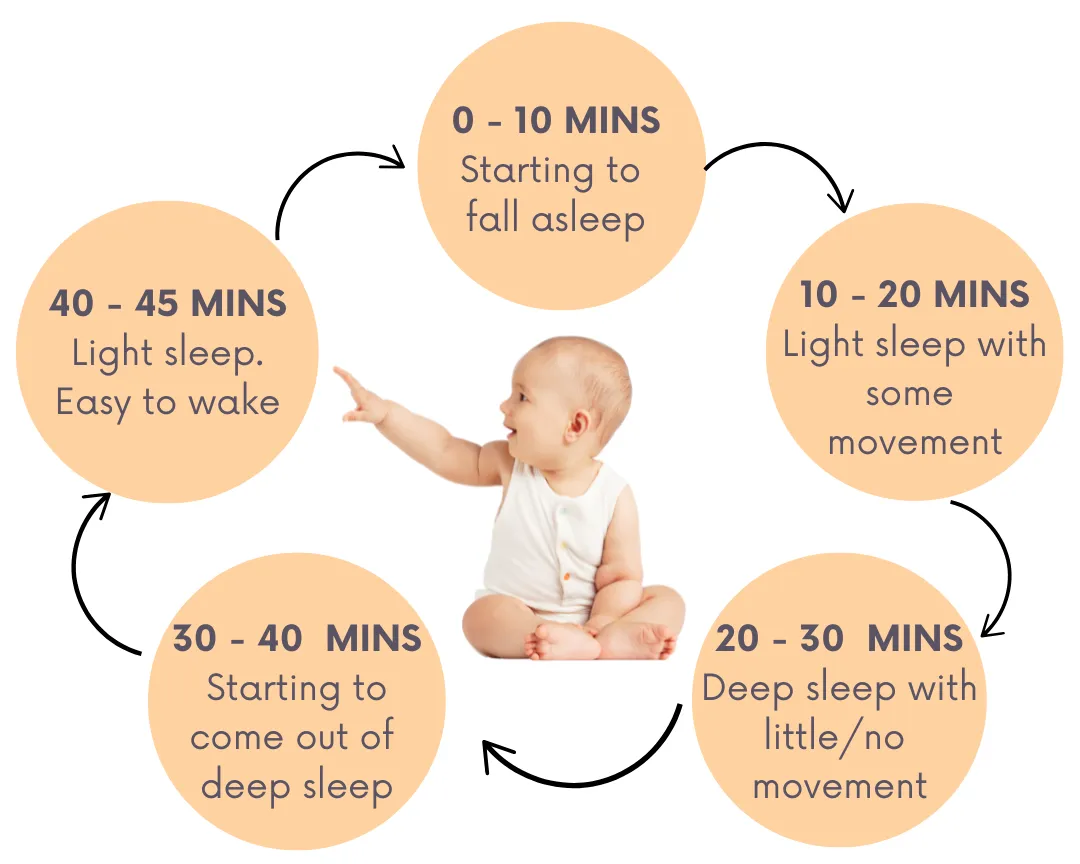
Newborns have much shorter sleep cycles, generally lasting around 45–60 minutes, and they spend a much larger proportion of their sleep in active sleep.
This is one of the reasons you might notice your newborn wriggling, making little noises, moving their arms or even briefly opening their eyes while they're asleep.
And here's something that surprises a lot of parents: just because your newborn is moving or making noises doesn't necessarily mean they're awake!
Understanding the difference between active sleep and actually waking can be incredibly helpful, particularly when you're wondering whether your baby needs settling or is simply moving through a normal stage of sleep.
How long are newborn sleep cycles?
Newborn sleep cycles are generally around 45–60 minutes long, which is considerably shorter than the sleep cycles we experience as adults.
And this is where things can get interesting!
As your newborn moves between different stages of sleep, you might notice them stirring, wriggling, making little noises, opening their eyes or even letting out a brief cry.
Sometimes they'll settle straight back into sleep without needing any help, while other times they'll wake completely and need feeding or some support to fall asleep again.
But here's something I really want parents to understand: just because newborn sleep cycles are around 45–60 minutes doesn't mean your baby should wake every 45–60 minutes!
Newborns can move through multiple sleep cycles without fully waking, which is why some babies naturally have longer stretches of sleep.
And if your baby is waking every 30–45 minutes, it doesn't automatically mean they're unable to connect their sleep cycles.
Their sleep pressure, feeding needs, comfort and how much sleep they've already had can all influence whether they continue sleeping or wake completely.
Understanding newborn sleep cycles is helpful, but it's only one part of understanding your baby's sleep patterns.
Why newborns wake so often
If you've ever wondered why your newborn can sleep beautifully in your arms but seems to wake the SECOND you put them down, you're certainly not alone!
Frequent waking is incredibly common during the newborn stage, and there are several reasons why your baby might wake throughout the day and overnight.
Firstly, newborns spend a much larger proportion of their sleep in active sleep compared to adults. During this stage, you might notice your baby wriggling, making noises, moving their arms or appearing unsettled, even though they're still asleep.
Their circadian rhythm is also still developing, which means they haven't yet established the same distinction between daytime and nighttime sleep that older babies and adults have.
And then, of course, there are their feeding needs!
Newborns need regular feeds to support their growth and development, and this naturally means waking overnight, sometimes quite frequently.
But here's something important to understand: not every newborn wakes hourly, and waking every 45–60 minutes isn't automatically explained by their sleep cycles.
Some newborns naturally sleep for longer stretches, while others wake more frequently depending on their feeding needs, individual sleep requirements, sleep pressure and settling circumstances.
So while frequent waking can be completely normal, I wouldn't automatically dismiss every hourly waking as something your baby simply has to grow out of.
Understanding how much sleep your newborn is getting across 24 hours, their awake time and what happens when they wake can help us identify whether there's anything contributing to those frequent wakings.

How sleep cycles affect naps
Ever wondered why your newborn can have a beautiful two-hour nap one day, only to wake after 30 minutes the next?
Newborn sleep cycles are generally around 45–60 minutes, and it's common for babies to wake after a relatively short period of sleep. This is often referred to as catnapping.
But here's something important to understand: not every short nap is caused by your baby waking between sleep cycles.
Sometimes your newborn simply hasn't built enough sleep pressure to sleep for longer. Other times, they may have been awake longer than they can comfortably manage, or they might wake because they're hungry or uncomfortable.
And while short naps are incredibly common during the newborn stage, that doesn't mean every 30-minute nap needs to be accepted as something your baby will eventually grow out of.
If your newborn is consistently catnapping and becoming increasingly unsettled throughout the day, it's worth reviewing their awake time, total sleep across 24 hours and individual sleep needs.
On the other hand, if they're having shorter naps but are generally happy, feeding well and getting sufficient sleep overall, there may be absolutely nothing that needs changing!
You can read more about the different reasons behind short naps in our Catnapping blog.
When do sleep cycles change?
Around three to four months of age, your baby's sleep starts undergoing some significant changes.
During the newborn stage, sleep is primarily divided into active sleep and quiet sleep. As your baby's brain develops, their sleep becomes more organised, with more distinct stages of non-REM and REM sleep.
And this is where the famous 4 Month Sleep Regression often comes into the conversation!
You might notice your baby suddenly waking more frequently overnight, having shorter naps or needing additional support to fall asleep, even if they were previously sleeping for longer stretches.
But here's something I really want parents to understand: the four-month sleep regression isn't something every baby experiences, and changes to sleep cycles don't automatically mean your baby will start waking every 45 minutes.
Sleep development is a gradual process, not a switch that suddenly flicks at exactly four months.
While the changes in sleep organisation are part of normal neurological development, how they affect your baby's sleep can vary enormously.
Some babies experience very little disruption, while others go through a period of more frequent waking.
And if your baby's sleep does become more disrupted around this age, it doesn't necessarily mean you need to introduce sleep training or wait for the regression to pass.
Reviewing their individual sleep needs, awake time, nap distribution and settling circumstances can help identify what might be contributing to those changes.
Can newborns link sleep cycles?
Absolutely! And this is something I think is often misunderstood when it comes to newborn sleep.
Just because newborn sleep cycles are around 45–60 minutes doesn't mean your baby is incapable of sleeping for longer stretches.
In fact, many newborns naturally move through multiple sleep cycles without fully waking, which is why you might see a two-hour nap during the day or a longer stretch of sleep overnight.
Of course, every baby is different!
Some newborns naturally consolidate their sleep more easily, while others wake more frequently and need additional support to fall asleep again.
And that's where feeding, rocking, holding and contact naps can be incredibly helpful during those early weeks.
But here's the thing: if your newborn is consistently waking after 30–45 minutes, I wouldn't automatically assume they have a problem linking sleep cycles.
Sometimes they simply haven't built enough sleep pressure to continue sleeping. Other times, hunger, discomfort, their individual sleep needs or how much sleep they've already had can influence whether they wake.
As your baby grows, their sleep patterns will continue to develop, and many babies gradually begin having longer, more consolidated stretches of sleep.
The important thing is understanding that linking sleep cycles isn't a skill your newborn needs to be taught. It's something they're already capable of doing, although how consistently they remain asleep between cycles will vary.
What this means for parents
Understanding how newborn sleep cycles work can take away a lot of the pressure parents feel during those early months.
If your baby is waking frequently, having short naps or needing support to fall asleep, it doesn't automatically mean something is wrong or that you're creating bad habits.
But equally, I don't want parents believing that frequent waking is ALWAYS something they simply have to accept because of their baby's biology.
Yes, newborn sleep is immature, and frequent waking is completely normal, particularly when babies still need regular overnight feeds.
However, sleep pressure, awake time, daytime sleep distribution and feeding patterns can all influence how well your newborn sleeps.
Sometimes a few small adjustments can make a difference, while other times your baby is simply sleeping in a way that's appropriate for their age and individual needs.
The goal isn't to make your newborn sleep through the night or follow a perfect routine. It's to understand what their sleep needs actually are, recognise what's developmentally normal and know when there might be something worth adjusting.
When to seek extra support
While frequent waking and short naps are common during the newborn stage, that doesn't mean you have to struggle through months of broken sleep without support.
If your newborn is waking constantly, struggling to settle or having such short naps that you're spending your entire day trying to get them back to sleep, it might be worth reviewing what's happening.
Sometimes it's a matter of adjusting awake time, reviewing how much sleep your baby is getting across 24 hours or making small changes to their settling environment.
Other times, you might simply need some reassurance about what's normal for your baby's age and what you can realistically expect.
And if sleep is leaving you feeling completely exhausted, anxious or overwhelmed, that's reason enough to reach out for help.
You don't need to wait until your baby is four or six months old before asking questions about their sleep.
Newborn sleep support isn't about expecting your baby to sleep through the night or introducing sleep training before they're developmentally ready. It's about understanding their individual sleep needs, identifying anything that might be contributing to difficult days and nights, and finding practical ways to make things more manageable for your family.
And if you're concerned about your baby's feeding, growth, health or unusual sleepiness, please speak with your GP or maternal and child health nurse.
Looking ahead
As your baby grows, their sleep will continue to develop. Sleep cycles become more organised, longer stretches of sleep may become more consistent, and naps often begin to consolidate.
But this doesn't happen at exactly the same age for every baby!
Some babies naturally start having longer naps and more predictable nights quite early, while others take a little longer.
And even when sleep starts improving, there will still be periods when things change. Nap transitions, developmental milestones, changing sleep needs and illness can all affect sleep along the way.
Understanding how sleep cycles work is helpful, but remember, they're only one part of the equation.
Your baby's individual sleep needs, awake time, sleep pressure and nap distribution will continue to play an important role as they grow.
The aim isn't to achieve perfect sleep. It's to understand what's happening, recognise when your baby's sleep needs are changing and know what adjustments might help along the way.
Need personalised support?
If you are not sure whether your baby's routine is right for this stage, or sleep is starting to feel really hard, our team is here to help.
Based in Melbourne, Australia and supporting families Australia-wide, our team offers:
30-minute sleep consultation - a focused session where we look at your baby's routine, naps, feeds, awake windows, and overnight waking, then give you clear, practical next steps tailored to your family.
Two Week Sleep Support - a fully guided two-week program that includes a personalised sleep plan, a 60-minute consultation, and 10 days of weekday support while you make changes. Ideal if sleep feels really unsustainable and you want more hands-on help.
In-home sleep support - hands-on, face-to-face support for families in Melbourne, Sydney, Byron Bay Shire, Gold Coast and surrounding areas who want someone there with them through the process.
The Sleepy Little Bubs is based in Melbourne and offers virtual sleep consultations across Australia and worldwide.
Whether you need quick clarity or more structured support, we can help you find the right next step.

Eva Beke
Certified Paediatric Sleep Consultant
Founder The Sleepy Little Bubs
I’m Eva Beke, a certified baby sleep consultant and founder of The Sleepy Little Bubs, supporting families across Australia and the world with evidence based baby and toddler sleep support.
My approach is realistic, supportive, and designed to evolve as your child grows, so you’re not just getting help for today, but confidence moving forward.
CLIENT STORIES
Real Families. Real Rest.

"Eva is fantastic and helped my family get better sleep."
"I loved the practical advice and lack of judgement - being a mum of a baby who doesn’t sleep is hard and Eva really just gets it and supports you."
- Ashleigh T.


"Eva helped our little one sleep independently and we will forever be grateful for it!"
"After tweaking his environment and wake windows, with sleep training, we already saw improvements within 3 days. Thank you 🙏🏼"
- Farah F.

"Eva showed such kindness and professionalism in our support call."
"I’m so grateful that she made the effort to squeeze me in on short notice, to help a mama in dire need. She’s a gem!
- Johanna S.
PRODUCTS
INFORMATION
SUPPORT
LEGAL




© Copyright The Sleepy Little Bubs All Rights Reserved.