
Catnapping: Why Short Naps Happen and When They Improve



If your baby wakes after 30–45 minutes from nearly every nap, you are not doing anything wrong.
But that does not mean it is not frustrating.
Short naps can leave the entire day feeling unpredictable. Your baby wakes tired, you spend half the day trying to resettle them, and by the afternoon you are doing nap mathematics just to work out how you will reach bedtime.
Catnapping is incredibly common, particularly in younger babies. For many babies, it is a normal stage of sleep development. For others, consistently short naps can be a sign that their routine or sleep needs have changed.
The important thing is not just how long the nap lasted.
It is how your baby wakes, how they cope afterwards, and what is happening across the rest of their day and night.
What is catnapping?
Catnapping generally describes naps that last for one sleep cycle, usually around 30–45 minutes.
Your baby falls asleep, completes one cycle and then wakes rather than moving into another.
This can happen occasionally, or it can happen at nearly every nap.
Some babies wake happy and ready to continue their day. Others wake crying, still clearly tired and unable to comfortably manage another full awake period.
Those are two very different situations.
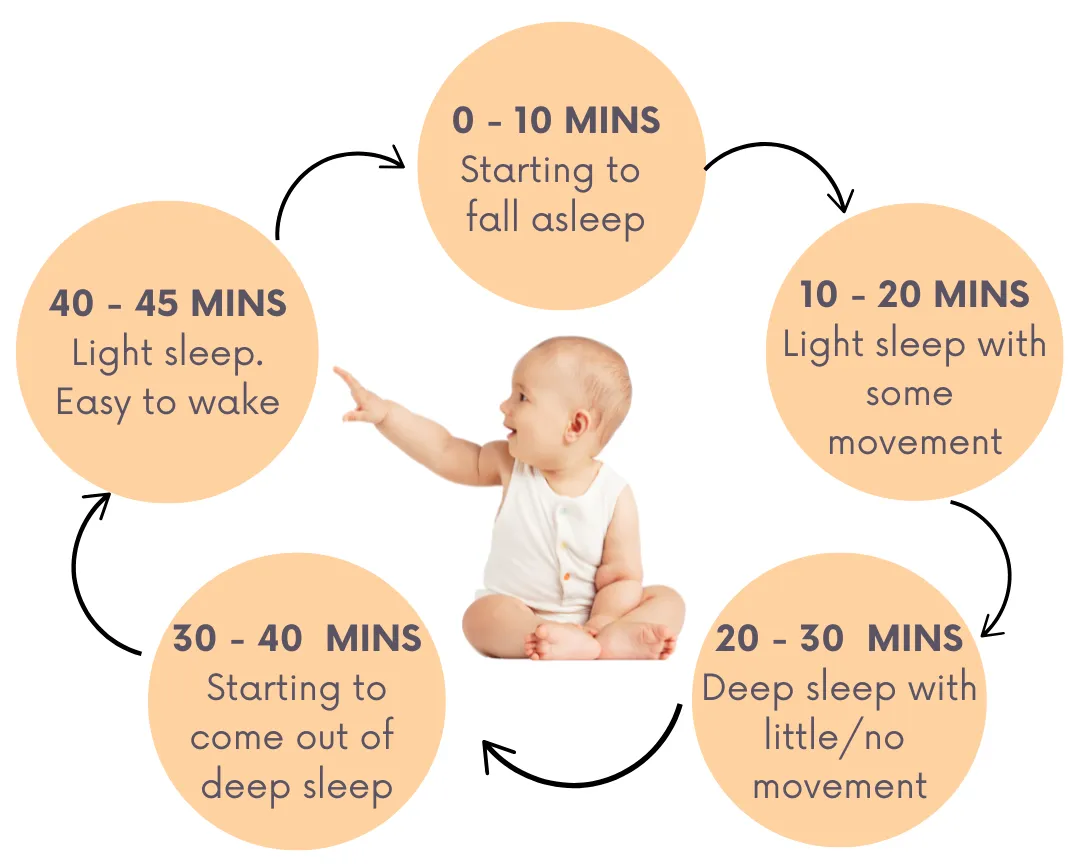
Why does catnapping happen?
There is rarely one single reason. Your baby’s age, sleep development, awake time, nap structure and environment can all contribute.
Sleep Development
Short and unpredictable naps are extremely common in younger babies.
Their daytime sleep is still developing, and some naps may last 30 minutes while others last much longer, even when you have done exactly the same thing beforehand.
As sleep matures, many babies become more able to move from one sleep cycle into the next, but this develops at different times for different babies.
Changing sleep needs
As babies grow, their awake time gradually increases.
If awake time is too short, your baby may be tired enough to fall asleep but not have enough sleep pressure to continue beyond one cycle.
If awake time is too long, they may become overtired, fall asleep quickly and still wake after 30–45 minutes upset and exhausted.
Understanding the difference between under vs overtired can help explain why the same short nap can happen for completely different reasons.
Developmental shifts
Periods of rapid development can temporarily disrupt naps.
Many families notice catnapping become more obvious around the four month sleep regression, when sleep structure matures and babies can become more alert between sleep cycles.
Sleep environment and settling support
In the early months, many babies rely on support to consolidate sleep cycles. If they fall asleep in one condition and wake in another, they may fully wake at the end of a cycle.
This is not a problem.
It is developmental. It just helps explain why naps can stay short even when bedtime settling feels fine.
Is catnapping normal?
Yes, particularly in newborns and younger babies.
Some babies catnap for weeks or months before their naps begin to lengthen. Others move through this stage more quickly.
But whether a short nap is actually a problem depends on more than the number on the clock.
A 30-minute nap may be completely fine if your baby:
Wakes happy and content
Comfortably manages until their next sleep
Has longer naps elsewhere in the day
Is getting enough sleep across 24 hours
Is settling and sleeping reasonably well overnight
If every nap is short, your baby wakes upset and they seem exhausted again almost immediately, it may be worth looking more closely at their routine and sleep needs.
Short naps do not mean your baby will always be a poor sleeper.
It can also help to look at how much sleep your baby is getting across the full 24 hours, rather than judging one nap in isolation.
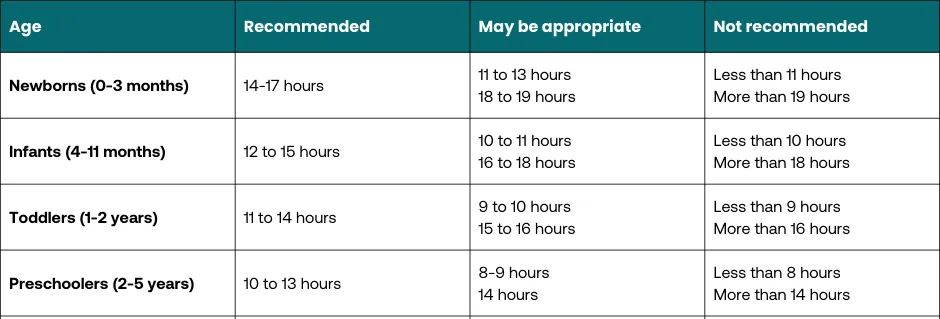
When does catnapping improve?
Many babies begin showing more consistent longer naps from around five to six months, but there is a very wide range.
Some babies consolidate naps earlier, while others continue taking shorter naps for several more months. Even babies who can link sleep cycles may still have one shorter nap as part of a completely appropriate routine.
Naps also do not always lengthen all at once.
You may notice one nap becoming longer and more predictable before the others.
Your baby may also take a long nap one day and a short nap the next without anything being wrong.
As sleep matures, awake times become better matched to your baby’s needs and their nap structure changes, naps often become more consistent.
Should you try to “fix” catnapping?
That depends on your baby’s age and how the short naps are affecting them.
For newborns and younger babies, short and unpredictable naps are often developmentally normal. The focus is usually on helping them get enough sleep across the day, rather than forcing every nap to lengthen.
For older babies, consistently short naps may be a sign that their awake times, nap structure or sleep pressure need adjusting, particularly if they wake upset or the short naps are disrupting the rest of the day.
Not every short nap needs to be extended.
What matters is whether your baby is coping well, getting enough sleep overall and managing comfortably across the full day and night.
What to do on a catnapping day
If naps are short, the goal is not necessarily to force every nap to lengthen.
The goal is to protect the rest of the day.
Depending on your baby’s age, how they woke and how much sleep they have already had, you may:
Offer the next nap slightly earlier
Use a supported nap, such as contact, carrier, pram or car
Add a short bridging nap later in the day
Adjust the final awake period
Bring bedtime forward slightly
Continue with the usual day if your baby is coping well
A baby who wakes after 30 minutes may not comfortably manage the same awake time they would after a longer nap.
At the same time, offering another nap too quickly can mean there is not enough sleep pressure, which may lead to another short nap.
This is why it helps to look at the full day rather than reacting to one nap in isolation.
Supporting sleep does not mean you are creating a bad habit. Sometimes it is simply the most practical way to help your baby get the sleep they need.
Can catnapping affect night sleep?
It can, although the effect depends on why the naps are short.
If your baby is getting too little daytime sleep and becoming overtired, you may see:
More unsettled evenings
False starts after bedtime
Frequent night waking
Early morning waking
Difficulty settling
But short naps do not always mean your baby needs significantly more sleep.
If every short nap is repeatedly extended when your baby does not need it, or bedtime is brought forward too dramatically, there may not be enough sleep pressure for a consolidated night.
This is why we look at sleep across the full 24 hours rather than treating every short nap as something that must be fixed.
When catnapping may need a closer look
Catnapping can be completely normal, but it may be worth reviewing your baby’s sleep more closely if:
Every nap is short and they wake upset
They appear tired again almost immediately
You are constantly trying to resettle or add extra naps
Bedtime is becoming increasingly difficult
Night waking has increased alongside the short naps
Naps have suddenly shortened after previously being longer
Your baby is struggling to get enough sleep across 24 hours
The entire day is starting to feel unmanageable
This does not automatically mean something is wrong.
It may simply mean that your baby’s awake times, nap structure, sleep pressure or bedtime no longer match what they need.
Need personalised sleep support?
The Sleepy Little Bubs supports families with babies and toddlers from 4 months to 5 years across Australia, the UK, Europe, the US and Canada.
If short naps are taking over your day, a 30-minute sleep chat can help you work out what is developmental and what may need adjusting.
We’ll look at naps, awake times, feeding, nights and settling, then give you clear guidance on what to do next.
For families wanting more hands-on support, our 10-day sleep support package includes a personalised plan, consultation and weekday WhatsApp support while you make changes.
The Smarter Way to Invest in Better Sleep
Supporting sleep does not have to mean starting over every time something changes.
Our sleep courses are built to support you long term, with age specific guidance that adapts as your child grows.
From early routines and regressions to nap transitions and toddler sleep challenges, you will have a clear plan so you can respond with confidence at every stage.

Infant
5-24 Months

Toddler
2-4 Years
PRODUCTS
INFORMATION
SUPPORT
LEGAL




© Copyright The Sleepy Little Bubs All Rights Reserved.