
4 Month Sleep Routine: Awake Windows, Naps & Bedtime



4 month old sleep routine, awake windows, nap expectations, feeding patterns, and what a realistic day can look like.
Around four months of age, sleep can suddenly feel messy. Your baby may be waking more overnight, naps may shorten, and the routine that once felt predictable can seem to fall apart. This is very common and often overlaps with the 4 month sleep regression, which marks a major and permanent shift in how your baby sleeps.
At this age, it’s important to move away from rigid schedules and instead focus on supporting appropriate awake windows, realistic sleep expectations, and flexibility day to day.
What does sleep look like at 4 months?
At four months, most babies are still transitioning out of newborn sleep patterns. Sleep is lighter, more organised, and more easily disrupted. This means naps can be fragile, night waking may increase, and sleep may feel less predictable overall.
Rather than following a clock-based routine, sleep is best supported by working within awake windows of around 1.5 to 2 hours. Some babies will begin consolidating naps, while others will continue taking short naps for a while longer. Both are completely normal at this stage.
Short naps are often linked to newborn sleep cycles, which are still maturing around this age.
How much sleep and feeding does a 4 month old need?
Most four month olds are aiming for approximately 12–15 hours of total sleep across 24 hours, including both day sleep and overnight sleep. Some babies will sit at the higher end of this range, while others need slightly less.
In terms of feeding, many babies are having around 4–5 feeds during the day, with 2–3 feeds overnight still very common. Some babies may feed more frequently, while others may begin stretching feeds slightly. This variation is normal and often influenced by growth, development, and sleep changes.
Sleep and feeding remain closely connected at this stage, especially during periods of change like the 4 month sleep regression.
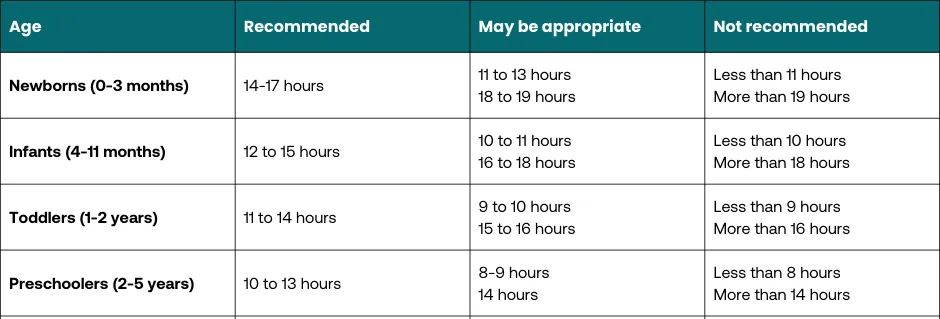
Typical awake windows at 4 months
Most babies do well with:
Awake windows of 1.5 to 2 hours
Slightly shorter windows earlier in the day
Slightly longer windows leading into bedtime
If your baby is consistently difficult to settle, waking upset from naps, or experiencing frequent night waking, it can be helpful to review whether it’s time to increase awake windows, as sleep needs continue to evolve rapidly at this age.
Example of a 4 month old sleep schedule.
Example with longer naps
Some babies begin taking longer naps around this age. A 4 month old sleep schedule with longer naps may look like this:
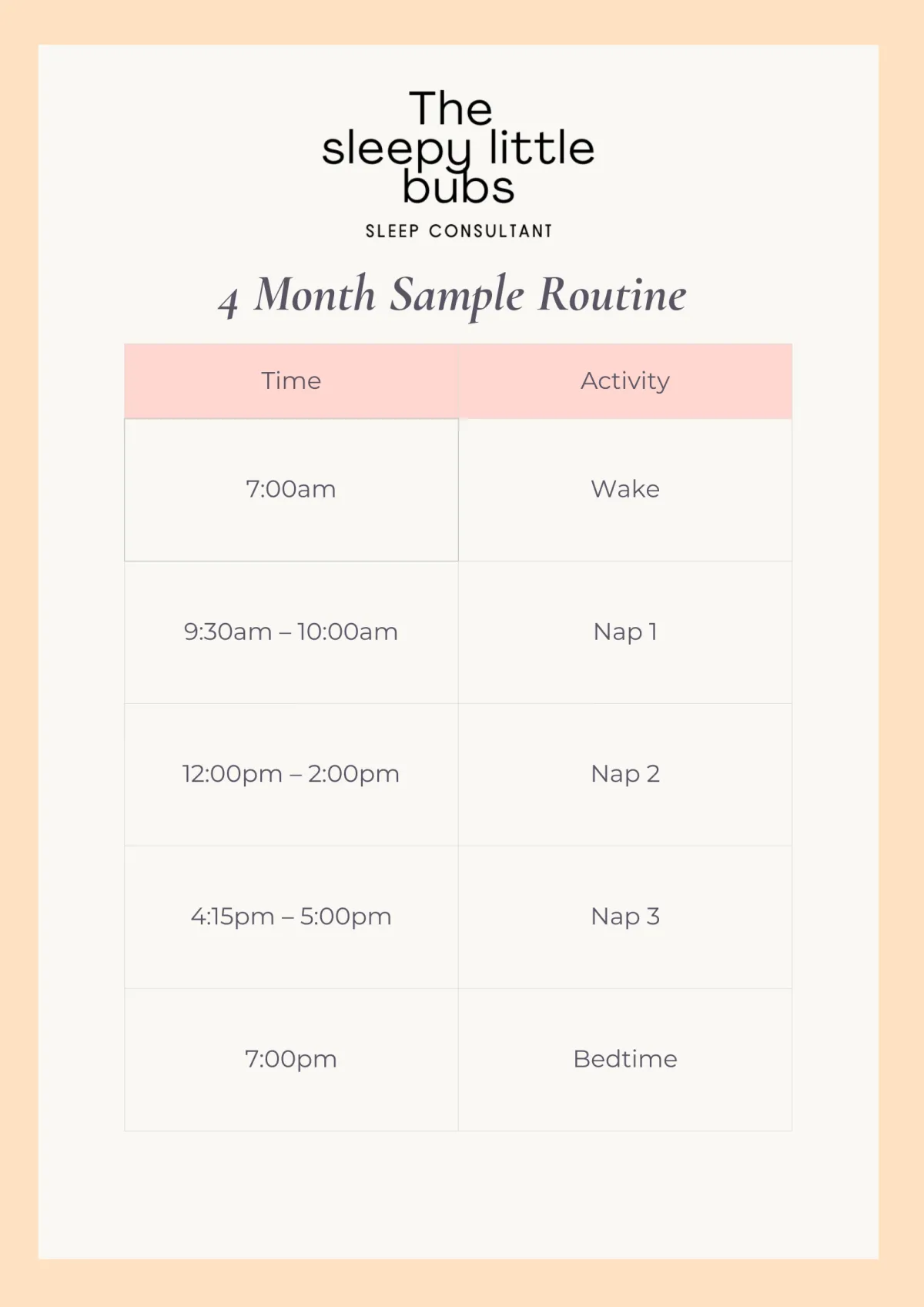
This is an example only, not a rule. Nap lengths and timing may vary from day to day.
Example 4 month sleep schedule with catnaps
It is also very common for four month olds to take short naps or catnaps across the day. In this case, the day is guided almost entirely by awake windows rather than nap length.
A catnapping day may involve:
Naps lasting 30–45 minutes
Awake windows close to 2 hours
A short late afternoon nap used to bridge to bedtime
Catnapping is developmentally normal at this age and does not mean your baby’s sleep is broken. You can read more about this in catnapping.
Why your 4 month old sleep routine can feel inconsistent
The four month stage is marked by a significant neurological change in sleep. Your baby is moving through lighter and deeper stages of sleep, which can make naps shorter and night waking more frequent.
This is why routines can feel inconsistent, particularly during the 4 month sleep regression. Rather than forcing structure, supporting sleep through awake windows, a calm wind down, and flexibility tends to be far more effective.
Swaddling at 4 Months: When to stop and what to do next
Many families begin questioning the swaddle around this age. If your baby is showing signs of rolling, attempting to roll, or breaking out of the swaddle, it’s important to review when to stop swaddling for safety reasons.
Transitions out of the swaddle can temporarily disrupt sleep, so allowing some flexibility with naps and settling during this period is important.
When do 4 month old naps get longer?
For many babies, naps gradually begin to consolidate between 4–6 months as sleep pressure increases, awake windows stretch, and they become more able to link sleep cycles during the day.
By around 6 months, many babies are capable of taking longer, more predictable naps, although some will still need support with routine, environment, and how they are settling to sleep.
If short naps persist, it’s often helpful to look at the bigger picture, including awake windows, sleep environment, feeding, and how your baby is supported to sleep.
How to support your 4 month old sleep routine
At four months, sleep is changing quickly, so support is less about following a perfect schedule and more about creating rhythm, predictability and flexibility.
A helpful 4 month old sleep routine may include:
Watching for tired signs, not just the clock
Using awake windows of around 1.5 to 2 hours
Offering naps regularly across the day
Accepting short naps or catnaps
Keeping wind down routine calm and predictable
Supporting your baby to sleep in a way that feels manageable for your family
Adjusting wake windows as they grow
Reviewing feeds, sleep environment and settling if it becomes unsustainable
Need help with your 4 month old's sleep routine?
Sleep can change quickly around four months, and what works one week may need adjusting again the next.
If your baby’s naps, bedtime or night wakes feel all over the place, you don’t have to work it out alone.
A 30-minute sleep chat gives you personalised guidance for your baby’s current routine, awake windows, naps, feeding, settling and overnight sleep, so you know what to tweak next.

Eva Beke
Certified Paediatric Sleep Consultant
Founder The Sleepy Little Bubs
I’m Eva Beke, a certified baby and toddler sleep consultant and founder of The Sleepy Little Bubs, supporting families across Australia and the world with evidence based baby and toddler sleep support.
My approach is realistic, supportive, and designed to evolve as your child grows, so you’re not just getting help for today, but confidence moving forward.
The Smarter Way to Invest in Better Sleep
Supporting sleep doesn’t have to mean starting over every time something changes.
Our sleep courses are built to support you long term, with age specific guidance that adapts as your child grows. From early routines and regressions to nap transitions and toddler sleep challenges, you’ll have a clear plan and ongoing support so you can respond with confidence at every stage.

Infant
5-24 Months

Toddler
2-4 Years
PRODUCTS
INFORMATION
SUPPORT
LEGAL


© Copyright The Sleepy Little Bubs All Rights Reserved.