
15–18 Month Sleep Regression: Why Sleep Suddenly Feels Hard Again



What it is, why it happens, how long it lasts, and how to get through it
If your toddler was sleeping relatively well and has suddenly started resisting naps, fighting bedtime, waking overnight, or popping up far too early in the morning, you are not imagining it. Between around fifteen and eighteen months, many families experience what is commonly referred to as the 15–18 month sleep regression.
This stage often feels particularly challenging because it combines big emotional development, growing independence, and changing sleep needs all at once. While it can be exhausting, it is a very common and expected phase.
What is the 15–18 month sleep regression?
The 15–18 month sleep regression is a temporary disruption in sleep that typically appears during toddlerhood. It can show up as nap refusal, bedtime battles, frequent overnight waking, early rising, or a child who suddenly needs much more support to settle.
This regression often overlaps with one of the biggest sleep changes of toddlerhood, the move from two naps to one, which can make it hard to know what is developmental, what is routine related, and what is simply part of growing independence.
Why does the 15-18 month sleep regression happen?
Several major developmental shifts come together during this stage.
Increased separation anxiety
While separation anxiety is often associated with infancy, it commonly resurfaces during toddlerhood. At this age, your child has a much stronger sense of attachment and a clearer understanding that you can leave and come back, which can make separation at sleep times particularly challenging. Heightened separation anxiety can lead to bedtime resistance, distress when you leave the room, or overnight waking for reassurance.
Growing independence and strong opinions
Toddlers between fifteen and eighteen months are discovering autonomy. They want control, choice, and independence, but they do not yet have the emotional regulation skills to manage big feelings when things do not go their way. Sleep can quickly become a point of resistance, especially if it feels like something being imposed on them.
Changing sleep needs and nap pressure
Sleep needs continue to slowly decrease during this stage. Awake windows lengthen, and some toddlers begin showing signs they are moving toward the 2–1 nap transition. This transition typically happens between fifteen and eighteen months, though it can occur earlier or later depending on the child.
During this window, it is very common to see nap refusal, shorter naps, or bedtime becoming more difficult if sleep pressure is slightly off.
New sleep behaviours
Many families notice new behaviours emerging at this age, such as toddlers standing, calling out, or testing boundaries at sleep times. Some toddlers also begin attempting to climb out of the cot, which is an important safety milestone rather than just a sleep challenge. If your toddler is trying to climb out, this is a clear sign that it is time to move out of the cot and move into a big bed, even if sleep feels unsettled at the same time. Continuing to use a cot once climbing begins increases the risk of injury and should be addressed promptly.
Is it the 15-18 month regression of the 2-1 nap transition
One of the biggest questions parents ask during this stage is whether they are dealing with a true regression or whether it’s time to move to one nap.
At this age, the two often overlap.
Here’s how to tell the difference:
Signs it may be the 2-1 nap transition:
Consistently refusing one of the two naps
Taking a long time to fall asleep for the second nap
Bedtime pushing out later
Waking happily in the cot instead of distressed
Short naps despite adequate awake time
Signs it may be separation anxiety or developmental:
Increased clinginess during the day
Distress when you leave the room at bedtime
Wanting more reassurance overnight
Bedtime tears even when routine hasn’t changed
Sudden change rather than gradual pattern shift
Often, it is not just one thing.
Before dropping to one nap, assess:
Total awake time across the day
Nap length
Bedtime timing
How you are responding overnight
Small adjustments to timing can prevent a premature nap transition.
What are the common signs of the 15-18 month sleep regression?
Common signs include:
Resisting or refusing naps
Bedtime battles and delayed settling
Increased night waking
Heightened distress around separation
New boundary testing at sleep times
These behaviours are often interconnected and reflect both developmental growth and changing sleep needs.
How long does the 15-18 month sleep regression last?
For many toddlers, this regression lasts three to six weeks, depending on how quickly routines, boundaries, and sleep support adjust to match their developmental stage.
If sleep disruption continues beyond this window, it often indicates that routines, nap timing, or settling approaches need to evolve alongside your toddler’s growing independence.
How to support sleep during the 15-18 month regression
Review your routine carefully
Before making big changes, it is important to ensure your toddler’s day still supports their sleep needs. A realistic 15–18 month sleep routine can help you assess whether awake windows, nap timing, and bedtime are still well aligned.
Be cautious with the 2–1 nap transition
For most toddlers in the 15–18 month age range, the 2–1 nap transition is already underway or well established. At this stage, nap refusal, shortened naps, or changes to bedtime are often part of the transition itself rather than a sign that something has gone wrong.
Sleep disruption during this period is usually a combination of adjusting to longer awake windows, increased emotional development, and big changes in independence. Rather than avoiding the transition, the focus should be on supporting it with an age appropriate routine, enough awake time before the nap, and a bedtime that allows for recovery while your toddler adjusts.
Expect and manage bedtime battles
With independence growing, bedtime battles are common at this age. Offering limited choices, maintaining consistent boundaries, and keeping routines predictable can help reduce resistance without escalating power struggles.
Adjust settling techniques as emotions grow
Techniques that worked earlier may need adjusting as your toddler’s emotional awareness increases. Some toddlers benefit from a more gradual approach, increased reassurance, or clearer boundaries around sleep expectations during this stage.
Support connection without overstimulation
Extra connection before bed can help ease separation anxiety, but it is important to keep the wind down calm and predictable. Too much stimulation or inconsistency can increase resistance rather than reduce it.
Some Routine Examples
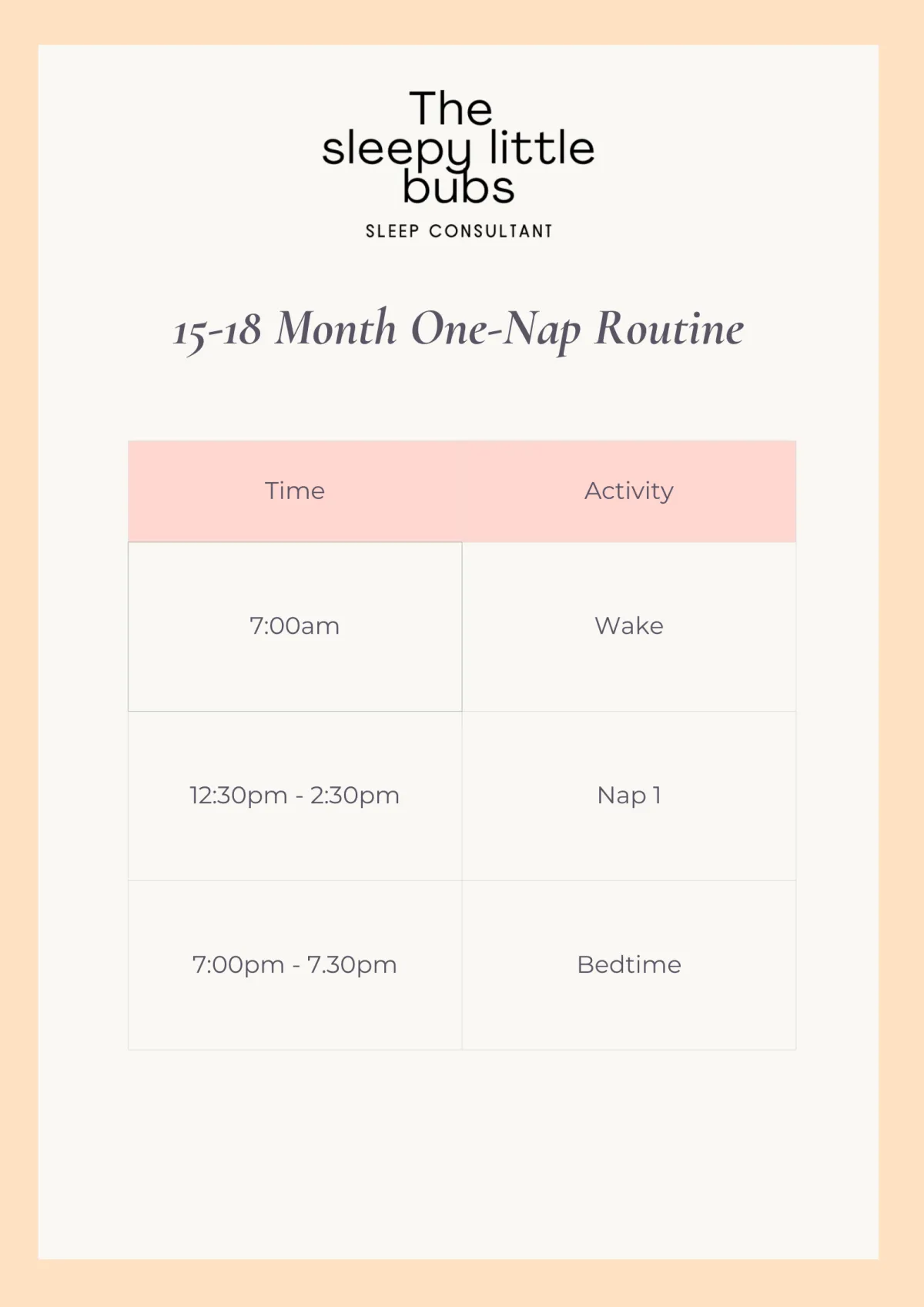
If still on two naps, one short and one long:
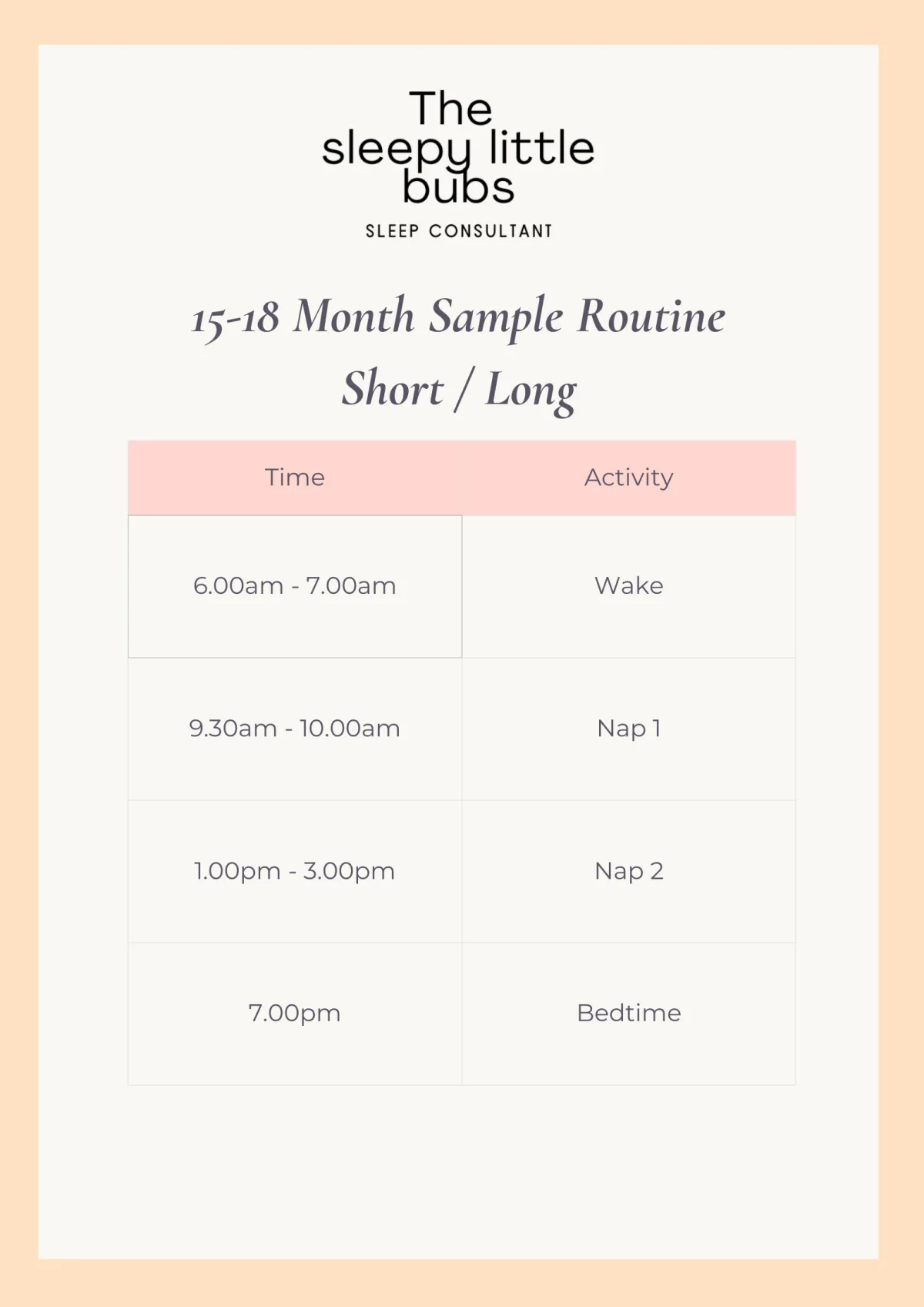
Or even:
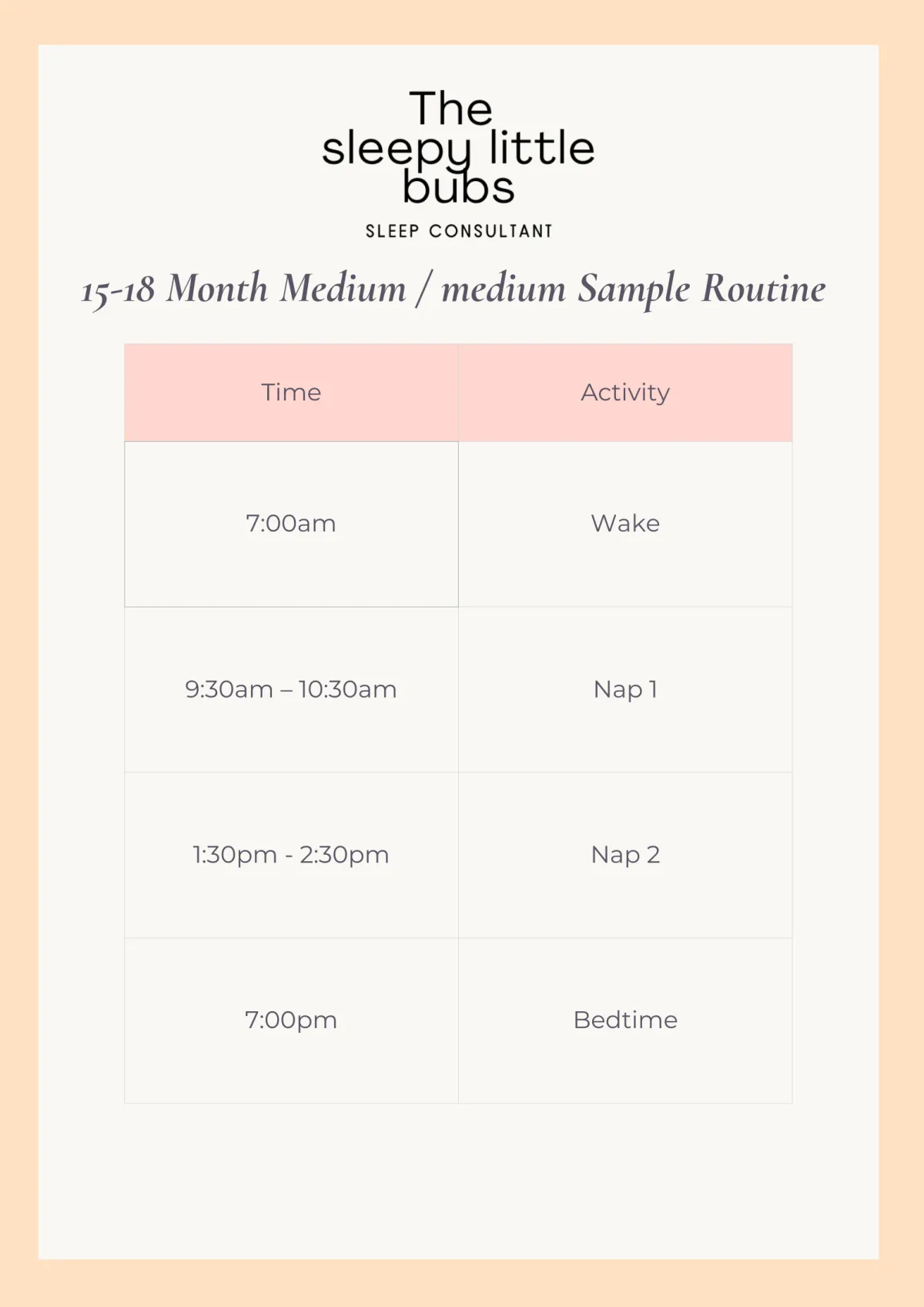
Should you make changes during the 15-18 month sleep regression?
This stage is not about forcing independence or eliminating support overnight. It is about recognising that your toddler’s emotional needs, boundaries, and sleep requirements have changed, and responding in a way that feels supportive and sustainable for your family.
Small, consistent changes often lead to the biggest improvements.
Frequently Asked Questions About the 15–18 Month Sleep Regression
How long does the 15–18 month sleep regression last?
For most toddlers, it lasts three to six weeks. If sleep disruption continues beyond that, routine or boundaries often need adjusting.
Should I sleep train during the 15 month sleep regression?
Absolutely! In fact it's not uncommon for settling techniques to change to combat separation anxiety, wind down routine and even the 2-1 nap transition. All of this is common around the 15-18 month sleep regression.
Why is my 16 month old waking at 5.00am?
Often early morning rising is linked to the 2-1 nap transition - it all comes down to sleep pressure. Is your baby under tired and they are needing less sleep during the day, or are they still adjusting to less sleep?
Is separation anxiety normal at 15–18 months?
Yes. Separation anxiety commonly resurfaces during toddlerhood due to increased attachment awareness and independence.
Looking ahead
As your toddler continues to grow, sleep will keep evolving alongside emotional development, independence, and routine changes. Having long term guidance can help you navigate these stages with confidence rather than frustration.
The Infant and Toddler Bundle provides comprehensive support through toddler sleep challenges, regressions, nap transitions, and emotional development. For families still within infancy, the 5–24 Month Infant Course offers structured guidance as sleep continues to change through the second year.
If you’re based in Melbourne or Sydney and navigating the 15–18 month sleep regression, in-home sleep consultations can be especially helpful at this age. Toddler sleep often involves routine timing, boundaries, separation anxiety, and environment - having tailored support in your home allows us to address all of it together.

Eva Beke
Certified Paediatric Sleep Consultant
Founder The Sleepy Little Bubs
I’m Eva Beke, a certified baby and toddler sleep consultant and founder of The Sleepy Little Bubs, supporting families across Australia and the world with evidence based baby and toddler sleep support.
My approach is realistic, supportive, and designed to evolve as your child grows, so you’re not just getting help for today, but confidence moving forward.
The Smarter Way to Invest in Better Sleep
Supporting sleep doesn’t have to mean starting over every time something changes.
Our sleep courses are built to support you long term, with age specific guidance that adapts as your child grows. From early routines and regressions to nap transitions and toddler sleep challenges, you’ll have a clear plan and ongoing support so you can respond with confidence at every stage.

Infant
5-24 Months

Toddler
2-4 Years
PRODUCTS
INFORMATION
SUPPORT
LEGAL


© Copyright The Sleepy Little Bubs All Rights Reserved.