
15–18 Month Sleep Routine



What it is, why it happens, and how to support sleep through this stage
If your toddler was coping well with sleep and suddenly naps are refused, bedtime turns into a battle, or nights feel more unsettled again, you are not imagining it. Between around fifteen and eighteen months, many families notice another shift in sleep as toddlers move through a period of rapid emotional, physical, and neurological development.
This stage often overlaps with the 15–18 month sleep regression, alongside growing independence, strong opinions, and increased separation anxiety.
Sleep needs are also continuing to change, particularly around daytime sleep. While this phase can feel challenging, it is very common and developmentally expected, and with the right routine support, sleep can settle again.
What does sleep look like between 15 and 18 months?
At this age, many toddlers are either in the final stages of the 2–1 nap transition or already well and truly settled on one nap. Some children continue to cope with two naps for a little longer, particularly closer to fifteen months, while others clearly struggle to fit two naps into the day without impacting bedtime or nights.
Sleep can feel inconsistent during this window, especially if your child is straddling nap structures. It is also common to see an increase in nap resistance, boundary testing at bedtime, or overnight waking linked to emotional development rather than true sleep problems.
How much sleep does a 15-18 month need?
Most children between fifteen and eighteen months are aiming for around 11–14 hours of total sleep across 24 hours, including day sleep and overnight sleep.
Day sleep may look like:
Two naps for some children early in this stage, or
One longer nap once the transition is complete
There is a wide range of normal at this age, and sleep needs can vary significantly between children.
Separation anxiety and sleep at this age
Separation anxiety often peaks again during this stage. Your toddler now has a strong awareness of separation and a growing desire for autonomy, which can make sleep times particularly challenging.
This can show up as:
Increased clinginess at naps or bedtime
Distress when you leave the room
Waking overnight calling out or seeking reassurance
These behaviours are developmentally normal and commonly overlap with nap transitions and bedtime resistance.
How many naps at 15-18 months?
This age range is where most children complete the 2–1 nap transition. While some children have already transitioned by fifteen months, others take a little longer to adjust.
Signs your toddler may be ready for one nap include:
Consistently refusing one nap
Managing long awake periods comfortably
Taking one longer nap
Bedtime becoming very late or difficult on two naps
Once these signs are consistent over a few weeks, moving to one nap usually improves both day sleep and nights.
What can a 15-18 month day look like?
Because this stage overlaps with the final nap transition, routines can vary depending on where your toddler is at.
Two-nap routines
Some toddlers still cope best with two naps early in this stage.
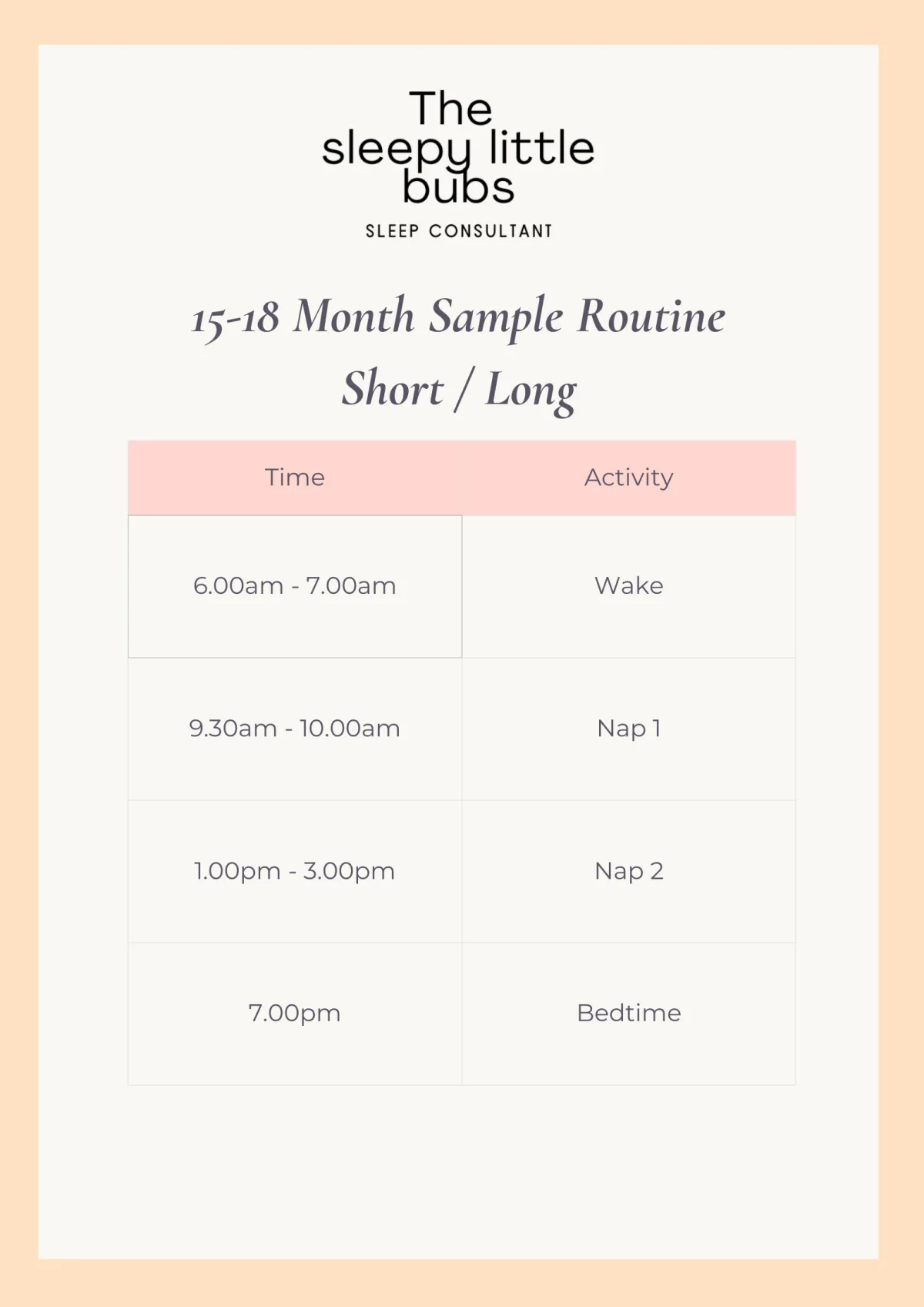
Medium / medium example
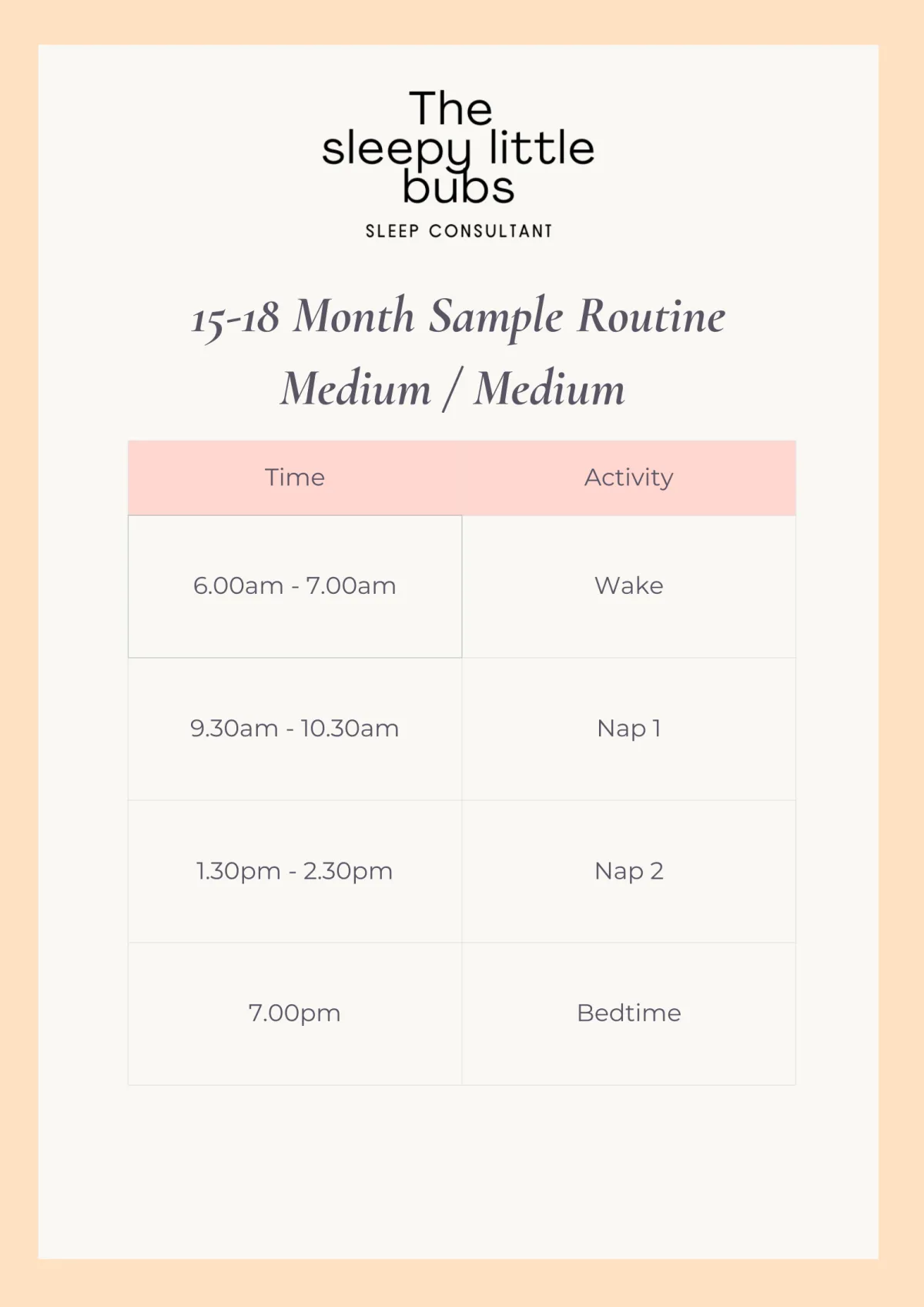
Or even the below if they are very close to their transition
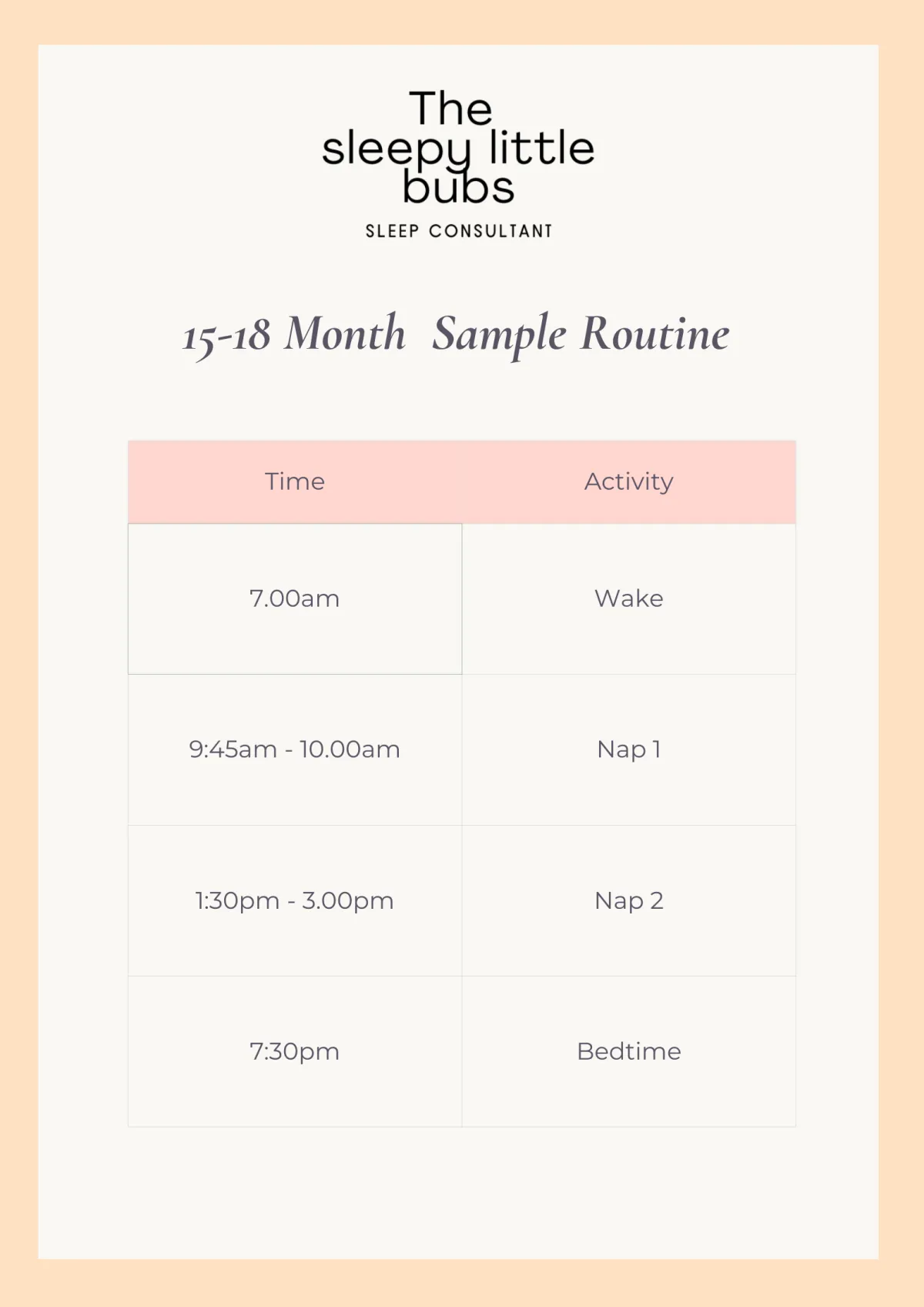
One-nap routine (most common by 15-18 months)
Many toddlers are well and truly ready for one nap during this window. A typical routine looks like:
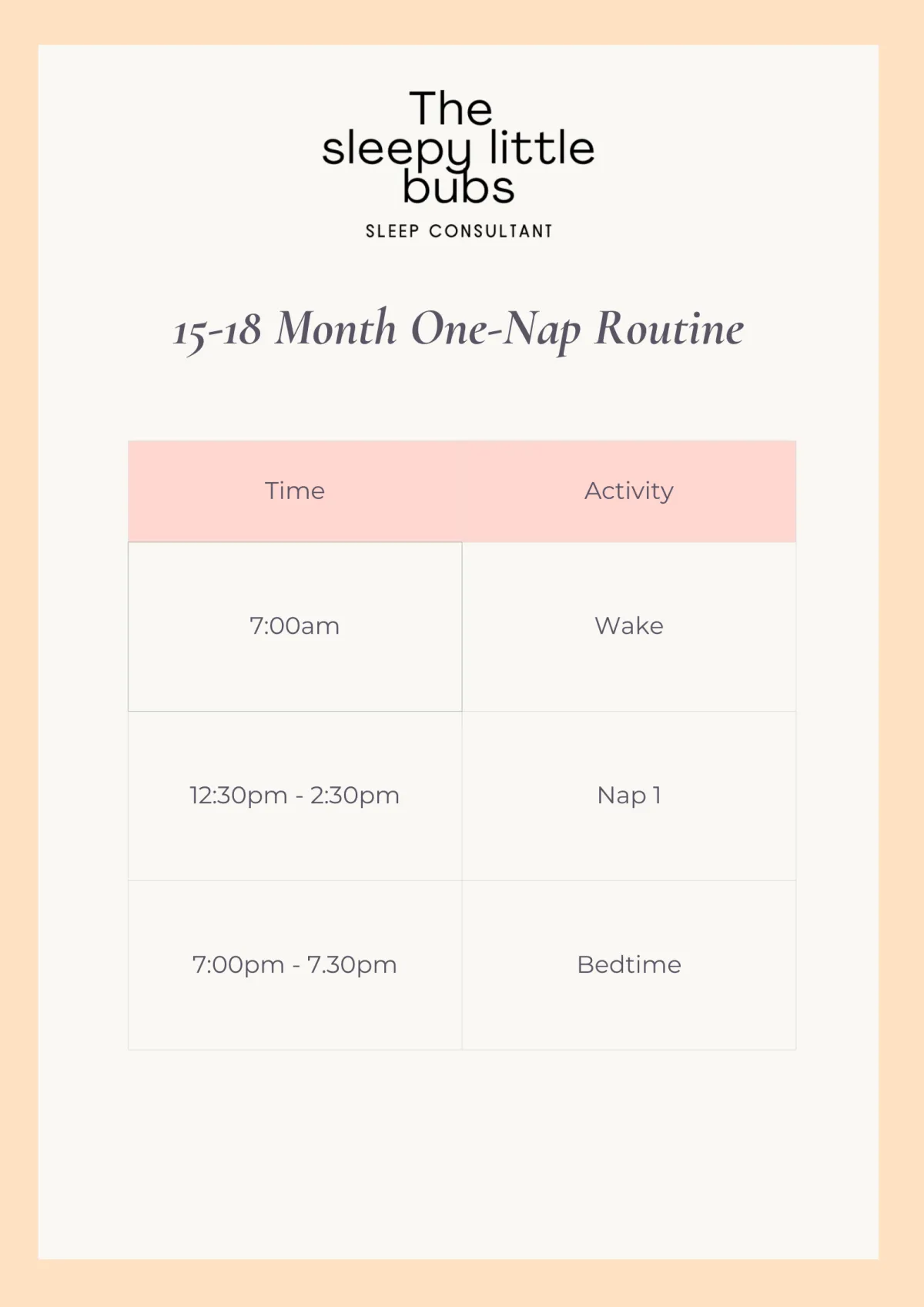
Some toddlers may cope better with a slightly earlier bedtime initially while adjusting to longer awake periods.
These routines are examples only and should be used as guides rather than strict schedules. Readiness for one nap is based on consistent patterns over time, not a few difficult days.
Common sleep challenges at 15- 18 months
Sleep challenges during this stage often include nap refusal, early rising, overnight waking, and bedtime battles. These are commonly linked to:
Developmental leaps
Separation anxiety
Changing sleep pressure
Nap transitions
Sleep is rarely “broken” at this age - it is usually evolving.
Supporting sleep between 15-18 months
Keep routines predictable and consistent
Hold clear boundaries around sleep while offering reassurance
Expect resistance during transitions and developmental phases
Avoid switching between nap structures too frequently
Make changes gradually and give them time to settle
Consistency and confidence are key during this stage.
Looking ahead
As your toddler moves beyond eighteen months, sleep continues to evolve with increasing independence, emotional regulation, and boundary testing.
The Infant and Toddler Bundle provides long-term support through this stage and beyond, covering regressions, nap transitions, bedtime struggles, and toddler sleep challenges as they arise.

Eva Beke
Certified Paediatric Sleep Consultant
Founder The Sleepy Little Bubs
I’m a certified paediatric sleep consultant and the founder of The Sleepy Little Bubs. I support families through baby and toddler sleep with practical, evidence-based guidance that considers the whole picture - sleep, development, routines, feeding, and family dynamics.
My approach is realistic, supportive, and designed to evolve as your child grows, so you’re not just getting help for today, but confidence moving forward.
The Smarter Way to Invest in Better Sleep
Supporting sleep doesn’t have to mean starting over every time something changes.
Our sleep courses are built to support you long term, with age specific guidance that adapts as your child grows. From early routines and regressions to nap transitions and toddler sleep challenges, you’ll have a clear plan and ongoing support so you can respond with confidence at every stage.

Infant
5-24 Months

Toddler
2-4 Years
PRODUCTS
INFORMATION
SUPPORT
LEGAL


© Copyright The Sleepy Little Bubs All Rights Reserved.