
12–15 Month Sleep Routine



What it is, why it happens, how long it lasts, and how to get through it
If your child was sleeping reasonably well and suddenly naps are being refused, nights feel more broken, or bedtime turns into a battle, you are not imagining it.
Between around twelve and fifteen months, many families experience a noticeable shift in sleep as toddlers move through a period of rapid developmental and emotional change.
This stage is closely linked to growing independence, separation anxiety, and shifting sleep needs, often alongside resistance to naps and changes in routine. It can feel frustrating and unpredictable, but it is a very common and developmentally expected phase, and with the right support, sleep can settle again.
What does sleep look like between 12 - 15 months?
At this age, many children are still adjusting after the 12 month sleep regression, which can bring temporary disruption to both naps and nights. Development is moving quickly, with new skills, growing independence, and increased emotional awareness all influencing sleep.
Some children continue to manage two naps comfortably, while others begin showing signs that they are ready to move toward one nap. Nap resistance is very common at this stage, but it does not always mean your child is ready to drop a nap immediately.
It is also common to see another period of disruption closer to fifteen months, often overlapping with the 15–18 month sleep regression, where sleep can feel unsettled again even if routines are well established.
How much sleep does a 12-15 month old need?
Most children between twelve and fifteen months are aiming for around 11–14 hours of total sleep across 24 hours, including day sleep and overnight sleep.
Day sleep may be split across:
Two naps for some children, or
One longer nap for children who are further along in the 2–1 nap transition
There is a wide range of normal at this age, and individual sleep needs can vary significantly.
From twelve months onward, solids become the primary source of nutrition, with milk feeds becoming secondary.
Separation anxiety and sleep at this stage
Separation anxiety often resurfaces strongly between twelve and fifteen months. Your child now has a clearer understanding of separation, which can make sleep times particularly challenging.
This can look like:
Increased distress when you leave the room
Needing more reassurance at bedtime
Waking overnight and calling out
These behaviours are developmentally normal and often overlap with nap resistance and bedtime struggles.
Awake time and sleep balance at 12–15 months
Sleep pressure continues to change rapidly during this stage. If awake periods are too short, your child may resist naps or bedtime. If they are too long, overtiredness can creep in and disrupt both naps and nights.
Understanding the difference between under vs overtired can be especially helpful when navigating nap resistance and unsettled sleep at this age. Small, gradual changes tend to be far more effective than big shifts.
How many naps at 12–15 months?
This is the stage where many families begin navigating the 2–1 nap transition. Some children move through this transition smoothly, while others need more time.
During this period, it is common to see:
Refusal of one nap
Shortened naps
Bedtime becoming more difficult
Early morning waking
Frequent Night Waking
What can a 12-15 month day look like?
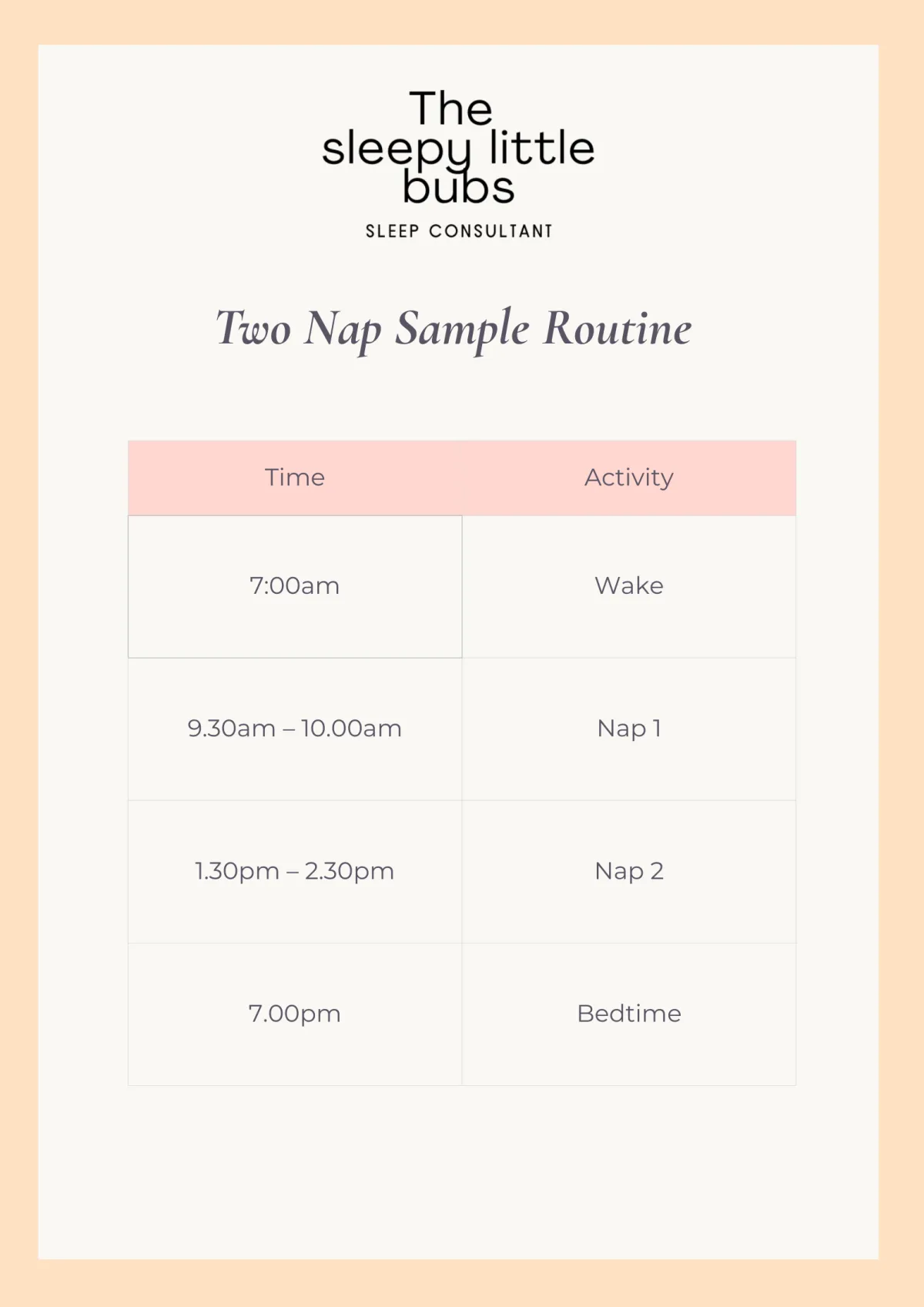
Because this age range includes a major nap transition, routines can vary depending on how ready your child is to move to one nap.
Short / long example
Medium / medium example
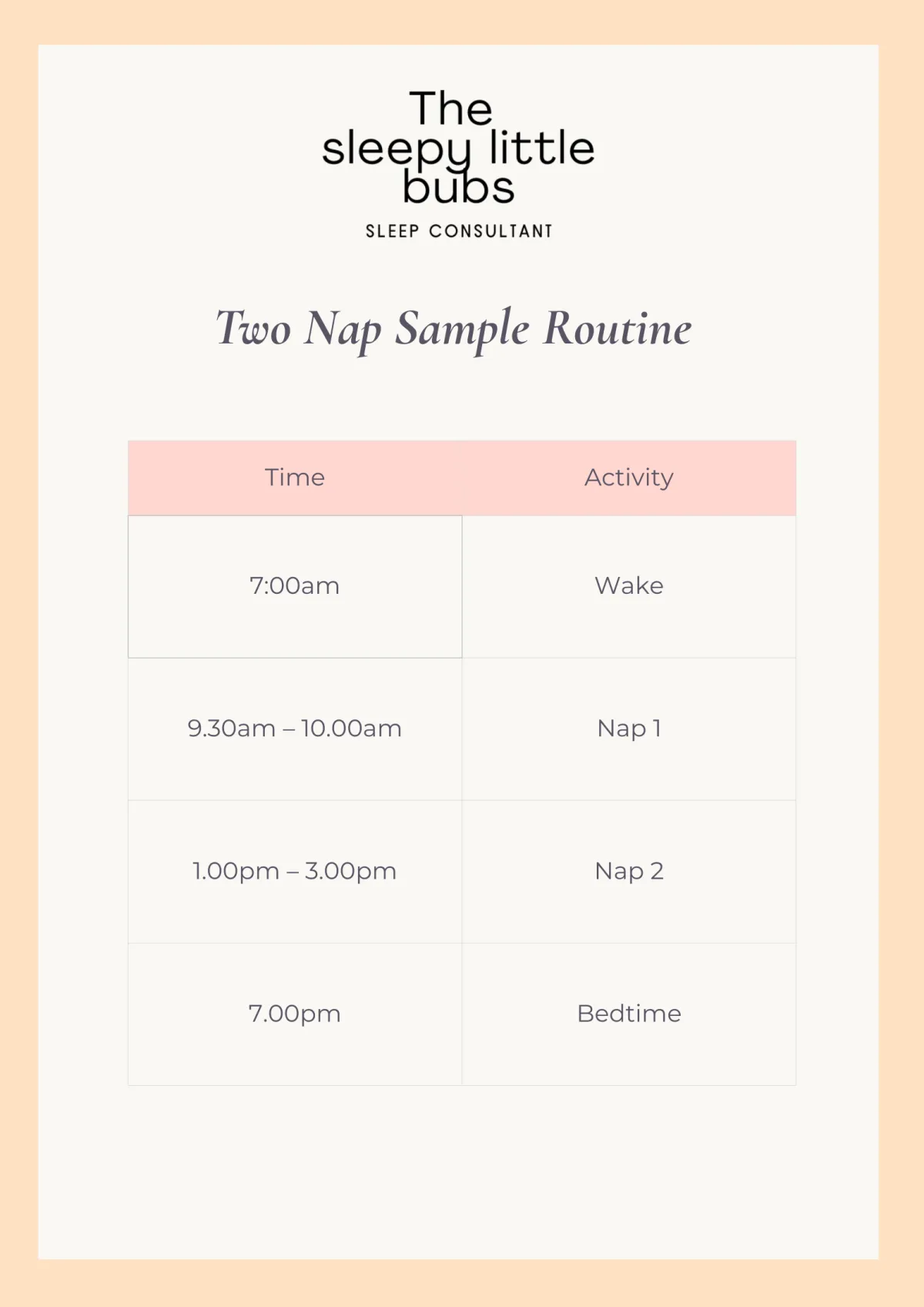
Transitioning toward one nap
For children who are clearly ready to transition, you may see routines like:
Short / long example
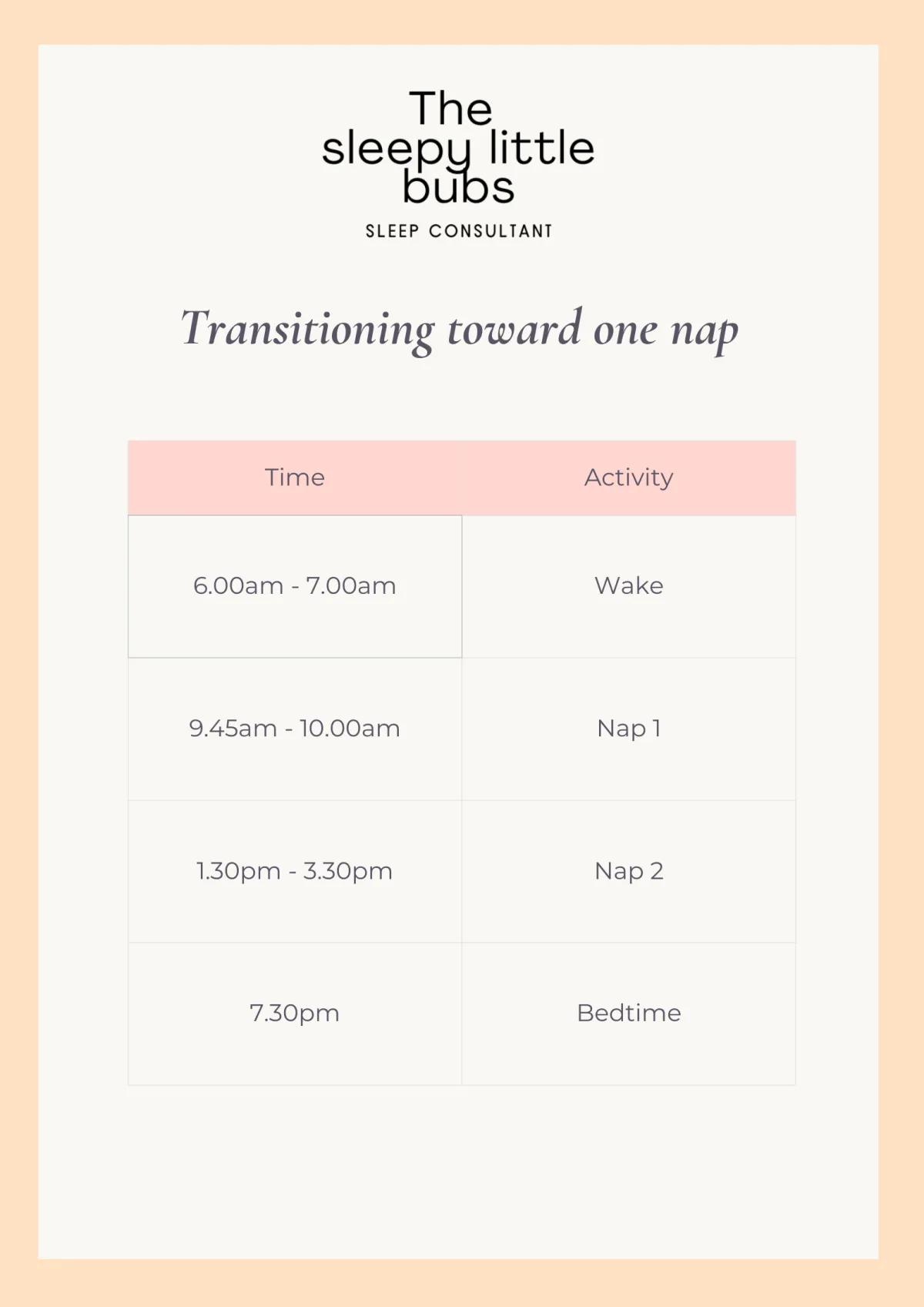
Some children may even manage with even less sleep, such as:
1.30pm – 3.00pm,
2.00pm – 3.30pm
Fully transitioned to one nap
Some children have already completed the transition by fifteen months. In this case, a day may look like:
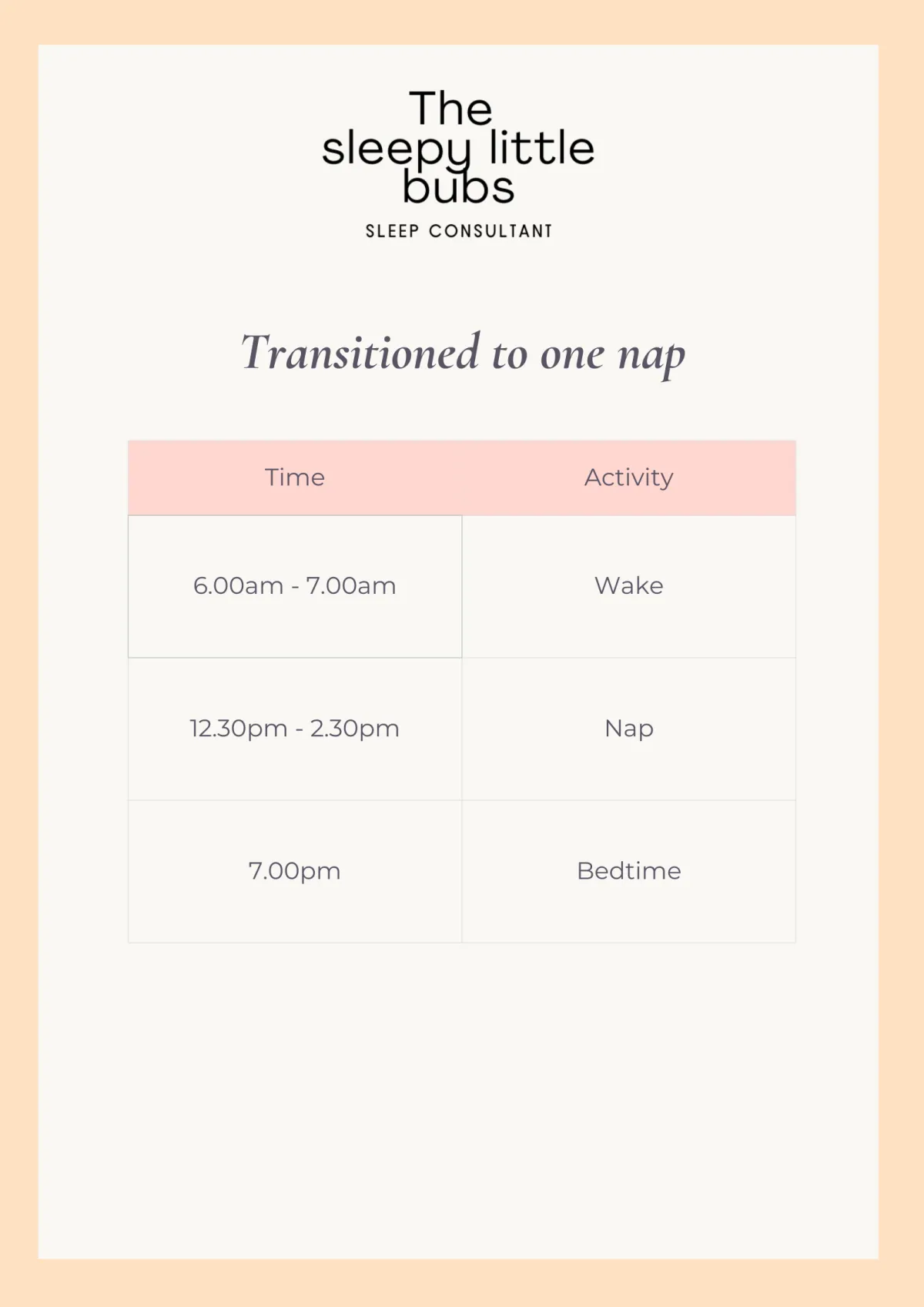
These routines are examples only and should be used as guides rather than strict schedules. Readiness for one nap is based on consistency over weeks, not a few difficult days.
Common sleep challenges at 12–15 months
Nap resistance, bedtime battles, early rising, and night waking are all common during this stage. These challenges are often linked to:
Developmental leaps
Separation anxiety
Shifting sleep needs
Nap transitions
Looking at sleep across the full 24-hour picture usually provides more clarity than focusing on one sleep period alone.
Supporting sleep between 12 and 15 months
Keep routines predictable but flexible
Offer reassurance during separation anxiety while maintaining clear boundaries
Adjust timing gradually rather than making sudden changes
Expect some nap resistance during transitions
Avoid making multiple changes at once
Consistency, patience, and realistic expectations go a long way during this stage.
Looking ahead
Sleep continues to evolve as your child moves further into toddlerhood, with more independence, emotional development, and boundary testing ahead.
The 5–24 Month Infant Course provides age specific guidance through this stage and beyond, while the Infant and Toddler Bundle offers long term support right through toddler sleep challenges, regressions, nap transitions, and big developmental changes.

Eva Beke
Certified Paediatric Sleep Consultant
Founder The Sleepy Little Bubs
I’m Eva Beke, a certified baby and toddler sleep consultant and founder of The Sleepy Little Bubs, supporting families across Australia and the world with evidence based baby and toddler sleep support.
My approach is realistic, supportive, and designed to evolve as your child grows, so you’re not just getting help for today, but confidence moving forward.
The Smarter Way to Invest in Better Sleep
Supporting sleep doesn’t have to mean starting over every time something changes.
Our sleep courses are built to support you long term, with age specific guidance that adapts as your child grows. From early routines and regressions to nap transitions and toddler sleep challenges, you’ll have a clear plan and ongoing support so you can respond with confidence at every stage.

Infant
5-24 Months
Toddler
2-4 Years
PRODUCTS
INFORMATION
SUPPORT
LEGAL


© Copyright The Sleepy Little Bubs All Rights Reserved.